Nine countries border the Baltic Sea. An equal number of rivers flow into it, but only six of them are responsible for nearly all the problems. Enormous discharges of nitrogen and phosphorus have turned the sea into a slimy, oxygen-starved soup.
By Jesper Enerstvedt
1,197 views
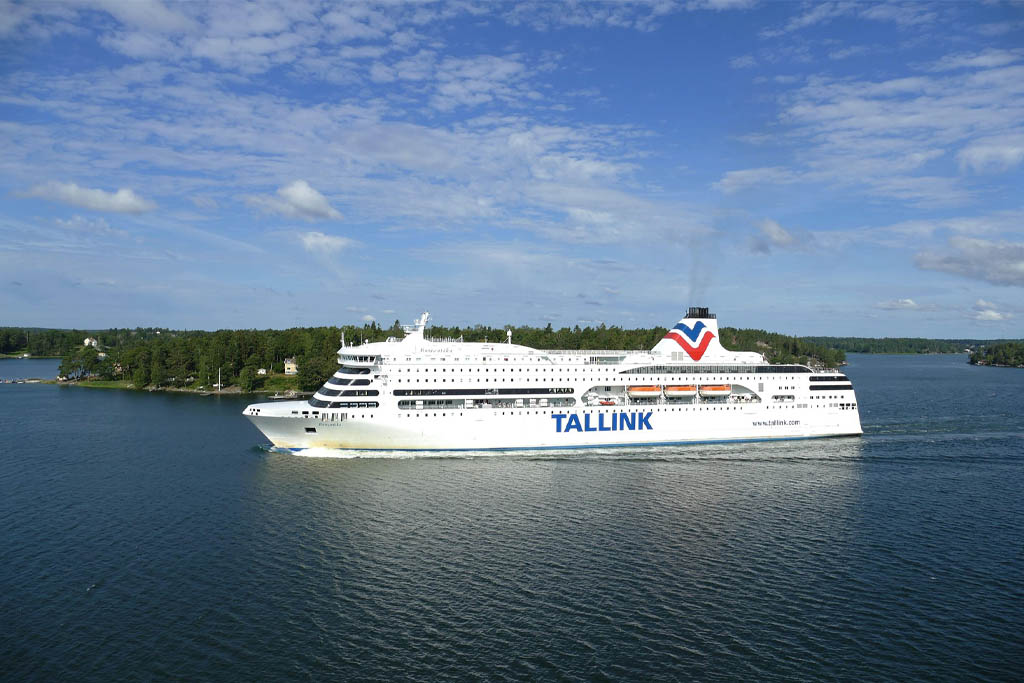
Photo: Falco/Pixabay Passenger ferry between Estonia's capital Tallinn and Sweden's capital Stockholm.
According to the International Council for the Exploration of the Sea (ICES), cod are nearly extinct, and there isn't much herring left in the sea either. For the nine countries bordering the Baltic, an unimaginable tragedy is unfolding. An entire culture is dying out. Most people around the sea know full well what the cause is.
The rivers flowing into the sea carry with them substances that strip away oxygen and form a slimy layer on the seabed.
The Baltic Sea is an inland sea with low water exchange. That is why it cannot tolerate large inputs of phosphorus and nitrogen. It flows in — but it does not flow back out. Fertilizer runoff from the rivers has caused massive algal growth and vast zones where no oxygen exists. Scientists call it dead seabed. It is a catastrophe of epic proportions that the world is witnessing in the Baltic Sea.
The Baltic Sea cod stock collapsed in 2019. Despite the introduction of a total ban on cod fishing, the stock has not managed to recover. Herring stocks have plummeted dramatically in recent decades. Figures published annually in the ICES Advisory Committee report on herring in the various areas of the Baltic Sea show declines of over 70–80 percent from the peaks of the 1990s. As long as the six rivers keep pumping poison into the sea, no amount of regulation by the coastal states will help. At that point, the game is up.
Nine countries border the Baltic Sea. They are Denmark, Estonia, Finland, Latvia, Lithuania, Poland, Russia, Sweden and Germany. Through these nine countries flow nine major rivers into the Baltic Sea. The nine are the Neva, Vistula, Oder, Daugava, Nemunas, Torne, Kemijoki, Dalälven and Narva.
The Torne, Kemijoki and Dalälven stand out with the lowest discharges. Kemijoki's nitrogen load is roughly a quarter of that of the Vistula and the Oder. The Torne and the Dalälven follow the same pattern. Low population, little agriculture, and extensive forest and mountain terrain are the reasons. That leaves the Neva, Vistula, Oder, Daugava, Nemunas and Narva as the great sinners.
The Neva flows out at St. Petersburg, Russia. It is the most water-rich river. The Vistula is Poland's longest river. The Oder flows through both Poland and Germany. In Latvia, the Daugava flows out at the capital, Riga. The Nemunas flows through Belarus before emptying into Lithuania. Sweden contributes the Torne and the Dalälven. Kemijoki is Finland's longest river. The Narva flows along the border between Estonia and Russia.
The Helsinki Commission (HELCOM) is the body that monitors pollution of the Baltic Sea on behalf of all the coastal states. HELCOM measures river pollution primarily in terms of nitrogen and phosphorus, since these are what drive algal blooms and oxygen depletion in the Baltic Sea. Publicly available now is the "Baltic Sea Environment Fact Sheet," which covers data up to 2023 but was published in 2025. The larger dataset is found in HELCOM PLC-7: Input of Nutrients by the Seven Biggest Rivers in the Baltic Sea Region 1995–2017.
The report leaves no doubt about who is to blame for the catastrophe in the Baltic Sea. The Neva, Vistula, Oder, Daugava, Nemunas and Narva are the Baltic Sea's largest sources of nitrogen and phosphorus pollution. Together they cover around 825,000 km², nearly half of the entire Baltic Sea catchment area. Combined, these six rivers carried approximately 365,000 tonnes of nitrogen and just over 13,000 tonnes of phosphorus into the Baltic Sea, corresponding to around 38 percent of all nitrogen and phosphorus entering the sea that year. Over fifty million people live around these rivers.
According to HELCOM, the Vistula is the worst offender among the major rivers. The Vistula alone accounted for 30 percent of the nitrogen and 28 percent of the phosphorus. Agriculture is the main source for the Vistula, responsible for 61 percent of the nitrogen and 52 percent of the phosphorus. The Oder river comes in a close second. Here too, agriculture is to blame. The Oder flows through the Czech Republic, Poland and Germany, with nearly half of its catchment area given over to fields and pasture.
The Neva is the river with by far the greatest water volume, but much of its catchment area is not cultivated land. Most of the nutrients likewise do not come from human activity in Russia, but from natural sources. The total load to the Gulf of Finland is nonetheless 110,000 tonnes per year, of which the Neva accounts for roughly half. Three-quarters of the load carried by the Neva originates from Lake Ladoga — meaning it largely represents natural background loading from an enormous catchment area, not urban or industrial discharge.
The Nemunas flows through Lithuania and Belarus. Here there is a great deal of agricultural land. The nitrogen load has increased since 2003 due to intensified agriculture, while the phosphorus load has fallen following EU-driven improvements in wastewater treatment. The total nitrogen load from the Nemunas was 838 kg/km² in 2017. By comparison, the Finnish river Kemijoki carried just 133 kg/km². That is an enormous difference.
The Latvian river Daugava is heavily influenced by upstream inputs from Russia and Belarus, which contribute 50 percent of the nitrogen and 70 percent of the phosphorus — leaving Latvia with little it can do about it. The Narva, between Estonia and Russia, carries less water, but discharges 9,800 tonnes of nitrogen and roughly 500 tonnes of phosphorus annually. The Narva additionally carries wastewater from the oil shale industry in Kohtla-Järve, Sillamäe and the city of Narva.
The outlook is bleak. Agriculture in Poland, Germany, Lithuania and Belarus is not going to disappear. None of the countries around the Baltic Sea have shown any willingness to overhaul agriculture for the sake of the sea. The war in Ukraine has shut down all cooperation with Russia. Without Russian participation, there is no realistic plan for reducing the discharges. Even if all emissions stopped tomorrow, it would take decades before the phosphorus and nitrogen already in the sea disappeared. The Baltic Sea is trapped in a vicious cycle. It is heading toward certain death.