Texas Orders Unauthorized Dallas-Area Muslim 'University' to Stop Operations, Cites Lack of State Approval
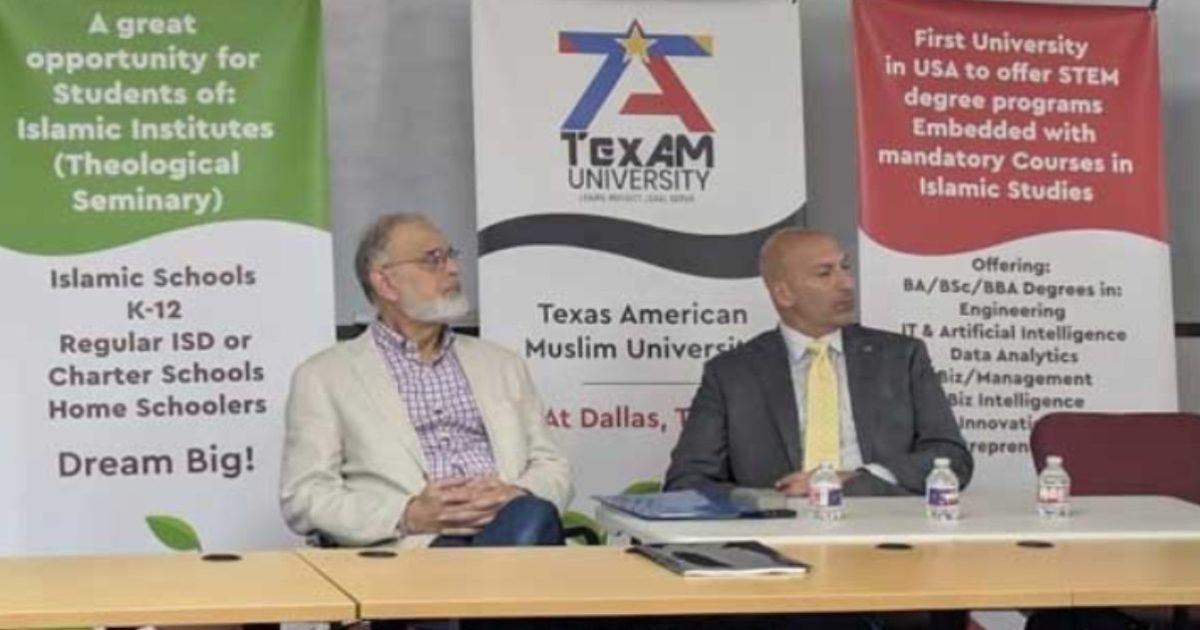
Governor Greg Abbott directed the Texas Higher Education Coordinating Board to issue an immediate cease-and-desist order against an institution calling itself the Texas American Muslim University at Dallas, saying the entity is operating illegally without state authorization. The THECB warned the school faces criminal, civil and administrative penalties if it continues to advertise, enroll students or use the protected term "university."
By Cassandra MacDonald
1,007 views
Texas Governor Greg Abbott has directed state higher-education regulators to order an immediate shutdown of an entity calling itself the Texas American Muslim University at Dallas, saying the institution has been operating illegally without state authorization. On May 6, 2026, at Abbott's direction, the Texas Higher Education Coordinating Board (THECB) sent a formal cease-and-desist letter to the entity, known as "TexAM," which operates out of Richardson, a Dallas suburb, demanding that it stop advertising, offering, and enrolling students in degree programs and that it cease using protected terms such as "university." The board publicly announced the action the following day.
Governor Abbott announced his directive in a post on X, writing: "I directed the Texas Higher Education Coordinating Board to issue a Cease & Desist to 'TexAM,' an unauthorized Islamic educational institution operating illegally in Texas. If they refuse to comply, legal action will follow. Texas will not allow illegal educational institutions to operate in our state." The governor's statement framed the move as enforcement of state law to protect students and uphold standards for degree-granting institutions.
The action followed a period in which TexAM had been actively promoting "Spring 2026 Admissions" on its website and appeared to have classes already underway. According to the coordinating board and subsequent reporting, the school had marketed itself as the first university in the country to offer STEM degree programs embedded with mandatory Islamic studies coursework, advertising bachelor's and master's programs in fields including artificial intelligence, computer science, information technology, cybersecurity, and health informatics, alongside coursework in areas such as Islamic economics. The school promoted a student campus in Richardson and, per state officials, solicited students both online and overseas. TexAM's leadership has said the institution does not charge tuition and is funded primarily through donations.
In addition to the state regulatory action, the Texas A&M University System issued its own cease-and-desist communication to TexAM on May 8, alleging the entity's name and branding infringe upon or dilute Texas A&M's trademarks and could create public confusion by suggesting an affiliation with the Aggies. The system demanded that those uses stop.
THECB's formal warnings underscore the legal framework that governs private postsecondary institutions in Texas. To lawfully operate or grant degrees in the state, a private postsecondary educational institution must hold a Certificate of Authority issued under Chapter 61, Subchapter G of the Texas Education Code. The board determined that TexAM had never been granted such a certificate and was therefore prohibited from granting or offering to grant degrees, and it noted that protected terms such as "university" and "college" cannot legally be used by unapproved institutions. The board's notice highlighted potential consequences for noncompliance, including criminal and civil penalties as well as remedies available under the Texas Deceptive Trade Practices Act, and warned that continued operation could result in referral to the Texas Attorney General for prosecution. The letter directed TexAM to sign and return written confirmation that it had ceased the activities identified, with an initial deadline that the board later extended to May 11.
TexAM's leadership has disputed the characterization of the school and said it moved to comply. Shahid A. Bajwa, the entity's founder and chairman, said the organization had already complied with the coordinating board's letter — stopping use of the "university" name, halting graduate-level classes, and continuing instead as an institute rather than a university. Bajwa said the school's legal corporate name is "Texas American Muslim Institute for Technology at Dallas," and argued that the "TexAM" shorthand was derived from "Texas," "American," and "Muslim" rather than intended to mimic the Texas A&M brand. He has also said that including "Muslim" in the name reflected the founders' identity and values, in the manner of other faith-based institutions, that the school welcomed students of all backgrounds, and that its Islamic studies component was transparent and meant to complement its STEM offerings.
The dispute did not end with the cease-and-desist orders. On May 18, Texas Attorney General Ken Paxton filed suit in Collin County against TexAM and three associated individuals — Bajwa, Bilal Piracha, and Arsalan Shahzad — seeking temporary and permanent injunctions and more than $1 million in civil penalties for alleged violations of the Texas Deceptive Trade Practices Act and the Texas Education Code. "TexAM has repeatedly disregarded Texas law, misrepresented its authority to grant degrees, and risked deceiving students about its legitimacy," Paxton said in announcing the suit, adding that his office "will not allow illegal, unaccredited degree mills to operate in Texas." The attorney general's office also asserted that the entity's nonprofit corporate charter had been forfeited in February 2026 and remained forfeited. Bajwa, for his part, said he was confused by the lawsuit, contending that the coordinating board had extended the compliance deadline and that the school had made the required changes by that date; a coordinating board spokesperson indicated her understanding was that TexAM had complied with the letter while the matter was being reviewed, and the attorney general's office did not immediately explain why it sued if the entity had complied.
The episode unfolded amid heightened political attention to Muslim institutions in Texas. The initial scrutiny of TexAM followed a report by a conservative outlet whose coverage has increasingly drawn responses from Republican officials, and the action against the school came alongside other Islam-related enforcement steps taken at Abbott's direction during the same period. It also coincided with a charged political moment: anti-Muslim rhetoric has become more prominent in Texas Republican politics, with several GOP candidates — Paxton among them — campaigning against what they describe as the "Islamification" of Texas and the spread of Sharia law, themes that civil rights groups representing Muslims have found alarming. Paxton himself was in the midst of a competitive U.S. Senate primary runoff against incumbent John Cornyn at the time of the suit.
The move raises broader questions about the oversight of new or niche educational ventures that market degree programs, and about the protections in place for prospective students who may enroll in unaccredited or unauthorized institutions. It also illustrates how an entity can face multiple, overlapping legal challenges — regulatory, trademark, and consumer-protection — when its operations and branding draw official scrutiny, while leaving open contested questions about whether the school's conduct amounted to deliberate deception or a fledgling institution's failure to navigate the state's licensing requirements. As the litigation proceeds, the case is likely to remain a flashpoint both for debates over postsecondary regulation and for the broader political climate surrounding Muslim institutions in the state.