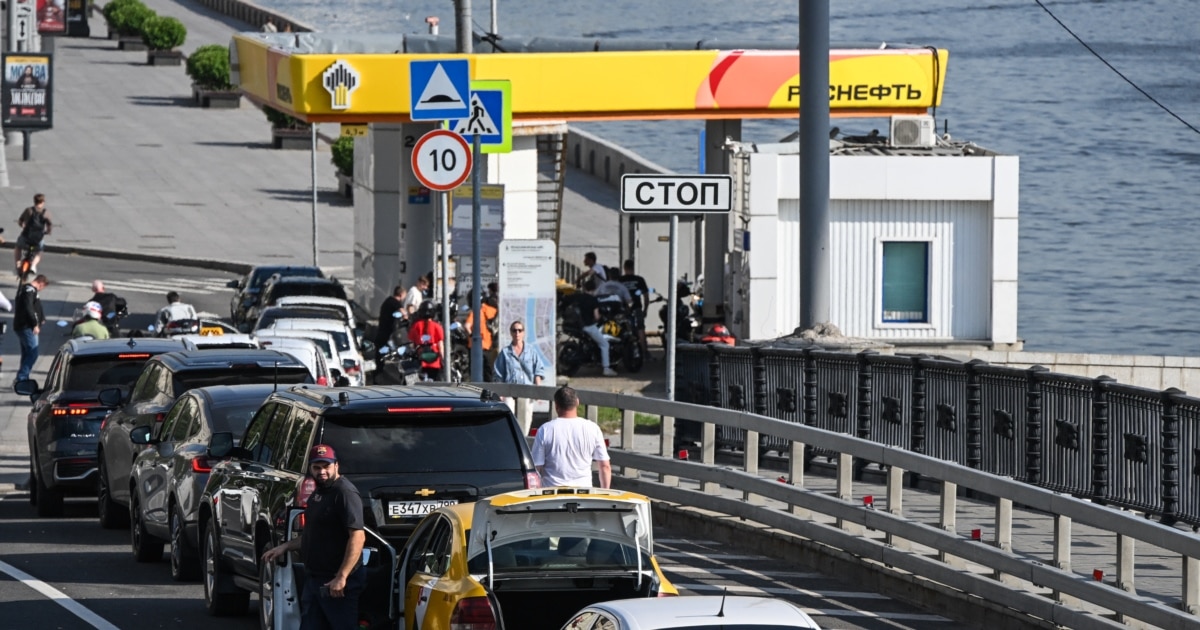
Teachers in Russia Ordered to 'Duty' at Gas Stations to Calm Motorists amid Nationwide Fuel Shortage
Local administrations in multiple Russian regions have issued or circulated instructions asking schoolteachers to serve as volunteers at petrol stations to help manage queues and calm drivers during an acute fuel shortage. The move, reported in Krasnodar Krai and elsewhere, has provoked public anger and debate about whether educators are being coerced into non-teaching duties amid a deepening energy crisis caused by attacks on oil infrastructure.
By Vanessa Bergmann
871 views
Authorities in parts of Russia have asked schoolteachers to report to petrol stations to help calm drivers and regulate queues amid a widening fuel shortage, a measure that has provoked public outcry and raised questions about coercion of public-sector workers. In Krasnodar Krai, the administration of Dinsky District circulated a roster to local schools requiring teachers to be on duty at filling stations; teachers were reportedly expected to come even during their vacations. Those asked to attend were offered free tea and coffee as compensation.
The instruction led to a storm of anger on local social media, including from teachers themselves. The Telegram channel «Антиджоб.нет», which collects reports about abusive employers, quoted one complaint: “Мы, молодые учителя не весим даже 50 кг и должны угоманивать злых людей на заправке. Бесплатно и обязательно, а не то будут вопросы и не дай бог увольнения!” The post encapsulates wider concern that the “volunteer” label masks pressure on educators to undertake potentially risky, non-professional duties.
A correspondent for regional outlet Живая Кубань contacted the Dinsky District Education Department, which did not deny that teachers had been performing shifts at petrol stations but framed the practice as voluntary and limited to men. Officials were quoted as saying: “Никто никого не заставляет дежурить. Тем более, женщин. Вызываются сами мужчины в качестве добровольцев, поскольку ситуация на АЗС касается и их самих. Поэтому дежурить идут волонтеры исключительно на добровольных началах. Среди них нет женщин”. Local reporting suggests, however, that at least some teachers feel obliged to comply.
Similar calls for civilian volunteers have appeared elsewhere. In Pskov Region, authorities advertised for “volunteers” to stand at Surgutneftegaz stations to inform drivers about fuel dispensing rules and help manage queues; the announcement did not state what, if any, compensation would be provided. At other outlets, including stations run by Псковнефтепродукт, informal patrols or дружинники have been deployed to maintain order.
The mobilization of volunteers to manage petrol stations comes amid a broader national fuel crisis. Regional outlets such as 7x7 report that authorities across multiple regions have circulated SMS alerts about rationing schemes — for example, dispensing fuel on alternating days linked to vehicle license plates — while Irkutsk regional authorities suggested an electronic appointment system for stations to cut queues. In Perm, local authorities received notice of a planned rally over fuel shortages, although organized protests appear limited so far.
Media monitoring by Новая газета Европа in collaboration with the Vox-Harbor project found a surge of public discussion about the fuel crisis on Telegram: between May 1 and the present, some 6,600 posts and 39,700 comments about fuel shortages and closed stations were published. Early spikes in coverage came after May attacks on refineries in Nizhny Novgorod, Yaroslavl and Perm; a marked jump in reporting followed May 29 when Crimean authorities limited sales of A-95 petrol to 20 liters per day. The largest wave of discussion began on June 18, after a major drone attack on Moscow, with the monitoring project noting an average of roughly 350 unique posts per day on the topic since then.
Commenters and regional data show the crisis being felt most acutely in annexed Crimea, Moscow and the Moscow region, occupied areas of Ukraine, and southern Russian regions including Krasnodar Krai and Rostov. East of the Urals, discussion has been concentrated in Zabaykalsky Krai, Irkutsk Region and Tuva. According to Reuters reporting cited by regional outlets, Russia’s current gasoline production meets only about 65% of seasonal demand. In response to shortages, Moscow has banned exports of gasoline, diesel and jet fuel; Deputy Prime Minister Alexander Novak announced the start of imports and efforts to increase domestic output by using petroleum products of lower environmental class.
Human-rights and labor advocates observing the developments say the use of teachers and other civilian volunteers to perform public-order functions during a national shortage warrants scrutiny, particularly when participation may be effectively compulsory. The situation underscores broader strains caused by repeated attacks on oil-processing infrastructure and the government’s emergency measures, which together are reshaping everyday life in many Russian regions and occupied territories as authorities seek to manage both supply shortages and public order.