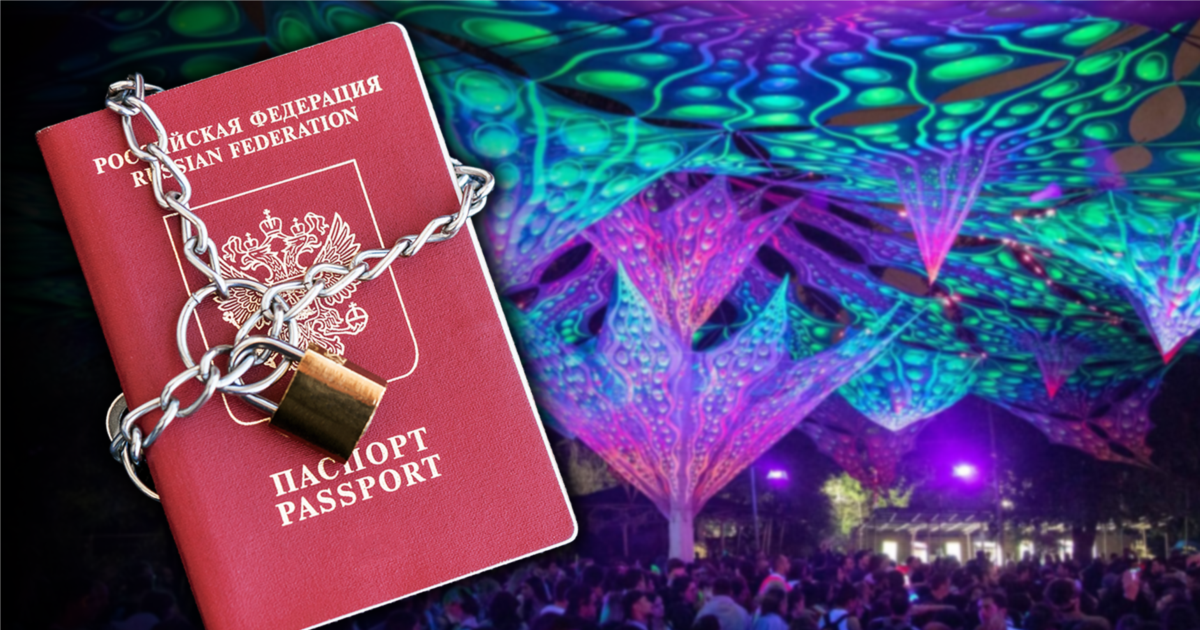
Tbilisi music festival drops blanket ban on Russian passport holders but imposes loyalty questionnaire, sparking debate over discrimination and business rights
Organizers of the Zion Festival in Tbilisi reversed an initial decision to bar all Russian citizens from attending, saying they no longer want to judge people solely by their passport. Instead, they will allow exceptions for Russians who complete a short questionnaire affirming support for Georgia's territorial integrity and opposing Russia's occupation — a policy that has drawn both support and criticism and raises legal and ethical questions under Georgia's anti-discrimination framework.
By Alexander Walter
883 views
Organizers of a music festival in Georgia’s capital announced and then scaled back a policy to ban Russian passport holders from attending, touching off a wider debate about the boundaries between legitimate business decisions and unlawful discrimination.
Zion Festival, which had been scheduled to take place in Tbilisi on September 25–26, originally carried a warning that "Russian citizens will not be admitted." That restriction was publicized on event channels including the ticketing platform Tkt.ge and provoked immediate reactions from residents of Georgia who hold Russian passports as well as from others observing from abroad.
Some Russian citizens and permanent residents in Georgia reacted angrily. One local blogger, identified only as Tania, called the ban a "disgusting story" in a video message, saying she understood why the sight of a Russian passport could elicit a strong reaction in Georgia but questioned where the line should be drawn between political stance and discrimination based on citizenship. "Does a Russian passport automatically mean its holder is an oppressor? If we decide that a passport is enough and we do not need to learn anything else about a person, what does that say about us?" she asked.
Radio Free Europe/Radio Liberty contacted Zion Festival organizer Gigi Gabadze, who told reporters that organizers changed their original policy on September 11. "We do not want to judge people only by their passport," the festival explained in an Instagram statement. Organizers said they would permit "exceptions" for Russian citizens who share the festival's values and who "recognize the reality" in Georgia. Those wishing to attend will be asked to complete and sign a short questionnaire confirming their positions on Georgia's territorial integrity, Russia's occupation of Georgian territories, and respect for the festival's values.
Festival organizers said the initial ban was a direct reaction to the realities Georgians live with: parts of Georgia remain occupied by Russia and many Georgian citizens have experienced war, occupation and forced displacement. The announcement and the subsequent partial reversal did not defuse tensions. Some social media users criticized the questionnaire requirement as humiliating and inconsistent with professed values of freedom and respect. "Talking about freedom, unity and respect while screening people at the entrance by passport and demanding confirmation of political loyalty is pure hypocrisy," one commentator wrote.
This episode echoes other instances in Georgia where private businesses have limited services for Russian nationals since Russia’s full-scale invasion of Ukraine in 2022. One hiking club, Yeti, advertises tours "without occupiers," stating on social media: "Do not serve Russian citizens or take them on tours while 20% of our country is occupied. Occupation does not happen only by weapons — it can continue through economic, political and social influence. Every choice matters!"
A high-profile domestic example involved a Batumi gym, Reformer Fitness, which required Russian citizens to sign a document recognizing the territorial integrity of Georgia and Ukraine in order to use the facility. The matter was reviewed by Georgia’s Ombudsperson (Public Defender). The Ombudsperson concluded that the requirement to sign a declaration recognizing sovereignty and territorial integrity was not, by itself, necessarily discriminatory. The office said such a demand could be seen as an expression of fundamental international law principles and as the company exercising freedom of expression and entrepreneurial autonomy. However, the Ombudsperson also criticized public remarks by the gym’s owner, Giorgi Futkaradze, in which he explicitly defended the right of private businesses to be discriminatory and to accept the attendant reputational and financial risks.
Georgia’s 2014 Anti-Discrimination Law does prohibit differential treatment on grounds including citizenship, and lists numerous protected characteristics — race, color, language, gender, age, origin, property status, religion, national or ethnic belonging, profession, family status, health, disability, sexual orientation, political or other convictions and more. The law does not provide for automatic fines or criminal penalties; alleged victims can lodge complaints with the Ombudsperson, who investigates and issues recommendations, and may also pursue civil suits seeking material or moral damages.
Observers point to an international precedent in the Czech Republic. In 2014 Hotel Brioni in Ostrava required Russian guests to sign a statement opposing Russia's annexation of Crimea. The Czech Trade Inspection found this discriminatory and fined the hotel owner 50,000 Czech crowns. The case went through multiple courts and in April 2019 the Czech Constitutional Court overturned the earlier decision, finding that administrative bodies had insufficiently taken into account the hotel owner's freedom of expression and entrepreneurial freedom.
The Zion Festival controversy underscores a broader tension seen elsewhere in Europe and the post-Soviet space: how to reconcile private actors' rights to set rules for their venues with anti-discrimination protections and the dignity of individuals who may be targeted because of their nationality. For Georgian civil society, businesses and institutions, the issue remains fraught, shaped by recent wars, occupation of territory, and deeply felt political and social wounds. As debate continues, legal channels — complaints to the Ombudsperson and, where brought, court cases — will likely remain the principal mechanisms for resolving disputes over whether particular policies cross the line from legitimate expression of values into unlawful discrimination.