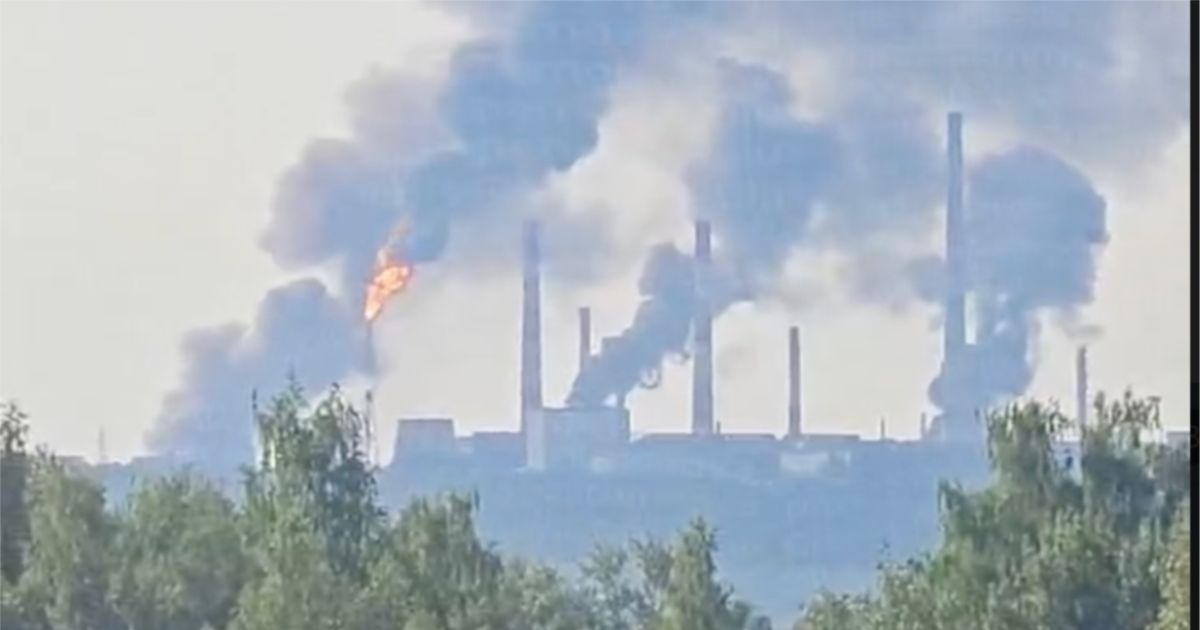
Tatarstan Declares Mourning After Drone Strikes on Nizhnekamsk Kill 12, Wound Dozens
Explosions rocked the oil and petrochemical hub of Nizhnekamsk in Russia’s Tatarstan on the morning of August 10, in what local authorities described as a mass attack by Ukrainian drones. Tatarstan’s head declared a period of mourning; by midmorning officials said 12 people had been killed and 39 injured, while independent Russian outlets said the strike hit the Nizhnekamskneftekhim petrochemical complex owned by Sibur.
By Blake Marriott
1,131 views
Explosions erupted on the morning of August 10 in Nizhnekamsk, a city in Russia’s Republic of Tatarstan that hosts several large oil-refining and petrochemical plants, authorities and media reported. Local officials described the incident as a mass attack carried out with drones, saying both industrial and civilian facilities were hit and that there were fatalities.
At around 9:00 a.m. Moscow time, Russian state media published information from the press service of Rustam Minnikhanov, the head of Tatarstan, saying that the strikes had targeted “both industrial and civilian facilities” and that there were deaths. Minnikhanov subsequently announced a period of mourning in the republic following the attacks.
An update issued by the Tatarstan head’s press service at about 11:00 a.m. said the confirmed toll in Nizhnekamsk had risen to 12 people dead and 39 wounded. Authorities did not immediately provide a detailed breakdown of the identities or ages of the victims, or specify every site that had been struck.
Independent Russian outlet ASTRA, after analyzing footage shared by eyewitnesses, reported that the attack struck the Nizhnekamskneftekhim petrochemical complex. The complex is part of the Sibur holding and is one of Europe’s largest petrochemical facilities, producing ethylene, synthetic rubber and other chemical products. Nizhnekamsk’s industrial zone also contains two oil-refining plants, Taneco and TAIF-NK, which Russian and Western reports say were targeted by strikes attributed to Ukrainian forces in June and July 2026.
Some Russian media outlets additionally reported that a city market in Nizhnekamsk had come under attack on August 10; that claim has not been independently confirmed by other sources. As of the latest reports, Ukrainian authorities had not issued a public comment on the incident.
The strikes come amid a pattern of cross-border operations that Moscow has repeatedly condemned. Russian officials have characterized Ukrainian attacks on industrial infrastructure inside Russia as “terrorist” acts. Kyiv and its supporters, however, have framed strikes on Russian economic and military infrastructure as a response intended to impose costs on Russia for its own strikes against Ukrainian cities, to disrupt Moscow’s war-funding capabilities and to pressure the Kremlin to seek an end to the conflict.
The reported damage to a major petrochemical facility raises broader concerns about civilian protection and the potential for environmental and public-health consequences when energy and chemical installations are struck. Petrochemical complexes are critical to domestic economies and can be densely populated by workers and nearby communities; attacks on such infrastructure risk high civilian tolls and long-term socio-economic disruption. The incident in Nizhnekamsk will likely intensify debate over the legality and proportionality of attacks on industrial targets and could prompt calls for independent investigations and accountability measures.
At the time of publication, regional authorities were still assessing the full extent of damage and casualties. International agencies and human rights groups have in past conflicts urged all parties to take precautions to protect civilians and civilian infrastructure, and to investigate strikes that result in civilian deaths. The lack of immediate comment from Kyiv, and the competing narratives offered by Russian officials and independent media, mean significant questions remain about responsibility, motive and the precise sequence of events that led to the explosions in Nizhnekamsk.