Tajikistan’s Rogun Dam Advances as International Lenders Back Controversial Project That Will Displace Tens of Thousands
Tajikistan has moved closer to completing the long-delayed Rogun hydroelectric dam after the World Bank approved a $300 million grant and reports emerged of possible additional funding from the Asian Development Bank. The project promises to double the country’s electricity capacity and eliminate chronic winter shortages, but it will inundate villages, force more than 50,000 people to relocate and raises serious seismic, geological and transboundary water concerns.
By Clémence Desjardins
1,163 views
A decades-old plan to build what Tajikistan says will be the world’s tallest dam has taken a significant step toward realization as major international lenders increase their financial backing for the Rogun hydroelectric project. In early October, Tajik authorities ratified a $300 million grant from the World Bank, and reports have surfaced that the Asian Development Bank may provide an additional $500 million. Those moves have strengthened momentum behind a project that has long divided regional neighbors, local communities and experts.
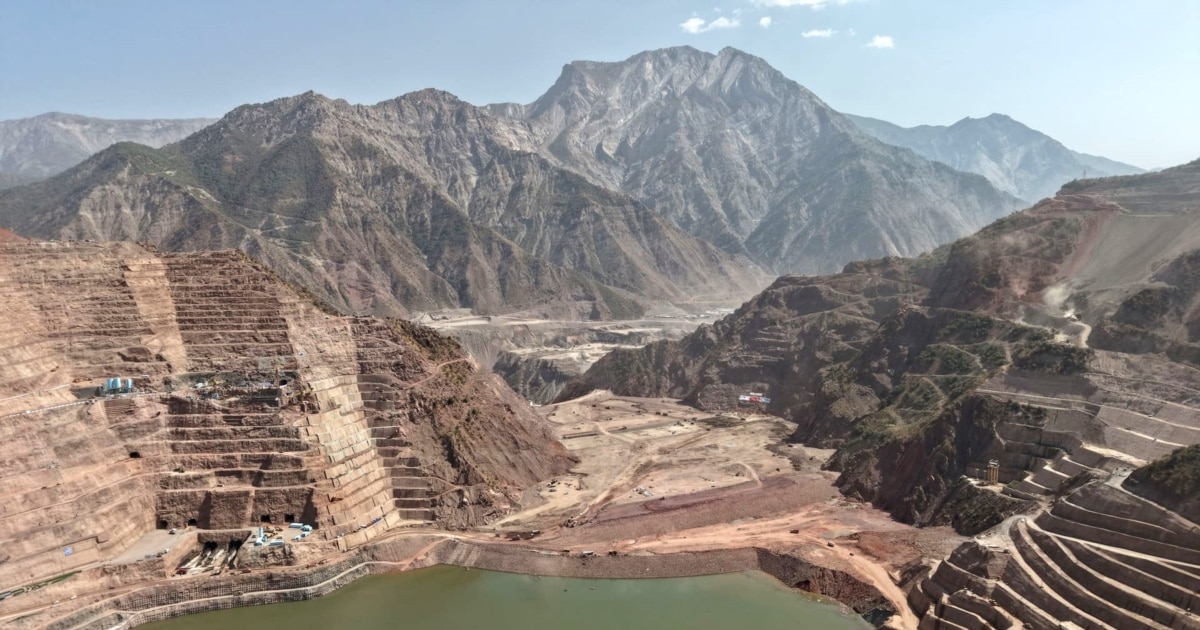
The Rogun dam is planned to reach 335 metres in height — taller than the Eiffel Tower — and to span a narrow gorge on the Vakhsh River about 100 kilometres east of Dushanbe. Tajik officials say the hydropower complex will roughly double the country’s electricity generation capacity, end chronic winter power shortages and create surplus energy for export, which could transform the nation’s economy. Two generating turbines are already operational; a third of six total units is expected to be online by 2027.
Despite those promises, the project carries immediate human-rights and social costs. Construction and reservoir filling will require the relocation of more than 50,000 people, according to project assessments cited in reporting. Some displaced residents have reported that compensation and resettlement packages promised years ago no longer match current prices because of inflation, and others say land allocated for cultivation has not been delivered. A 75-year-old farmer interviewed near Rogun said the promised payments would be largely eaten by rising construction costs and higher prices for basic materials.
Not all affected residents oppose relocation. Some resettled communities describe improved infrastructure, with new roads and electricity connections, and have said they are satisfied with their new homes. But critics point to what they say are avoidable displacements: environmental campaigners and technical analysts have argued that lowering the dam’s planned height by 35 metres could spare roughly 32,000 people from relocation. Opponents also warn that the reservoir will inundate villages and river valleys with long-term consequences for livelihoods.
Beyond social displacement, the site presents significant technical challenges. Engineers have identified a narrow layer of salt rock a few metres wide just above the dam site that could dissolve under reservoir pressure, a phenomenon that risks undermining the structure. The dam lies in an earthquake-prone region, prompting concerns about the potential for reservoir-induced seismicity. Reviewers have also found that Soviet-era work on the project requires extensive corrective reconstruction to meet modern safety standards.
The political and regional dimensions of Rogun have been fraught. The dam was conceived and started under the Soviet Union in 1976 but was abandoned after the USSR’s collapse and Tajikistan’s subsequent civil war. Downstream Uzbekistan long opposed the project, citing safety and fears that Tajikistan could use control of water flow as leverage. Opposition eased after the death of Uzbekistan’s long-time president Islam Karimov in 2016; in 2017 Uzbekistan’s foreign minister publicly encouraged Tajikistan to proceed while seeking guarantees on water use.
Experts note that recent backing from large multilateral banks makes the project more difficult to halt. Filippo Menga, an associate geography professor at the University of Bergamo who researches water politics in Central Asia, told Radio Free Europe/Radio Liberty that while new financing does not guarantee completion, the involvement of major lenders has tied their credibility to Rogun and “financially and politically, the project is now very hard to stop.” Environmental campaigners such as Eugene Simonov of the Rivers Without Borders coalition say the Tajik government has embraced the title of the world’s tallest dam as a national prestige project.
Tajik authorities argue that the record height yields superior economic and environmental performance compared with lower alternatives, a conclusion reportedly supported by World Bank studies. Yet substantial financing remains unresolved: Tajikistan still needs an estimated $5.8 billion to complete Rogun, most of which the government expects to supply from state coffers, and the project completion target is 2035. With geological, seismic, social and transboundary issues unresolved, Rogun’s progress is likely to remain a focal point for debates over development, human rights and regional cooperation in Central Asia.