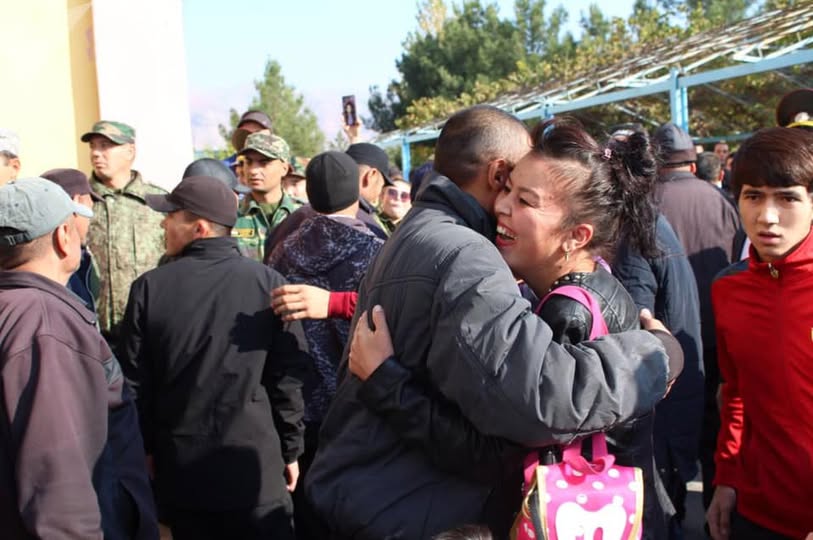
Tajikistan frees 8,008 inmates under presidential amnesty; juveniles and mothers with young children highlighted
Tajikistan has released 8,008 prisoners under a new amnesty law signed by President Emomali Rahmon on June 16, 2026. Justice Minister Muzaffar Ashouriyon said the law, published in Sadoi Mardum, will affect 18,038 people within two months through releases or sentence reductions and that implementation is continuing with special attention to juvenile offenders and mothers with young children.
By Manzuma Firuz , asia+
1,124 views
Tajikistan has released 8,008 inmates from correctional facilities under the country’s latest amnesty, Justice Minister Muzaffar Ashouriyon announced at a news conference in Dushanbe on July 21. The measure, signed into law by President Emomali Rahmon on June 16, 2026 and subsequently published in the official newspaper Sadoi Mardum, is expected to affect a total of 18,038 people within two months — some to be released outright and others to receive sentence reductions.
Speaking to reporters, Minister Ashouriyon said that implementation of the law is ongoing and that authorities are paying particular attention to juvenile and young offenders. “Under this law, 136 juvenile offenders have been released from correctional facilities. Only 32 inmates currently remain in the juvenile correctional colony,” he said, describing the early results of the amnesty’s application to minors.
The Justice Ministry also provided details on provisions for women serving sentences who are raising young children. According to the ministry, women prisoners are permitted to keep children under the age of three with them in correctional facilities. The state, the ministry said, supplies mothers and their children with food, milk and other necessities while the child remains in the facility.
At the request of the mother, a child may instead be placed in the care of relatives, Ashouriyon added. The ministry emphasized that children who remain with their mothers in prison are fully provided with the essentials required for their care.
President Rahmon’s instruction to officials to ensure proper implementation of the amnesty and to guard against corruption during the process was noted by the ministry. The amnesty law’s stated scope — affecting more than 18,000 people — sets a relatively tight window for authorities to identify eligible individuals, carry out releases, and apply sentence reductions where prescribed.
Officials have not provided a detailed breakdown beyond juvenile and women-related provisions in the initial announcement, and it remains unclear which categories of offenses or which inmate populations will be prioritized for release or sentence reduction. The Justice Ministry’s update indicates that the mechanism for applying the law is underway, but does not specify the administrative steps, oversight arrangements or timelines for completing the process for all those named in the legislation.
Large-scale amnesties are a frequent tool used by governments to reduce prison populations, mark national events, or respond to international and domestic calls for leniency. In Tajikistan’s case, the government’s formal publication of the law and the president’s public instructions to prevent corruption indicate a focus on procedural propriety, but details on independent monitoring or civil society access to information about beneficiaries have not been released in the ministry’s statement.
As implementation continues over the coming weeks, further updates from the Justice Ministry are likely to clarify how the remaining eligible cases will be handled and whether additional measures will be introduced to protect the rights of released individuals, particularly juveniles and mothers reintegrating into their communities. For now, the release of 8,008 prisoners marks the initial phase of an amnesty that the government says will touch more than 18,000 people across Tajikistan.