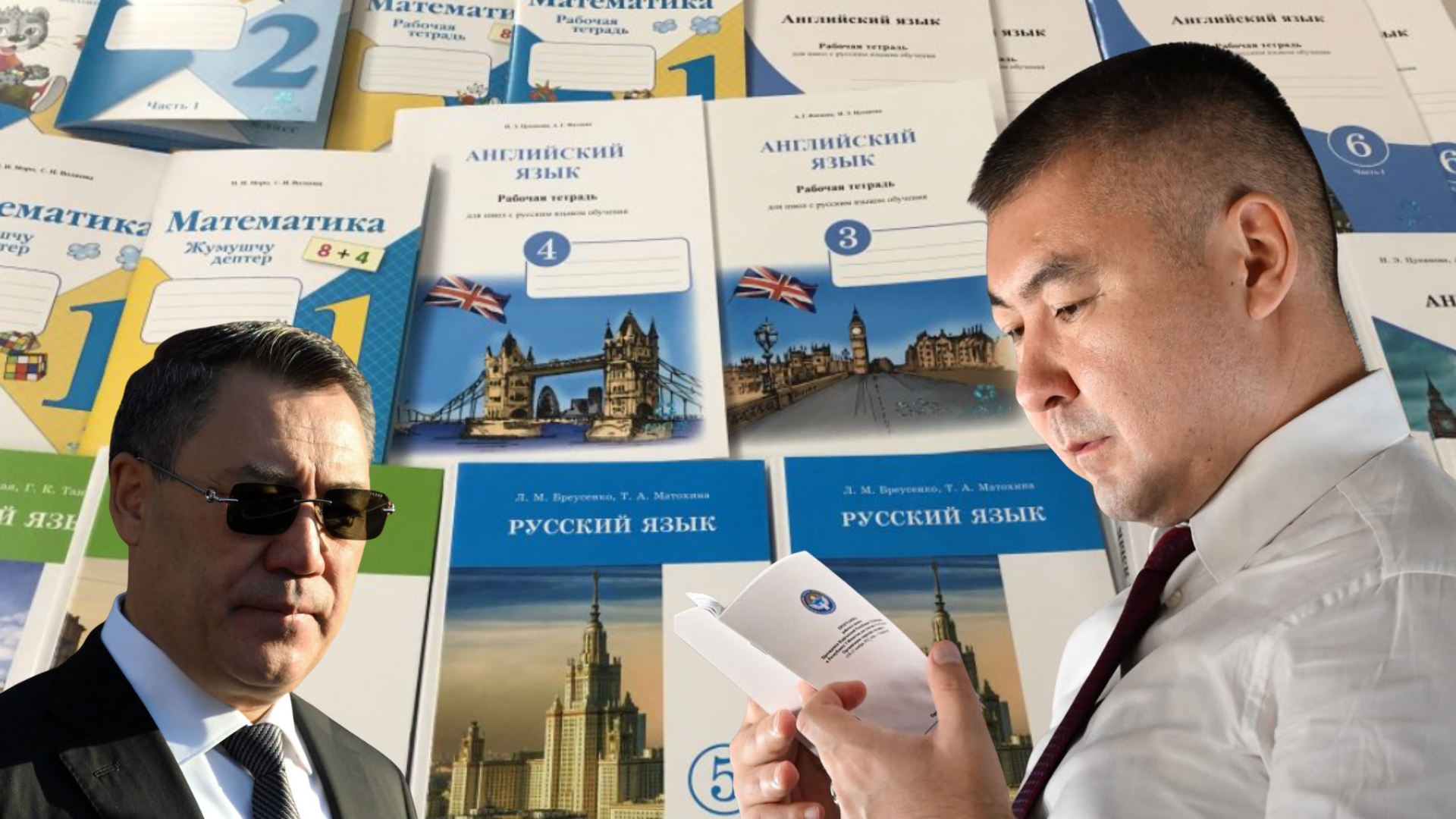
State-Printed Textbooks Scarce in Kyrgyz Schools as Same Editions Appear for Sale on Markets; Ministry Opens Probe into Uchkun
Parents say children receive only a handful of state-funded textbooks and must buy the rest, while identical books printed by the state publishing house Uchkun are appearing on markets for 500–1,000 som each. Uchkun, which was placed under the Office of the President and is overseen by Kanybek Tumanbaev, says it sold a 'small batch' to wholesalers; the Education Ministry has asked law enforcement to investigate and will add QR and bar codes to track distribution.
By Alexander Walter
890 views
Parents across Kyrgyzstan are reporting a persistent shortage of state-funded school textbooks, forcing many families to purchase books out of pocket even though those same titles are being sold openly on local markets. Social media users and parents told reporters that individual textbooks are being offered on market stalls for between 500 and 1,000 soms apiece, despite labels on some copies stating they are “not for sale.”
The textbooks in question are produced by the printing house Uchkun, which became the sole authorized publisher of school textbooks under a presidential decree signed by President Sadyr Japarov in October 2022. Uchkun had been placed under the authority of the Office of the President roughly a month and a half earlier, an office led by Kanybek Tumanbaev, a close associate of the president.
Journalists from Kloop and Temirov Live reported in July that Tumanbaev holds active Russian citizenship. Under Kyrgyz law, individuals with foreign citizenship are generally barred from holding certain leadership positions in state bodies. The presidency has not publicly responded to those findings, and Tumanbaev continues to head the Office of the President, which owns Uchkun.
Despite annual state spending of hundreds of millions of soms on the printing of textbooks and print runs measured in the millions of copies, many classrooms still lack full sets. The Ministry of Education (also referred to as the Ministry of Enlightenment) says that parents’ reports of shortages are being taken seriously and that it has asked law enforcement agencies to investigate the alleged sales of school books on markets.
In parliament, MP Dastan Bekeshov expressed outrage at the situation, saying that books stamped “not for sale” are nonetheless being sold on large marketplaces such as Dordoi. "There are no books in schools, and yet we sell them here in the markets. I don’t even know where they came from. This is corruption. Someone receives them from Uchkun and sells them while we finance print runs from the state budget so children should receive them free in school," he said.
Uchkun has acknowledged that it sold a "small batch" of textbooks to wholesalers who then placed them on the market. The ministry confirmed that only private schools may purchase textbooks directly from the printer under contract; state school textbooks are not meant to be sold.
The ministry outlined steps it plans to take to prevent further leakages of state-allocated books. Deputy Minister Mukhtarbek Baymurzayev said that the government spent about 900 million soms on textbook print runs in 2025 and plans to allocate 1.35 billion soms in 2026. He added that newly published textbooks will be distributed to all students and that families should not have to buy compulsory school books. Baymurzayev said the entire stock of school textbooks will be renewed over the next two to three years.
To improve traceability, the Education Ministry plans to print QR codes and barcodes on textbooks indicating the specific school for which each copy was issued. The ministry says such identifiers will allow authorities to track the movement of books and determine how copies intended for schools end up on the market.
The unfolding allegations raise broader questions about oversight of public procurement and the accountability of state entities tied directly to the presidential administration. With large public sums committed annually to textbook production and reports of missing or insufficient supplies circulating among parents and educators, investigators will need to establish whether the market sales reflect isolated errors, mismanagement in distribution, or a more systematic diversion of state property.
For now, parents and teachers continue to report shortages in classrooms while identical, state-printed textbooks are sold for hundreds of soms at markets, and authorities have launched steps intended to trace and curb the phenomenon pending the results of law enforcement inquiries.