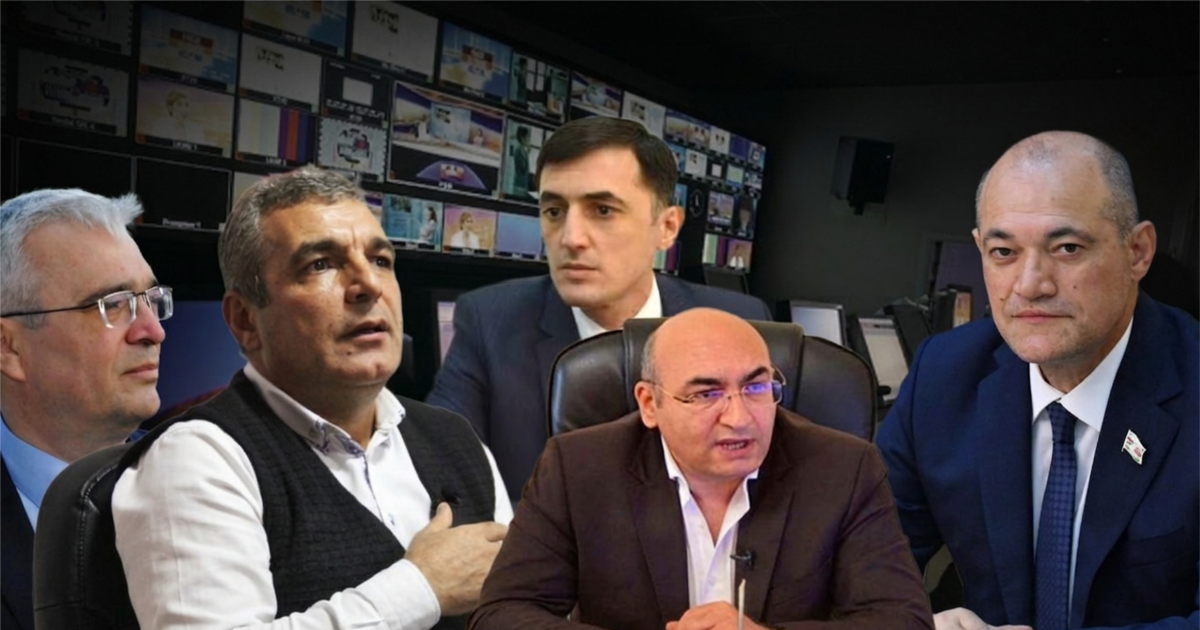
State-Controlled Outlets Feature Party Chairs as 'Experts' While Ignoring Their Parties, Monitoring Finds
Monitoring of media outlets under government control, including state television and official information agencies, indicates a recurrent editorial practice: political figures who engage in dialogue with authorities appear on air as purportedly impartial experts rather than as leaders of their political parties. At the same time, coverage of the parties these politicians represent — their statements, activities and political agendas — is largely absent from those same outlets.
By Vanessa Bergmann
1,110 views
Monitoring of media resources under government control in Azerbaijan, including state television channels and official information agencies, has identified a recurring editorial pattern in the treatment of political party leaders. According to the monitoring, party chairs who engage in dialogue with the authorities are frequently given access to broadcast programmes and media appearances, but they are almost never presented or identified in those contexts as representatives of their political parties.
Instead, these politicians are routinely invited on air and in other state-affiliated outlets as experts, analysts or commentators on international affairs or domestic policy matters. Their interventions are framed as expert commentary on topical issues rather than as direct expressions of their party’s views or political platform. Meanwhile, the parties these figures lead receive little or no coverage in the same media, with their official statements, policy positions and political activity effectively excluded from the public record offered by state-controlled outlets.
This editorial choice has multiple implications for political communication and pluralism. Framing party leaders as independent experts can obscure the organisational identity and policy agenda of the parties they represent. Audiences may hear analysis and opinions from a recognized public figure without being informed that those views reflect the platform or strategy of a particular party, thereby weakening voters’ ability to assess political alternatives and hold parties to account.
The pattern also raises questions about equal media access. When state-controlled outlets selectively grant visibility to individual politicians while denying coverage to the institutions they lead, the effect can be a narrowed public debate in which party structures and competition receive less attention. This editorial practice reduces the visibility of parties’ specific proposals, campaign activities and formal responses to government policy, potentially privileging official narratives and limiting the range of voices and perspectives available to citizens.
From the perspective of democratic norms and media pluralism, transparent identification of sources and their institutional affiliations is a fundamental standard. Independent, accurate reporting that clearly distinguishes between personal analysis and partisan positions helps citizens evaluate the interests and motivations behind public statements. When media present party leaders as neutral experts without disclosing their political roles, that distinction is blurred.
The reported pattern is especially consequential in environments where state-affiliated media outlets are dominant sources of information for large segments of the population. In such contexts, editorial decisions about who qualifies as an expert and which organisations or parties merit coverage shape the terms of political debate and the public’s understanding of competing policy options.
Improving transparency in how media introduce and contextualise guests, ensuring equal access for parties to present their platforms, and providing comprehensive coverage of party activities would strengthen public information and political accountability. Independent media and pluralistic broadcasting standards play an essential role in ensuring that citizens can evaluate not only the views of individual commentators but also the organised political alternatives those individuals represent.
The monitoring results draw attention to a subtle but important form of media control: not through outright exclusion of particular individuals, but through the reframing of who they are allowed to be in public discourse. That approach can limit meaningful political competition and reduce the information available to voters about organised political life.