Spanish police relocate hundreds of migrants from Ceuta beaches into new port tent camp amid clashes
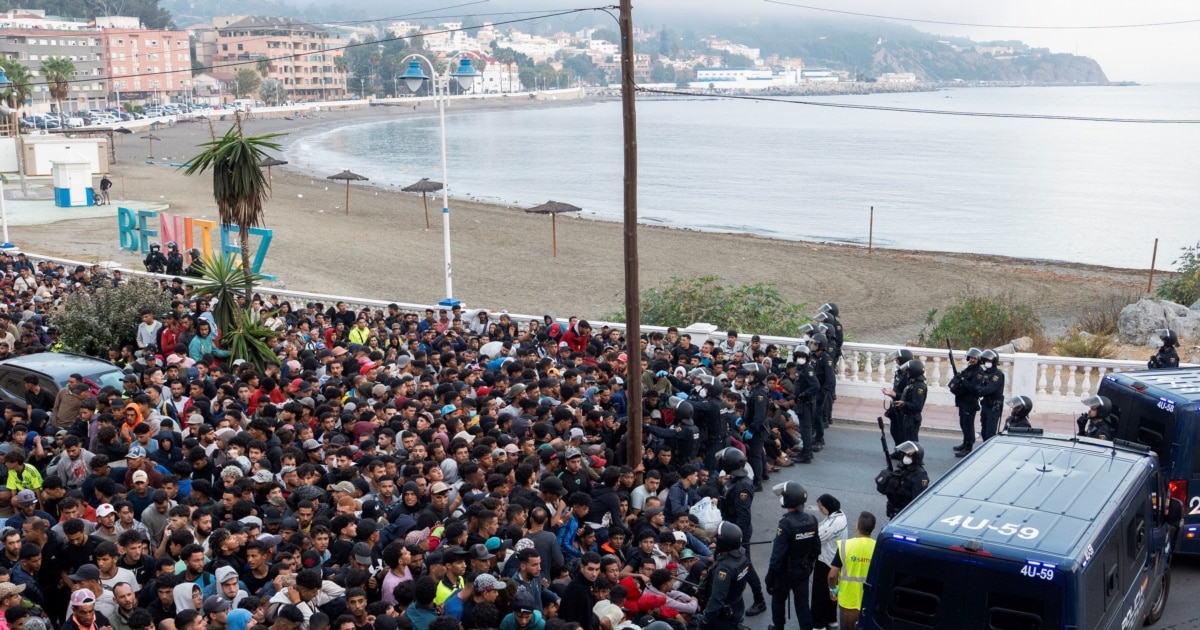
On September 18, Spanish authorities began moving hundreds of migrants who had been living on beaches in the north African enclave of Ceuta into a newly built temporary tent facility at the port. Riot police clashed with crowds vying for limited shelter places, firing rubber bullets into the air and striking people with batons as non-governmental organizations warned that thousands remain without accommodation.
By Vanessa Bergmann
1,116 views
Spanish police on Friday, September 18, initiated a large-scale operation to transfer hundreds of migrants who had been sleeping on beaches in the Spanish enclave of Ceuta into a newly constructed temporary camp at the enclave's port. Authorities said the new facility was built to provide emergency accommodation and to centralize migrants in order to identify them and determine their administrative status individually. The camp has capacity for about 1,700 people, and several hundred migrants were brought to the site during the initial phase of the operation.
The movement to the port camp was marked by scenes of disorder and force. Riot police struggled to control a pressing mass of people trying to secure spots in the shelter after weeks living in makeshift conditions on the shoreline. During the operation, officers fired rubber bullets into the air and used batons against people in the crowd, according to reporting on the scene. Migrants who had spent the night on the beach applauded at first as officials began moving groups, but the situation soon deteriorated into pushing and jostling as they competed for the limited available places.
Spanish authorities say the operation forms part of a government effort to gather migrants in facilities where they can be identified, assessed and provided with care while their legal and administrative cases are processed. Ceuta's local authorities estimate that thousands remain in the enclave following a mass arrival in late July, though figures vary: local officials put the number of people still present at around 13,000 while the Spanish central government has suggested the true number is lower. Non-governmental organizations working in Ceuta have raised alarms that, despite the new port facility, many people remain without shelter and continue to sleep outdoors in camps.
The recent turmoil in Ceuta followed an unprecedented influx at the end of July, when tens of thousands of migrants crossed from Morocco into the Spanish territory. The arrival spike occurred after Spain’s Supreme Court ruled that migrants intercepted at sea while attempting to reach Ceuta could not be summarily returned to Morocco. That ruling, combined with the spread of false information on social media offering assistance to cross the border, contributed to large numbers attempting entry by climbing border fences and by sea. Local authorities have said that at least 100 people died during that chaotic crossing, underscoring the lethal risk migrants face in the area.
Humanitarian groups have criticized the conditions migrants have faced in the weeks since the July influx, saying that shelter, sanitation, and basic services have been insufficient to meet the needs of those who remain. While the new port tents are intended as temporary accommodation, NGOs stress that centralizing people in such facilities does not resolve longer-term questions about asylum processing, family unity, and the legal rights of migrants under Spanish and international law. The groups are urging clearer plans for registration, access to legal counsel and protection from pushbacks or arbitrary detention.
Spanish riot police were deployed to manage the transfers and maintain order during the relocation operations. Authorities have framed the measures as necessary from a public order and humanitarian perspective: moving people into the port camp allows for medical checks, the provision of food and shelter, and the registration of individuals. Yet the reported use of force has provoked concern among human rights monitors and observers who say crowd-control methods should respect international standards and ensure the safety of vulnerable people, including those who may be fleeing persecution.
The situation in Ceuta remains sensitive politically and diplomatically. The enclave on the north African coast, which borders Morocco, is Spanish territory and a focal point of migrant crossings for people seeking entry to Europe. The summer influx brought renewed scrutiny on Spain’s border policies, the ability of local and national authorities to respond to mass arrivals, and the responsibilities of neighboring Morocco. For migrants themselves, the immediate questions are practical and urgent: access to shelter, medical care, legal assistance and clarity about their status.
As the operation continues, humanitarian organizations and local officials will monitor how effectively the temporary port facility serves its intended purpose and whether additional support is required to prevent further hardship. The broader legal and policy debates—about returns at sea, the treatment of migrants under court rulings, and the spread of disinformation that can endanger lives—are likely to persist as central issues shaping Ceuta’s response and Spain’s wider migration policy in the months ahead.