Seoul intelligence agency says North Korean leader Kim’s teenage daughter can reasonably be viewed as his heir
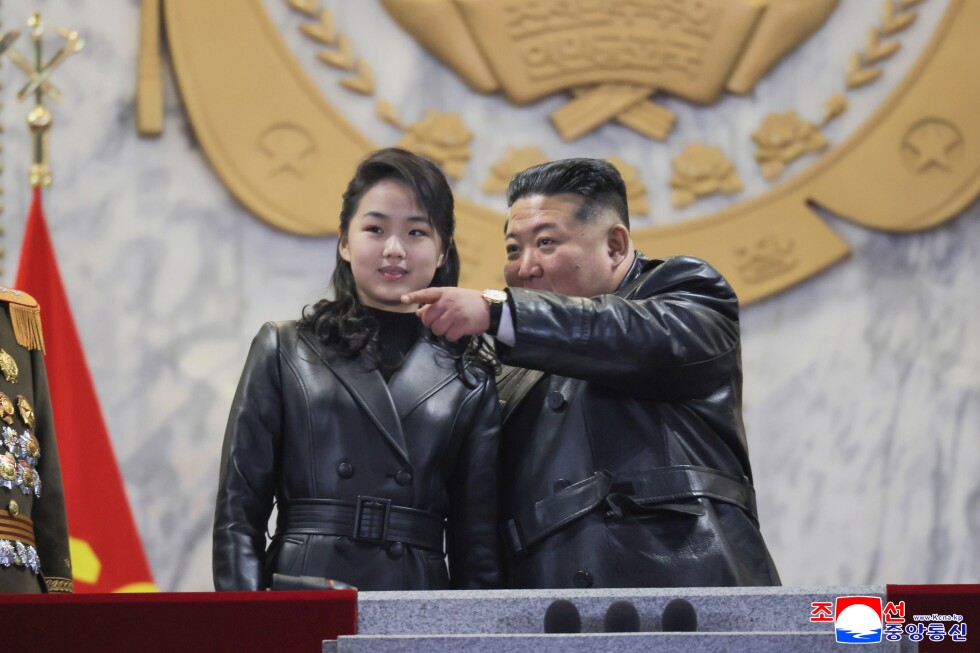
South Korea’s main spy agency told lawmakers that it is fair to view Kim Jong Un’s teenage daughter, Kim Ju-ae, as his likely successor. The rare public assessment by the National Intelligence Service underscores growing attention to succession dynamics in Pyongyang and the security implications for the region.
By HYUNG-JIN KIM
1,062 views
South Korea’s primary intelligence agency has told lawmakers that it is reasonable to view the teenage daughter of North Korean leader Kim Jong Un as his likely successor, a rare and striking public assessment about the secretive regime’s future leadership. The statement by the National Intelligence Service (NIS) signals Seoul’s judgment that Kim Ju-ae has moved into a visible role that could position her as an heir apparent.
The NIS assessment, made in a briefing to South Korean lawmakers, reflects heightened scrutiny of succession planning within the Kim family, which has ruled North Korea for three generations. The agency characterized it as “fair” to consider Kim’s daughter as his heir, a phrase that underscores both the uncertainty and the significance of the development. North Korea’s leadership choices are closely watched because of the country’s nuclear arsenal, military posture and the potential consequences for regional stability.
Over the past several years North Korean state media and official portrayals of the ruling family have drawn increased attention from outside observers. Analysts and officials in Seoul and elsewhere have noted that the regime selectively elevates figures close to Kim in coverage and staged appearances as a way of signalling internal power arrangements. The NIS statement indicates that South Korean intelligence views recent imagery and presentations involving Kim and his daughter as consistent with succession planning.
Succession in North Korea is consequential because the leadership exerts near-absolute control over the military, security services and the state’s nuclear and missile programs. Any transition, whether gradual or sudden, raises questions about continuity in policy, the regime’s internal cohesion and the potential for shifts in behavior that could affect diplomacy with the United States, South Korea, Japan and China.
The Kim family’s dynastic rule has precedent: Kim Il Sung, the state’s founder, was succeeded by his son Kim Jong Il, who in turn was succeeded by Kim Jong Un. Observers say that Pyongyang’s handling of any succession is typically opaque and tightly managed, with moves designed to minimize instability. South Korea’s NIS assessment adds an official layer to outside suspicions that the current leader is preparing a successor, and it may prompt closer watchfulness by regional capitals and international analysts.
Reactions from other governments and independent analysts are likely to focus on what the assessment means for North Korea’s future conduct—both domestically and in foreign and security matters. If Kim Ju-ae is being positioned as an heir, questions will arise about the degree of actual power she would hold, whether her role would be ceremonial or substantive, and how the inner circles of the regime might shift to support a new figurehead.
The NIS disclosure also underscores the role of intelligence services in shaping public and parliamentary understanding of North Korea. By sharing its judgment with lawmakers, the agency is informing policymakers and the public about how Seoul interprets signals from Pyongyang. That information could influence South Korea’s diplomatic posture and contingency planning.
While the NIS has framed its view as a fair assessment based on observable indicators, leadership transitions in North Korea are not deterministic. The opaque nature of the regime, the influence of senior military and party elites, and the potential for sudden changes all mean that uncertainty will persist. Nonetheless, Seoul’s public statement marks a notable moment in the long-running international effort to interpret developments inside one of the world’s most closed and consequential states.