Sent Back to a Country at War: Malaysia’s Return of Nearly 1,500 Myanmar Nationals
Malaysia’s return of 1,476 Myanmar nationals in September has raised questions about whether the operation was genuinely voluntary, and what happened to those sent back to a country still engulfed in conflict.
By Albina Kastrati
856 views
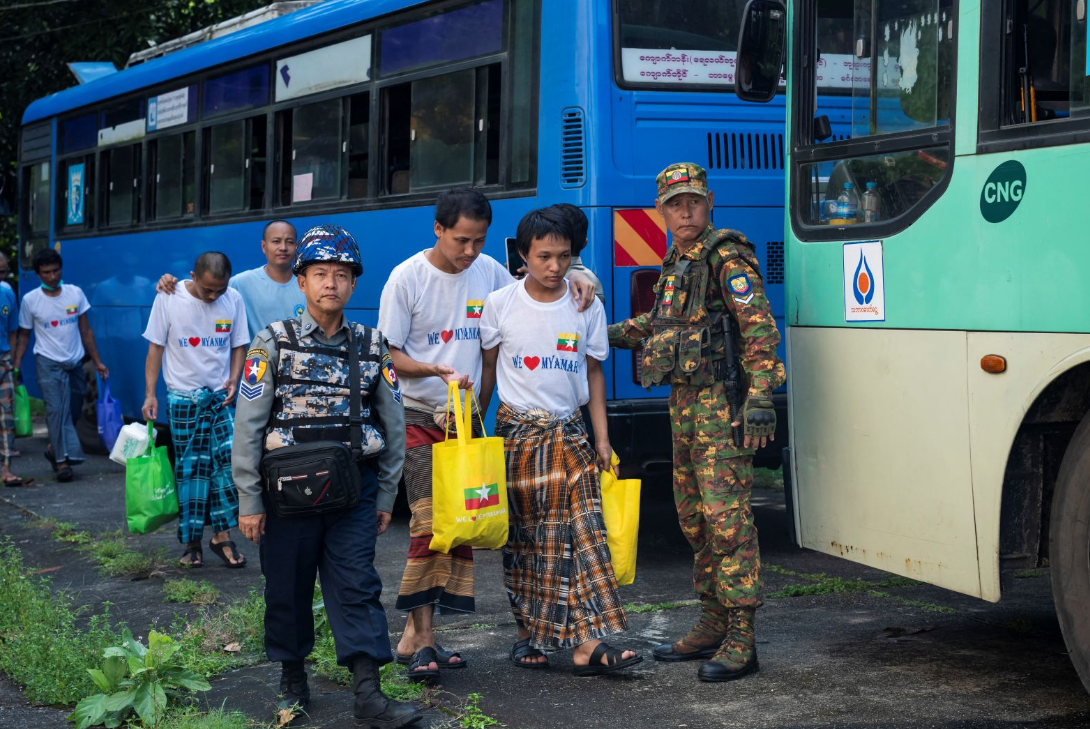
Photo: Myanmar migrants repatriated from Malaysia arrive at a temple in Yangon Region’s Thanlyin Township on October 4. (AFP)
The first phase of the repatriation programme took place on 29 September, when three Myanmar naval vessels, including a hospital ship, departed Malaysia carrying 1,370 men, 79 women and 27 children. The group had been held in 14 Malaysian immigration detention depots. Malaysian authorities described the operation as voluntary, saying the individuals had agreed to return and undergone citizenship, documentation, identity and health checks.
But the United Nations refugee agency questioned whether consent could be considered genuinely free and informed when those being returned had been held in immigration detention. UNHCR said it had not been given access to the individuals to assess their protection needs and warned that some could face serious risks in Myanmar. It called on Malaysia to ensure individual assessments and access to protection procedures before any return.
Kelley E. Currie, the UN Special Rapporteur on the situation of human rights in Myanmar, also urged Malaysia to halt the returns, warning that the risk of refoulement was substantial given the ongoing conflict and the possibility of persecution, torture and other serious human rights violations.
The concerns did not end when the vessels arrived. On 4 October, the returnees reached Yangon’s Thilawa Port. AFP journalists reported that they were taken by bus for immigration and health checks. Among them was 53-year-old Kyaw Swar Thein, who told AFP he had been detained in Malaysia for a year and eight months and had suffered from scabies. “I do not hope for anything,” he said, describing his uncertainty about the future.
In the weeks that followed, reports emerged that hundreds of ethnic Rakhine returnees had been held by Myanmar’s military after arriving in Yangon. The Irrawaddy, citing the Khamee Youth Unity Association and relatives of detainees, reported that more than 400 Rakhine people were transferred to temporary facilities in the Thanlyin and Hlaingtharyar townships for questioning. The association said 26 Khamee individuals were among those detained.
Some families were subsequently able to secure the release of relatives, but the process reportedly depended on providing identification documents. A relative of one released returnee told The Irrawaddy: “My younger brother was only set free yesterday.” The same report said families had been required to collect relatives before they could leave.
On 26 October, Malaysia’s Foreign Minister Mohamad Hasan told parliament that he had instructed the Malaysian chargé d’affaires in Yangon to investigate reports that around 300 returnees remained in military detention and to verify their physical condition and legal status. He said Malaysia would seek clarification from Myanmar. The reported figures have varied between outlets and accounts; the exact number detained, released or still in custody has not been independently established.
The programme also extends beyond the first group. Malaysian officials have said the two governments agreed on the return of 5,000 people in phases. On 6 October, Malaysia’s Immigration director-general said the process would continue beyond that initial figure, adding that the government wanted to see Myanmar nationals return if possible.
The questions surrounding the first phase therefore have implications for those who may be returned next: how consent is established in detention, whether people with potential protection needs are identified, and what safeguards exist once they reach Myanmar.
The Liberty Bulletin contacted Malaysia’s Ministry of Home Affairs and Myanmar’s Ministry of Foreign Affairs, as well as UNHCR Malaysia, Asylum Access Malaysia and Fortify Rights, seeking responses on the selection and screening process, the assessment of protection needs, the reported detention of returnees in Myanmar and the safeguards planned for further returns. No responses had been received by the time of publication.