Senate Passes Bipartisan Housing Package Aligned With Trump; Nine Republicans Oppose Over Digital Currency Language
The Senate approved the 21st Century ROAD to Housing Act 89-10, sending a broad housing reform package to the House despite objections from nine Republican senators and one Democrat who said a temporary ban on a central bank digital currency does not go far enough. Supporters, including Senate leaders and the White House, called the measure a compromise that will cut red tape, expand housing supply and restrict institutional investors from buying single-family homes.
By Andi Shae Napier
848 views
The Senate on Thursday approved a sweeping housing legislation package, the 21st Century ROAD to Housing Act, by a vote of 89-10, advancing measures supporters say will increase supply, reduce costs and curb institutional investors’ influence in the single-family housing market. While the vote was overwhelmingly bipartisan, nine Republican senators and one Democrat voted against the bill, citing concerns about language that places only a temporary restriction on a central bank digital currency (CBDC).
Republican Sens. Rick Scott of Florida, Mike Lee of Utah, Rand Paul of Kentucky, Ron Johnson of Wisconsin, Ted Budd of North Carolina, Todd Young of Indiana, Thom Tillis of North Carolina, Tommy Tuberville of Alabama, and Ted Cruz of Texas opposed the measure, joined by Democratic Sen. Brian Schatz of Hawaii. Democratic Sen. Cory Booker of New Jersey did not cast a vote. The dissenters focused their criticism on a provision that bars the Federal Reserve from issuing a CBDC only until 2030, a sunset that some lawmakers and critics say leaves open an eventual Federal Reserve on-ramp to a government-backed digital dollar.
Hard-line Republican members of both chambers have been pushing for a permanent prohibition on a Fed-issued CBDC. Supporters of a permanent ban argue that a digital dollar could give unprecedented power to the central bank, enabling control over individual transactions and threatening civil liberties. Some Democrats have also expressed concerns about the increasing role of cryptocurrency and digital payment technologies in policy debates in Washington.
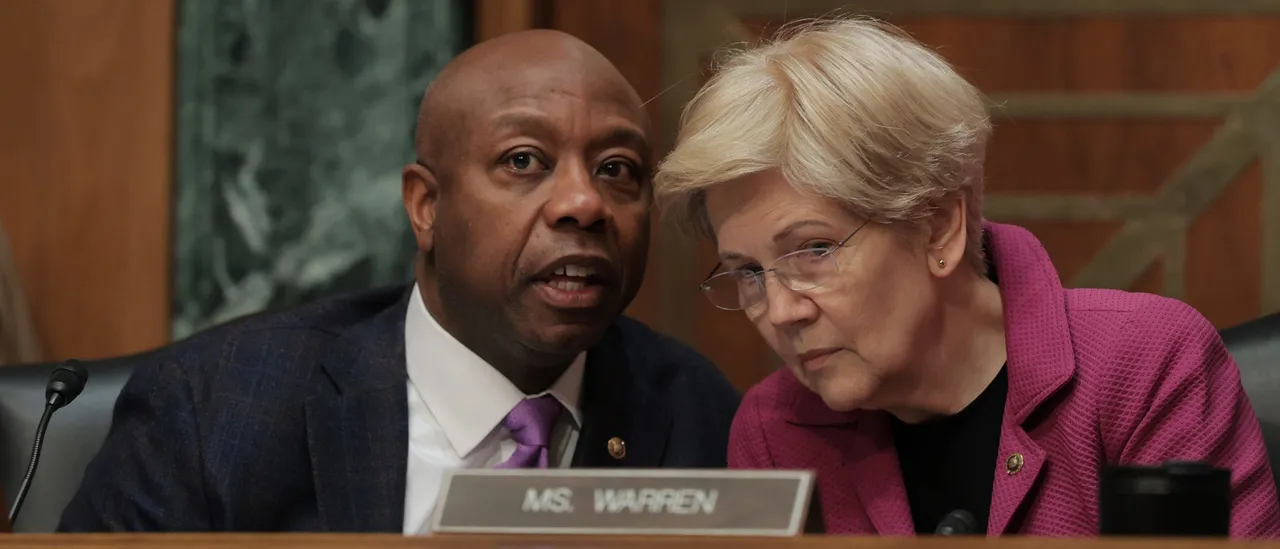
Leading Democrats and other supporters of the package defended the temporary language as a pragmatic compromise that secured broad bipartisan support. Sen. Elizabeth Warren of Massachusetts, the top Democrat involved in crafting the legislation, told the Daily Caller News Foundation that the provision’s temporary status is “a compromise that receives support from both the overwhelming majority of Democrats and Republicans.” She added that President Trump has voiced support for the bill in its current form. The White House has also publicly backed the measure, describing it as a balanced product that addresses housing affordability without new federal spending.
The Senate bill incorporates key elements of President Trump’s housing agenda, including language that aligns with his January executive order aimed at preventing institutional investors from buying up single-family homes. Supporters said embedding those provisions into the bill was important to protect individual homebuyers and curb market concentration. Republican Sen. Tim Scott of South Carolina, the lead GOP sponsor in the Senate, emphasized the bipartisan nature of the measure, noting in a television interview that lawmakers “put partisan politics aside” to create a package that reflects broad agreement on housing reform.
Despite the Senate’s decisive vote, the legislation will return to the House because the Senate version differs in parts from the measure the lower chamber passed in February. That means House members must consider amendments or enter negotiations with the Senate to reconcile differences, a process that could be time-consuming and politically fraught. If lawmakers fail to reach agreement quickly, key provisions could be delayed or altered in conference talks.
Sen. Raphael Warnock, a Democrat from Georgia, urged colleagues to focus on constituents over partisan interests, saying the bill could help families access homeownership and economic opportunity. Tim Scott framed the legislation as a tool to help everyday Americans, citing the example of “the single mom who raised me in North Charleston, South Carolina,” and arguing the bill would cut regulatory red tape, unlock supply and lower housing costs without adding new federal spending.
The measure enjoys endorsements from several major housing and policy organizations, including the National Association of Realtors, the National Association of Affordable Housing Lenders, the Bipartisan Policy Center, the National Low Income Housing Coalition and the U.S. Conference of Mayors. Proponents say those endorsements reflect broad demand for bipartisan action to address rising housing costs and constrain private equity from dominating the home-buying market. Opponents, however, continue to press for a permanent CBDC ban or other changes to ensure the Federal Reserve cannot deploy a digital currency in the future.
As the 21st Century ROAD to Housing Act moves back to the House, lawmakers will face the task of bridging lingering divisions over the CBDC language and other differences between the chambers. The outcome will determine whether the measure reaches President Trump’s desk in its current bipartisan form or is reshaped through further negotiation, with implications for housing policy, monetary authority oversight and the role of digital currency in the U.S. financial system.