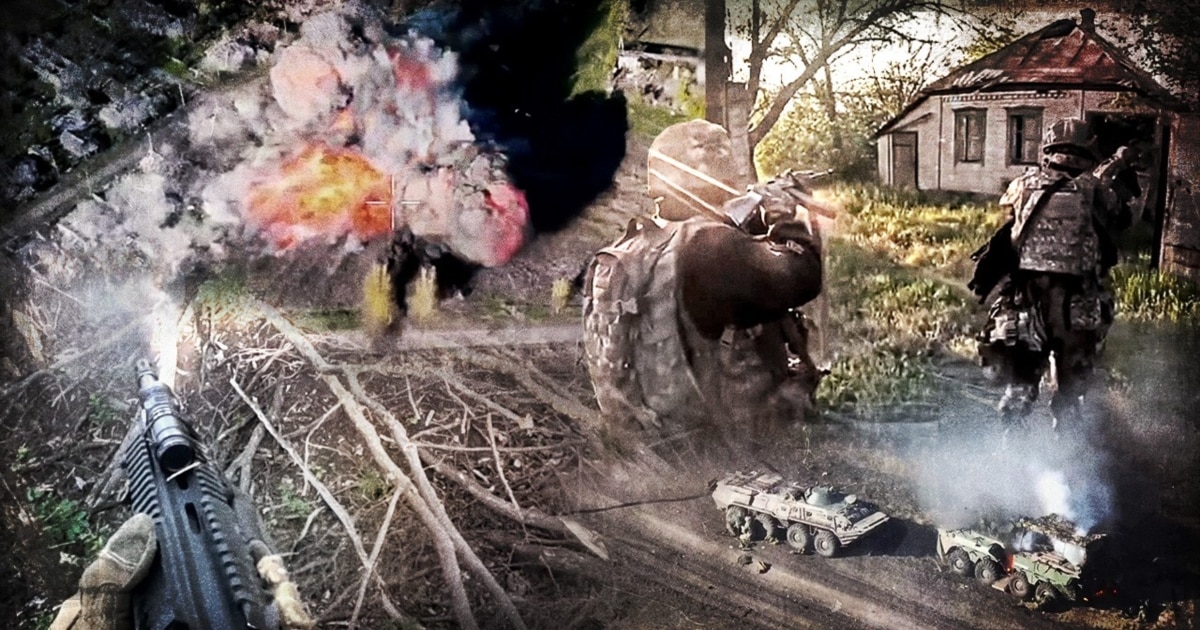
Secret Counteroffensive ‘Vivaldi’: How Ukraine Reclaimed 277 sq km and Struck Russian Supply Lines
Ukrainian commanders say a months-long, covert counteroffensive in the east, carried out by the Third Corps and dubbed Operation Vivaldi, liberated 277 square kilometres of terrain and severed key Russian supply routes. Officials speaking to Radio Free Europe/Radio Liberty say the operation inflicted a serious setback on Moscow’s efforts to take the entire Donetsk region.
By Christopher Manley
1,036 views
Ukraine’s Third Corps conducted a clandestine counteroffensive in the country’s eastern theatre that liberated 277 square kilometres of territory and disrupted Russian lines of supply, Ukrainian commanders told Radio Free Europe/Radio Liberty. The operation, known internally as “Vivaldi,” was kept secret for months before its results were disclosed to the international press, according to the commanders.
Operation Vivaldi, as described by those involved, combined careful operational security with targeted manoeuvres along the frontline. Maintaining secrecy for an extended period, the Third Corps sought to preserve the element of surprise and minimize operational exposure. Ukrainian commanders told RFE/RL that these precautions helped them recover ground while undermining the logistical networks that sustain Russian frontline forces.
The liberation of 277 square kilometres represents a meaningful local reversal of battlefield fortunes in eastern Ukraine, where control of territory has been contested since Russia’s large-scale invasion. Ukrainian officials framed the operation as more than a territorial gain: by severing or disrupting routes used to move personnel, equipment and supplies, the action directly affected Russian operational capabilities in and around the Donetsk region.
Commanders interviewed emphasized the strategic significance of disrupting supply lines. In modern ground campaigns, sustainment chains are essential for maintaining pressure and mounting further advances; interruptions can force opposing forces to slow operations, withdraw to more defensible positions, or limit their offensive options. According to Ukrainian accounts shared with RFE/RL, Operation Vivaldi achieved those effects in sectors where Russia was seeking to consolidate or expand control.
The disclosure of the operation’s results comes amid continued fighting across eastern Ukraine and ongoing international concern about humanitarian impacts on civilians in contested areas. While the commanders’ accounts focus on military outcomes, any shifts in frontline control have immediate consequences for civilian safety, displacement patterns, access to basic services, and the work of aid organizations attempting to reach those in need.
Keeping the counteroffensive secret for months also illustrates evolving Ukrainian operational tactics. Ukrainian military officials and analysts have repeatedly underscored the importance of surprise, deception, and careful force employment in countering the numerical and material advantages held by opposing forces. By withholding public details until the operation had achieved its primary objectives, the Third Corps reduced the risk of pre-emptive countermeasures and preserved the integrity of their plan.
Ukrainian commanders told RFE/RL that Operation Vivaldi delivered a heavy blow to Moscow’s ambitions in the Donetsk region, which Russian authorities have sought to incorporate into broader territorial gains. The commanders declined to provide sensitive tactical specifics publicly, but they asserted that the operation set back Russian plans in the area and created tactical opportunities for further Ukrainian actions.
The operation underscores broader questions about the trajectory of the conflict, the resilience of local supply and command networks, and how battlefield developments translate into political bargaining power. For civilians living near the affected areas, the immediate impact is measured in shifts in security, potential returns of displaced persons, and the continuing hazards of warfare, including unexploded ordnance and damaged infrastructure.
International observers and humanitarian groups will be watching closely to assess both the operational consequences of the counteroffensive and its human cost. While military gains can change the map of control, they also create urgent needs for protection, assistance, and accountability for potential violations committed during operations. The Third Corps’ revelation of Operation Vivaldi’s scale highlights a chapter of the conflict that, until now, had been waged in relative secrecy but carries clear implications for the military and humanitarian dynamics in eastern Ukraine.