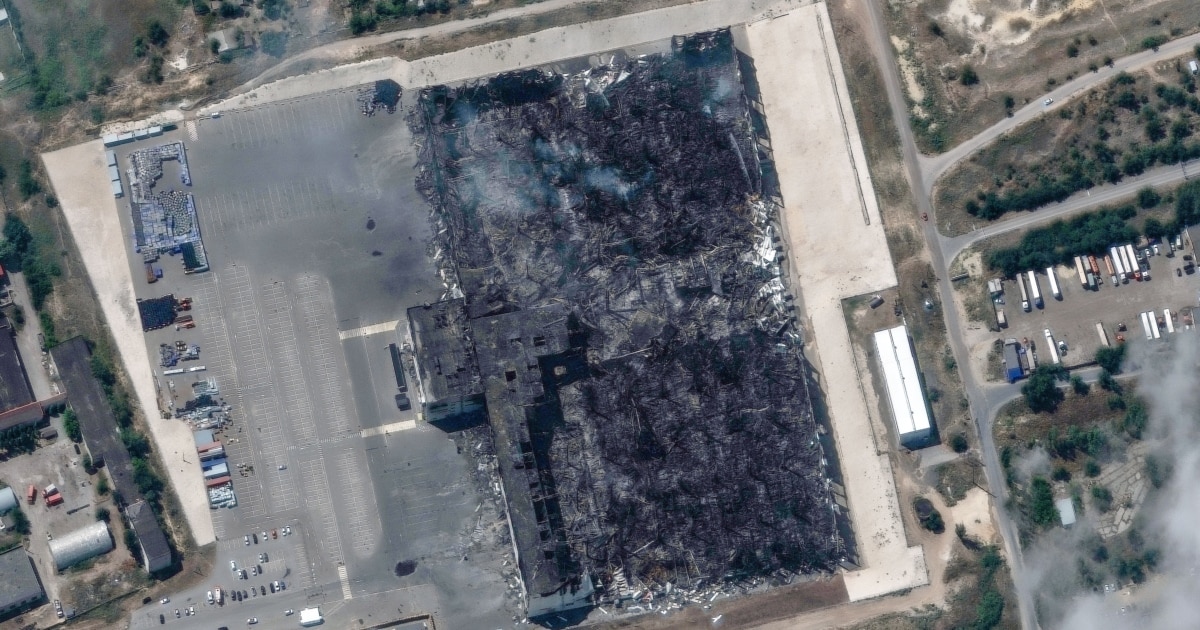
Satellite Images Show Damage to Wildberries Warehouses in Russia After Reported Ukrainian Drone Strikes
High-resolution satellite imagery released by imagery firm Vantor reveals damage to warehouses operated by Wildberries, the largest e-commerce retailer in Russia. The images come amid reports that the facilities have been targeted by Ukrainian drone strikes since mid-July, a development with potential implications for civilians, supply chains and questions of legal accountability.
By Alexander Walter
1,195 views
High-resolution satellite photographs published by the imagery firm Vantor show visible damage to warehouses operated by Wildberries, Russia’s largest online retailer. The images, circulated by Vantor and reported in local media, portray structural harm to logistic facilities that the publisher says have been struck in a series of Ukrainian drone attacks beginning in mid-July.
Wildberries is widely described in Russian and international media as the country’s dominant e-commerce platform — at times nicknamed the “Russian Amazon” — and operates a network of distribution and fulfilment centres across Russia. The publication of satellite imagery documenting damage at its warehouses underscores that the ongoing conflict has begun to affect commercial and civilian infrastructure beyond front-line battlefields.
The Vantor images themselves show burned or collapsed sections of large storage buildings and surrounding yards that appear disrupted. The firm’s release did not, in the material published alongside the images, specify the exact locations or offer casualty figures. The reporting on the images noted only that the facilities have been targeted by Ukrainian drone strikes since mid-July.
Attacks on logistics hubs and commercial warehouses can have cascading effects on civilian life. Warehouses used by large online retailers form a critical part of urban and regional supply chains for consumer goods, medical supplies, and other essentials; damage to these facilities can interrupt deliveries, reduce availability of commodities, and produce economic losses for businesses and workers linked to the sites. In contexts of armed conflict, damage to civilian infrastructure also raises questions about compliance with international humanitarian law’s protections for civilians and civilian objects.
The available reporting does not indicate whether there were casualties among warehouse employees, delivery drivers or nearby residents, nor does it provide an official accounting from Russian authorities or from Wildberries itself in connection with the Vantor images. Without such statements, public understanding is constrained to what can be discerned from remote imagery and secondary reporting.
These developments form part of a broader pattern of cross-border and asymmetric operations that have escalated in recent months, including the use of unmanned aerial systems to strike targets away from active front lines. The reported targeting of commercial logistics facilities signals a widening of the types of infrastructure being struck and has prompted debate among analysts and commentators about the implications for civilian harm and the legal and strategic calculus of both sides.
For now, the Vantor satellite pictures serve as visual documentation of physical damage to a high-profile commercial actor. They also illustrate how modern armed conflict can directly affect economic networks and civilian life far from traditional battlefields. Journalists and human rights monitors will likely watch for corroborating reporting, official responses, and any information about civilian casualties or disruptions to essential services linked to the strikes.
As further information becomes available, questions of accountability, proportionality and efforts to mitigate civilian harm will be central to assessing these incidents. The public release of satellite imagery contributes to transparency by providing data points that can be independently examined, but it also highlights the limits of remote observation in answering vital questions about responsibility and human impact.