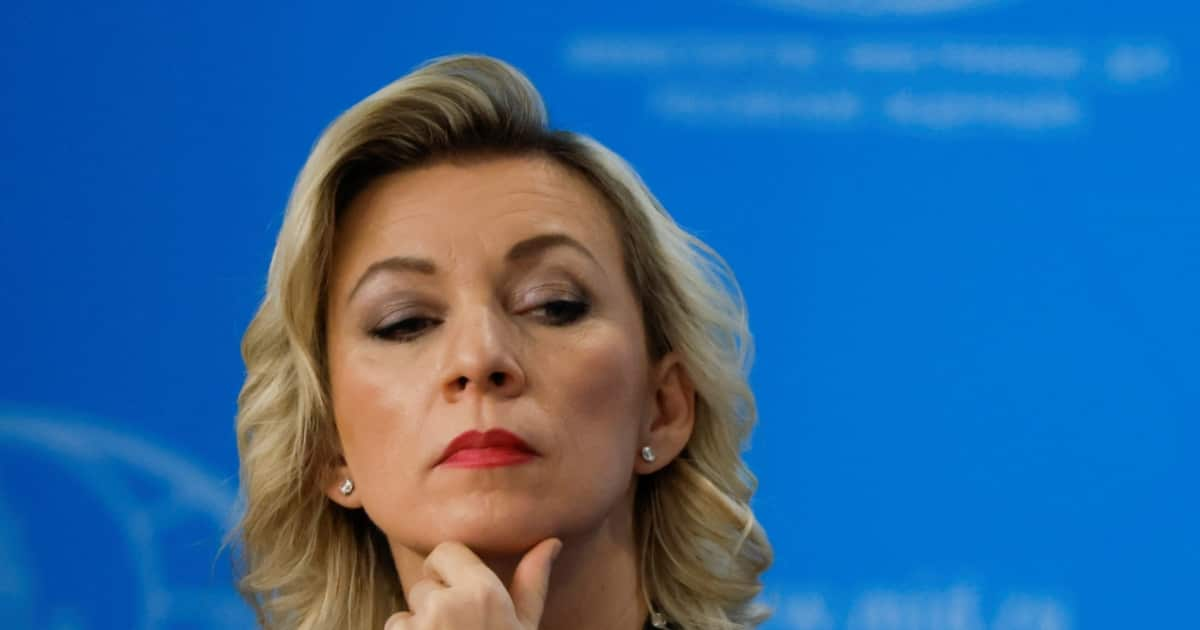
Russia’s Zakharova Says Zelensky Treats EU States 'As If They Were His Vassals' After Moscow Offers European Security Talks
Maria Zakharova, the spokeswoman for Russia’s Foreign Ministry, criticised Ukrainian President Volodymyr Zelensky for addressing European Union countries "as if they were his vassals," after Moscow said it had offered European governments the chance to visit Russia to explain their positions on regional security. The comments came amid Russian overtures for diplomatic engagement and statements from European leaders that some are prepared to negotiate over ending the war in Ukraine.
By Christopher Manley
596 views
Maria Zakharova, the official spokesperson for Russia's Foreign Ministry, on Tuesday publicly chastised Ukrainian President Volodymyr Zelensky for what she described as a demeaning tone toward European Union member states. In remarks to Russian news agency TASS, Zakharova said that "recently Volodymyr Zelensky has been speaking to the European Union countries as if they were his vassals," commenting on Kyiv’s objections to a Russian proposal aimed at inviting European representatives to Moscow.
The remarks followed a declaration by Russian President Vladimir Putin that Moscow had, through diplomatic channels, offered European countries the opportunity to visit Russia and present their positions on ensuring regional security. Putin’s statement was framed as an outreach to hear directly from European capitals, an offer that Ukraine’s president publicly opposed.
Western reporting, including from the BBC, has noted that some European leaders have said they are prepared to hold talks with Russia on measures that could help bring an end to the war in Ukraine. That willingness to engage with Moscow has been presented by proponents as a way to pursue a negotiated halt to hostilities, even as Kyiv and its supporters emphasise support for Ukraine and caution against concessions that could entrench Russian gains.
Zakharova’s comments argued that European governments had placed themselves in a subordinate position in relation to Kyiv by aligning closely with Ukrainian policy, and that those governments should either accept that stance and forgo public complaints or remember that they are independent states. "They themselves have put themselves in that situation," she said, according to TASS. "Either they accept that position and then have no reason to complain, or, nonetheless, they should remember that they are independent states."
The article carrying Zakharova’s remarks also referenced statements from other officials and commentators concerning possible multilateral engagement over the Ukraine conflict. It cites comments attributed to individuals named Kushner and to Russian officials including Deputy Foreign Minister Sergei Ryabkov, who has discussed preparations for visits by European representatives to Moscow to negotiate issues related to Ukraine.
The exchange underscores the diplomatic friction accompanying any initiative to involve European states directly in talks with Moscow. For Kyiv and its backers, invitations to Russia risk being portrayed as normalising or legitimising Moscow’s positions; for Moscow, outreach to European capitals can be presented as an attempt to broaden the negotiating table and shift diplomatic dynamics. The public spat between Zakharova and Zelensky highlights how public rhetoric remains an active theatre of contention as efforts at diplomacy proceed alongside ongoing military conflict.
The story appeared on the Armenian service of Radio Free Europe/Radio Liberty (Azatutyun) and drew on reports by Russian state media and the BBC. It reflects continuing tensions over the shape and participants of any potential negotiations aimed at ending the war in Ukraine, with competing narratives from Moscow and Kyiv about who should be heard, on what terms, and what participation by European governments would signify. As diplomatic exchanges continue, statements such as Zakharova’s are likely to influence public perceptions and political calculations in capitals across Europe and beyond.