Russia's Supreme Court Bars Anti‑War Yabloko From September Parliamentary Ballot
On August 10, Russia's Supreme Court disqualified the liberal Yabloko party from participating in parliamentary elections set for September 18–20, removing the only registered party publicly calling for an end to Moscow's war in Ukraine. The ruling, issued after a challenge by the nationalist Rodina party, was condemned by Yabloko leaders and human rights advocates as part of a broader crackdown on dissent since the February 2022 invasion.
By Christopher Manley
1,182 views
Russia's Supreme Court on August 10 ruled that the liberal Yabloko party may not participate in the parliamentary elections scheduled for September 18–20, denying voters one of the few institutional avenues for expressing opposition to Moscow's war in Ukraine. The decision came after a legal challenge from the nationalist Rodina party and follows the Central Election Commission's unexpected registration of Yabloko for the vote just weeks earlier.
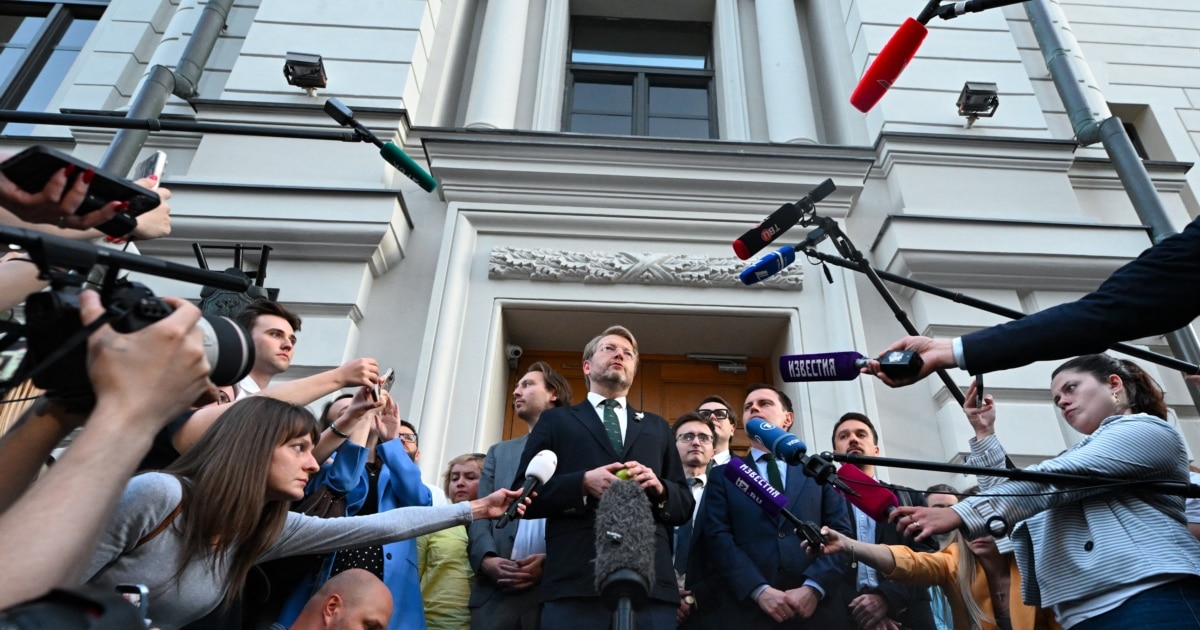
The hearing was held outside the court building, where hundreds of mostly young Russians gathered, and the court's decision swiftly dashed hopes among anti‑war activists that the upcoming elections would provide a platform for opposition to the conflict. The State Duma elections will determine the composition of the lower house's 450 seats at a moment when public debate over the war and its human costs remains acute.
Rodina's legal complaint, filed last week, accused Yabloko of a variety of infractions, including improper financing, copyright violations and allegations tied to extremism. At the hearing, Yabloko leader Nikolay Rybakov forcefully rejected those accusations, arguing that his party represents mainstream public interests. He told the court that the party acts in the majority's interest, saying "jer je očuvanje ljudskih života u interesu većine ruskih građana" and vowed that Yabloko would do everything possible to make Russia a "prosperous democratic state." The party said it would appeal the ruling and urged supporters "ne očajavajmo."
Observers noted that rulings in politically sensitive cases are widely believed to be directed by or closely coordinated with the Kremlin. The judge who heard the Yabloko case, Vyacheslav Kirilov, authored other controversial rulings earlier this year, including the decision to label prominent human rights group Memorial as "extremist." Human rights advocates say such legal actions form part of a growing legal and institutional squeeze on dissenting voices across Russia.
Analysts also suggested that the rapid registration and subsequent exclusion of Yabloko could reflect internal tensions within Russia's elite. Some factions—particularly security services and hardliners—appear intent on swiftly silencing anti‑war dissent, while others may favor allowing limited political space in anticipation of a possible end to the conflict. The legal back-and-forth around Yabloko has been interpreted as a public manifestation of those divisions.
The question of the war's longevity and human cost is central to the controversy. Polling indicates many Russians favor negotiations to end the fighting, which foreign and independent estimates say has resulted in the deaths of hundreds of thousands of Russian soldiers. Recent Ukrainian strikes on energy and other infrastructure, often far from the front line, have produced civilian casualties and heightened the war's immediacy for many Russian citizens, increasing pressure on political actors at home.
President Vladimir Putin has repeatedly rejected proposals for a ceasefire that would freeze current front lines, instead demanding that Ukraine cede territory and insisting that Moscow can achieve its aims either through diplomacy or force. Within this environment, political organizations advocating for an end to the war have faced escalating restrictions since the launch of the full‑scale invasion in February 2022.
Yabloko, founded in the 1990s, was once a notable force in the Duma, but its electoral fortunes declined as political space narrowed under Putin. The party has not won a seat since 2003 amid a political system critics say has increasingly favored the Kremlin‑backed United Russia party through restrictions and allegations of electoral malpractice. The Supreme Court's decision to block Yabloko from this year’s ballot further reduces the visibility of organized anti‑war voices in a pivotal election that will shape Russia's political course amid an ongoing international conflict.