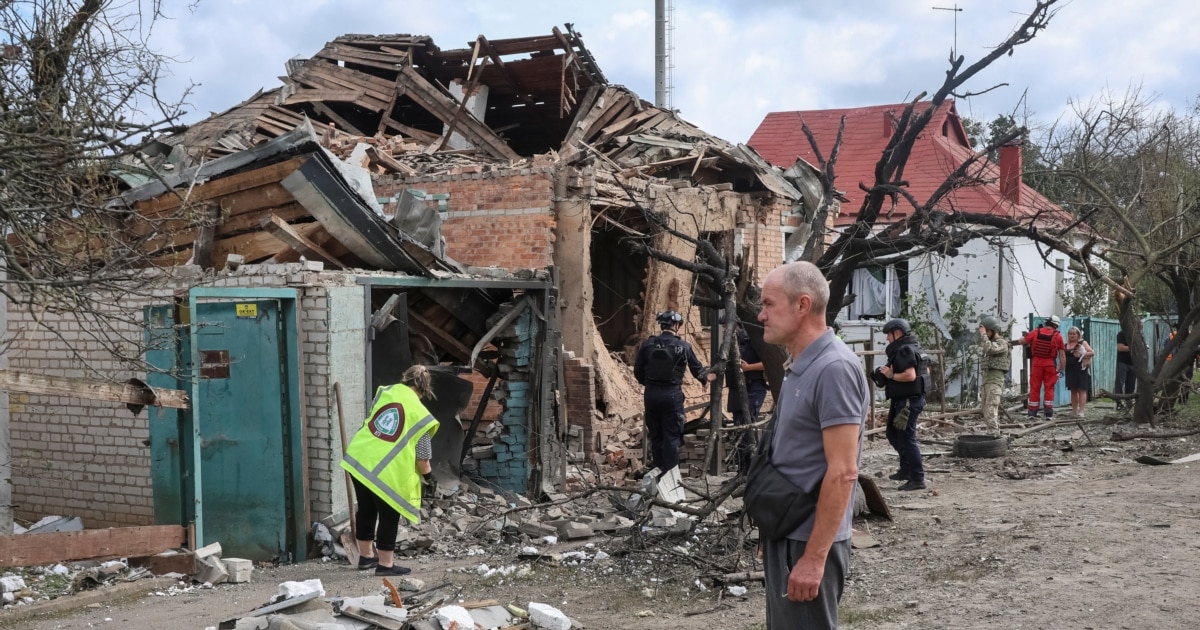
Russian Strike Sets Fire to RNK‑Ranok Warehouses in Kharkiv, Destroying School Textbooks; One Person Missing
On 1 August, warehouses of the Ukrainian publishing corporation RNK‑Ranok in Kharkiv were hit in an attack that ignited a large fire, destroying school textbooks, the company’s supervisory board chair said. Firefighters worked to extinguish the blaze, and authorities later reported one person missing amid the wreckage as officials reiterated concerns about repeated strikes on civilian infrastructure.
By Blake Marriott
1,088 views
Warehouses belonging to the Ukrainian publishing corporation RNK‑Ranok in Kharkiv were struck in an attack on 1 August that ignited fires and destroyed large quantities of school textbooks, the company’s supervisory board chair reported. Віктор Круглов, head of the RNK‑Ranok supervisory board, posted an immediate account of the incident, writing: "Приліт на склад «Ранка» в Харкові. Горять підручники".
Local rescuers and emergency services responded to the scene and worked to extinguish the blaze, according to the initial reports. Authorities later said one person was missing following the strike. Details about casualties beyond that missing person were not provided in the initial account published by Radio Svoboda.
The incident is the latest in a pattern of attacks on Ukrainian cities and civilian infrastructure attributed to Russian forces since the start of the full-scale invasion. Russian strikes on populated areas have employed a range of weapons, including strike unmanned aerial vehicles, missiles, KAB-guided aerial bombs and multiple-launch rocket systems, according to reporting that summarizes the methods used in previous attacks.
Ukrainian officials and international organizations have consistently condemned strikes on civilian targets and critical infrastructure, describing them as war crimes and emphasizing their often deliberate nature. Attacks that damage or destroy systems essential to civilian life — electricity, heating, water supply, communications and medical facilities — have been pointed to as part of a campaign that inflicts prolonged suffering on noncombatants and, in some statements, as indicative of actions with genocidal character.
The targeting of a major textbook publisher’s warehouses carries particular significance because it affects education and the availability of learning materials for children and students. Beyond the immediate human cost of possible injuries and the risk to life among those present at the site, the destruction of textbooks and educational supplies has broader consequences for schooling, curriculum distribution and cultural infrastructure in a city already strained by conflict.
Russian authorities have repeatedly denied that their armed forces carry out deliberate strikes on civilian infrastructure, hospitals, schools and other nonmilitary targets, despite documentation and condemnation from Ukrainian officials and multiple international bodies. The strike on RNK‑Ranok’s warehouses adds to international scrutiny over the conduct of hostilities and the need for accountability for attacks that hit civilian objects.
Emergency responders’ efforts to put out the fire and account for those affected will determine the immediate human toll, while the loss of printed educational resources may require long-term steps to replace materials and ensure continuity of education in the affected areas. The episode underscores the broader humanitarian and legal questions arising from repeated strikes on nonmilitary targets in populated areas of Ukraine, and it is likely to feature in ongoing calls by Ukrainian authorities and rights groups for investigations and accountability under international humanitarian law.
Further reporting is needed to establish the full scale of damage to RNK‑Ranok’s facilities, confirm the status of the person reported missing, and determine whether the strike will prompt additional inquiries by Ukrainian investigators or international monitoring bodies. For now, the fire at the publisher’s warehouses stands as another instance where civilian life, livelihoods and vital peacetime infrastructure have been directly affected by the conflict.