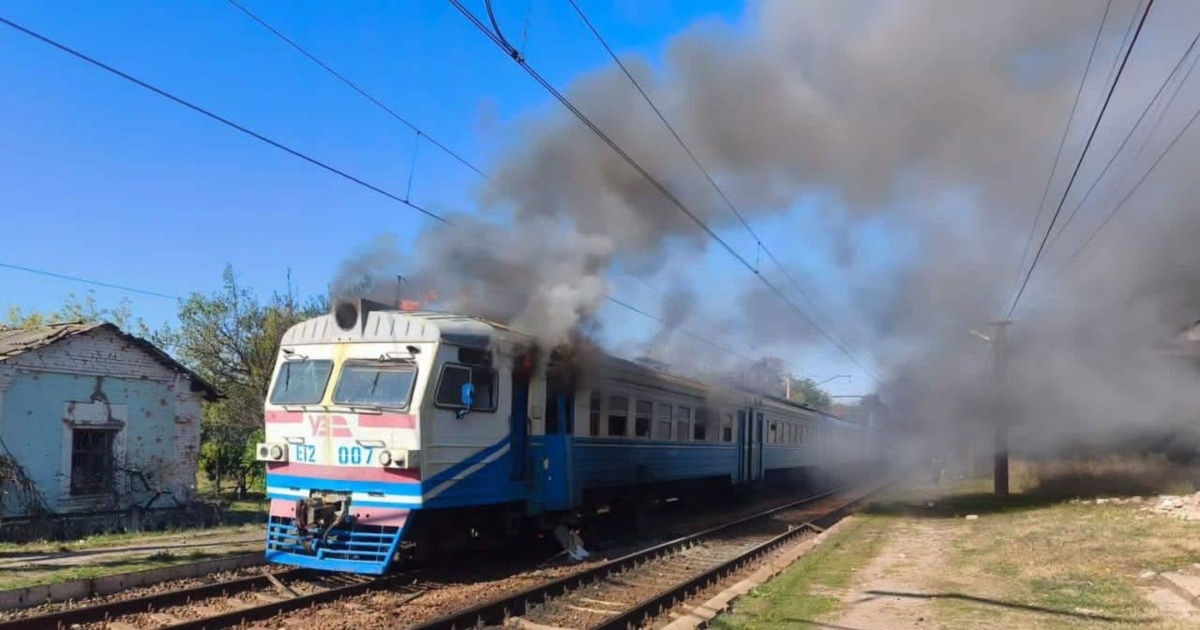
Russian strike on Kharkiv passenger train kills one and wounds seven, officials say
A passenger train in Ukraine’s Kharkiv region was struck in what officials say was a Russian attack, killing a 40-year-old man and injuring seven others. Ukraine’s national railway and regional authorities reported the strike hit an electric multiple unit in Novovodolazka district, underscoring escalating damage to Ukraine’s rail infrastructure.
By Clémence Desjardins
933 views
Russian forces struck a passenger train in Ukraine's Kharkiv region on [date not specified in original report], killing one person and injuring seven others, Ukrainian railway officials and regional authorities said. The attack occurred in Novovodolazka district and involved an unmanned aerial vehicle reportedly striking an electric multiple unit, according to the head of the Kharkiv regional military administration.
Oleksandr Peretsovskyi, chairman of the board of Ukrzaliznytsia, Ukraine’s state railway company, said the train was brought to a halt to carry out an evacuation when it was hit. In initial comments he told reporters that two people were wounded after failing to follow instructions from the train crew and remaining on the platform; those people sustained serious injuries. Peretsovskyi emphasized that passengers must obey railway staff during emergency evacuations, calling compliance a key way to survive “treacherous enemy strikes.”
Kharkiv regional governor Oleh Syniehubov later provided a revised toll, saying the strike killed a 40-year-old man and wounded seven others. Rescue teams and medical personnel were dispatched to the scene, Syniehubov said. Officials described the information as preliminary as emergency services continued work at the site.
The attack on the passenger train follows a pattern of strikes that have increasingly targeted Ukraine’s transport and logistics infrastructure since Russia’s full-scale invasion. Citing data compiled by Politico, the report noted that Russian forces have damaged or destroyed more than 500 locomotives since the invasion began, with over 60 percent of those losses occurring in the last eight months. According to the same reporting, Ukraine’s rail network has been losing roughly 37 to 40 locomotives per month.
The Russian Ministry of Defence has openly acknowledged carrying out strikes on trains, framing such attacks as part of a strategy to degrade Ukraine’s logistics and transport capabilities. Targeting rail lines, rolling stock and rail infrastructure directly affects Ukraine’s ability to move civilians, humanitarian aid and military supplies, and raises serious concerns about the protection of civilians and civilian objects under international humanitarian law.
Ukrzaliznytsia and regional authorities stressed that the attack had immediate human consequences — deaths and injuries — and broader implications for civilian mobility and emergency response in areas under threat. Railways in eastern and northern Ukraine have served both as lifelines for evacuation and as critical supply routes during the conflict, making attacks on trains particularly disruptive and deadly for non-combatants.
Emergency services continued their response at the site of the strike, and officials described casualty figures as preliminary pending further verification. The incident adds to a growing list of attacks on civilian infrastructure that aid agencies and rights groups have repeatedly condemned for endangering civilians and undermining humanitarian access. Observers say such strikes highlight the urgent need for accountability for attacks that hit civilian targets and for measures to better protect civilians who remain reliant on transport networks during wartime.
The situation remains fluid, with Ukrainian authorities continuing investigations into this and other recent attacks on rail and transport infrastructure. For now, the confirmed death and multiple injuries from the Kharkiv-region strike serve as the latest example of the toll the conflict continues to take on ordinary civilians and on the country’s critical infrastructure.