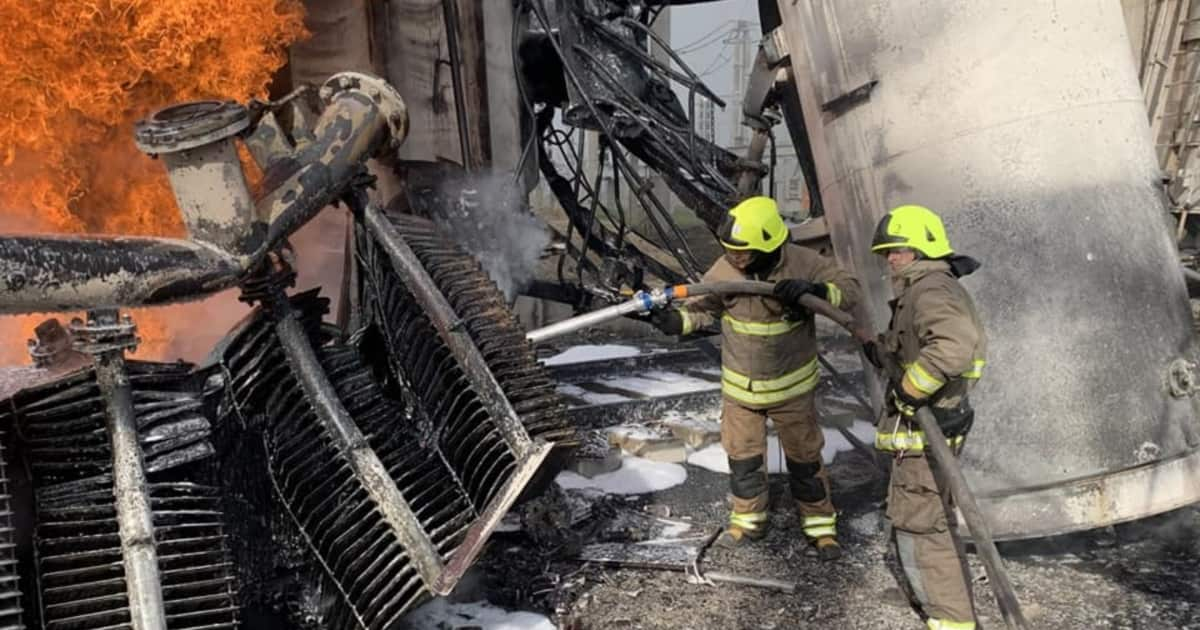
Russian Strike Hits Railway Station in Zhytomyr Region; One Person Injured, Fire Extinguished, Official Says
Russian forces struck the railway station in the Ovruch community of Zhytomyr region on 21 November, injuring one man and sparking a fire that emergency crews had fully extinguished by 17:00, regional governor Vitaliy Bunechko reported. The incident adds to a pattern of attacks on Ukraine's civilian infrastructure that Kyiv and international bodies have described as deliberate and potentially amounting to war crimes.
By Alexander Walter
663 views
Russian forces struck a railway station in the Ovruch community of Zhytomyr region on 21 November, injuring one person and setting off a fire that was later extinguished, the head of the regional military administration, Vitaliy Bunechko, reported.
According to Bunechko, medical teams transported the injured man to a healthcare facility where he is receiving treatment. The strike ignited a blaze at the scene; State Emergency Service of Ukraine (DSNS) units responded and, he said, had the fire completely under control by 17:00 local time.
The attack on the railway station is part of a wider campaign of strikes that Ukrainian officials say regularly target cities and civilian infrastructure across the country. Ukrainian authorities say Russian forces employ a range of weapons in these assaults, including attack drones, missiles, guided aerial bombs and multiple-launch rocket systems (MLRS), causing civilian casualties and damage to essential services.
Kyiv and many international organisations view these strikes as deliberate assaults on civilian life and infrastructure. Russian authorities, however, deny that their military carries out targeted strikes on civilian facilities during the full‑scale war. The differing characterisations of such attacks have fuelled sharp international criticism and calls for accountability.
Legal experts, researchers and human rights defenders cited by Ukrainian authorities and media argue that the systematic targeting of life‑support systems and health facilities — intended to deprive people of electricity, heat, water, communications and medical care — can amount to elements of grave international crimes. These observers contend that, taken together with other documented actions, such measures could fall within the scope of the 1948 Genocide Convention or constitute war crimes under international law.
Those experts point to a range of alleged actions that they say illustrate a broader pattern: statements by senior Russian officials and other representatives denying the existence of Ukrainians as a distinct nation and making public calls to destroy them; targeted strikes on civilian infrastructure and health facilities; persecution and killing of individuals with pro‑Ukrainian views on occupied territories; policies aimed at erasing Ukrainian identity in occupied areas, including the forced assimilation of children and removal of Ukrainian cultural materials; and the forcible transfer or deportation of children to Russia.
The Genocide Convention, adopted by the United Nations General Assembly in 1948 and ratified by 149 states, defines genocide as acts committed with intent to destroy, in whole or in part, a national, ethnic, racial or religious group. It lists key indicators, including the killing of group members, causing serious bodily or mental harm, deliberately inflicting conditions calculated to bring about a group's physical destruction, imposing measures intended to prevent births, and forcible transfer of children from one group to another. Human rights organisations and legal analysts monitoring the conflict say evidence of multiple categories of crimes requires investigation and accountability.
The strike in Zhytomyr region occurred amid continued aerial and drone activity over Ukraine. Ukrainian Air Force reports published on the same day said air defenders had shot down 117 Russian drones overnight, with strikes recorded in 19 locations. Such exchanges underscore the intensity of the campaign and the continuing risk to civilians and civilian infrastructure across multiple regions.
The Ovruch incident is one of many recent attacks that have drawn condemnation from Ukrainian officials and rights groups, who call for international investigation and enforcement of international humanitarian law. Emergency responders, health services and local authorities continue to face the challenge of protecting civilians and maintaining essential services amid repeated strikes.