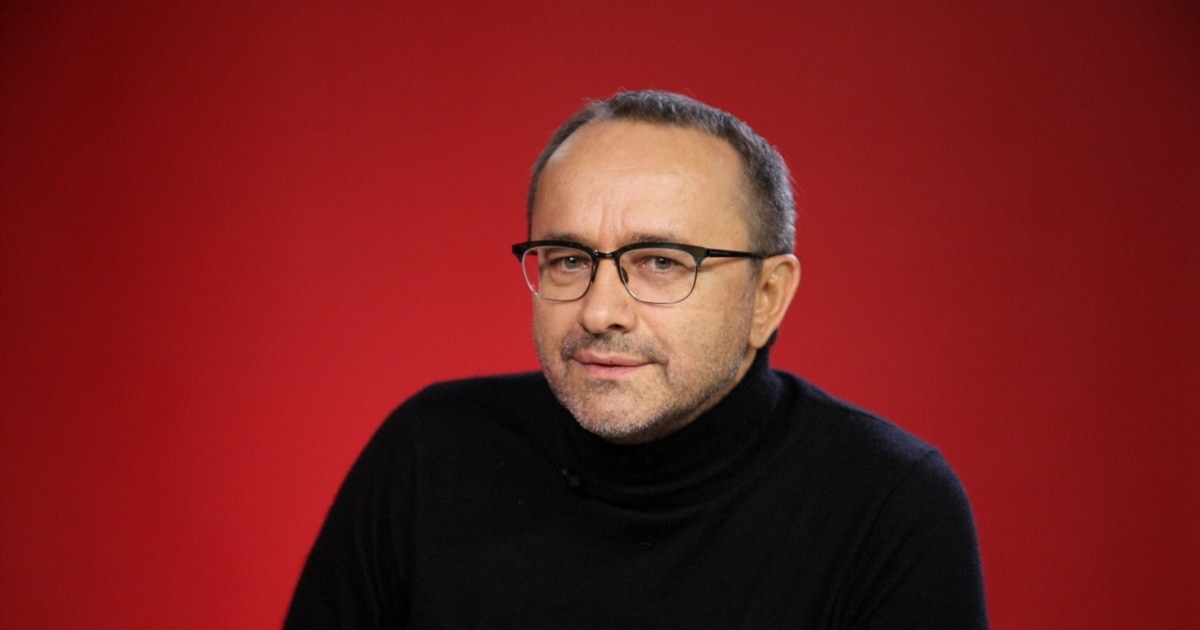
Russian Justice Ministry Adds Filmmaker Andrey Zvyagintsev to 'Foreign Agent' List
Russia's Ministry of Justice announced on 18 September that film director Andrey Zvyagintsev has been designated a "foreign agent," joining a list that also includes activists, a journalist, an opposition figure and the project "Anarchist-35." The label, created under a 2012 law, carries legal restrictions and has increasingly been used to pursue criminal cases and other punitive measures against critics and independent voices.
By Alexander Walter
1,105 views
On 18 September, the Russian Ministry of Justice placed film director Andrey Zvyagintsev on its registry of "foreign agents," listing him alongside blogger and activist Pavel Ivanov, journalist and writer Mikhail Shevelev, Kazakh opposition figure Erzhan Turgumbay and a project called "Anarchist-35." The move formalizes state scrutiny of these public figures and civic initiatives under a law critics say has been used to stifle dissent and constrain independent activity.
The so-called "foreign agent" framework was introduced in Russia in 2012. Under the law, non-governmental organizations, media outlets and private individuals can be designated as "foreign agents" if authorities determine they receive foreign funding, engage in broadly defined "political activity," or are subject to "foreign influence." Once labeled, entities and people face a range of obligations and restrictions intended to mark and regulate their operations.
The status carries legal consequences that go beyond reputational damage. The designation imposes reporting duties and public labeling requirements and limits certain rights. Importantly, it creates a legal basis for criminal prosecutions: authorities may open criminal cases for what they describe as "failure to fulfill the obligations of a foreign agent," a charge that in recent years has been applied in numerous cases against designated individuals and organizations.
Data cited by observers point to a severe tightening of enforcement since the law's adoption. By 2022, roughly one in five people or organizations on the foreign agent registry had faced criminal proceedings, and nearly one in seven were listed as wanted, held in pre-trial detention, or subject to other coercive measures. Those patterns highlight both the punitive potential of the designation and its use as an enforcement tool against perceived political opponents.
The list of those added on 18 September spans cultural, journalistic and activist spaces. Alongside Andrey Zvyagintsev, the ministry named Pavel Ivanov, described as a blogger and activist; Mikhail Shevelev, identified as a journalist and writer; Erzhan Turgumbay, a Kazakh opposition figure; and the project "Anarchist-35." The inclusion of a Kazakhstan-based opposition actor underscores the cross-border reach of Moscow's designation practices, which have at times been applied to foreign nationals and transnational projects.
Human rights advocates and press freedom organizations have long argued that the foreign agent law functions as an instrument of political control. They say the label carries a chilling effect: it deters independent reporting, curtails civic activism, and stigmatizes recipients of any foreign funding, even when that support is limited or unrelated to political work. For journalists, writers and cultural figures, the consequences can include restricted platforms, reduced ability to receive financial support, and increased legal vulnerability.
The ministry's announcement did not, in the public report, include detailed explanations of the specific grounds or evidence used to justify each designation. Historically, Russian authorities have cited a combination of funding links, public commentary, participation in public affairs or cooperation with foreign entities when adding names to the registry. Those designated typically face new compliance obligations and the prospect of fines, administrative penalties and, in some cases, criminal investigation.
As the list grows, the implications for civil society, media and the arts in Russia remain acute. The designation of a prominent cultural figure such as Zvyagintsev is likely to draw renewed attention from domestic and international observers concerned about the narrowing space for free expression. The move continues a broader trend in which state tools are deployed to monitor, label and, in certain cases, punish critics, journalists and activists under the auspices of national security and regulatory oversight.