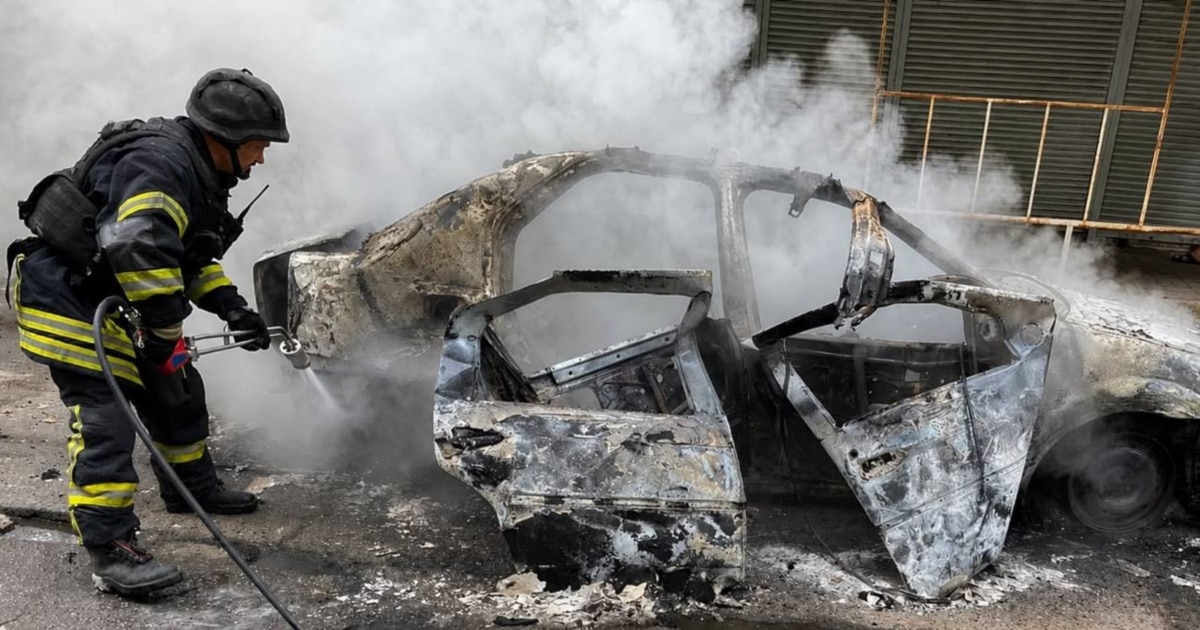
Russian drone strikes in Kherson kill one, injure several — local authorities
Authorities in Kherson said Russian forces carried out multiple drone strikes on July 12 that killed a 48-year-old man and wounded several other civilians across the city. Officials urged residents of vulnerable riverside neighborhoods to evacuate and warned that attacks on civilian infrastructure continue to be reported across Ukraine.
By Alexander Walter
917 views
A series of attacks by Russian forces in Kherson on July 12 left one man dead and several civilians wounded, local authorities reported. The head of the Kherson city military administration, Yaroslav Shanko, said that the fatality resulted from explosives dropped by a drone overnight in the Kорабел microdistrict. The deceased has been identified as a 48-year-old man.
Shanko provided details of other victims in an early statement: “«Поранення також отримали двоє чоловіків 43 та 58 років. У них мінно-вибухові травми та уламкові поранення кінцівок. Закликаю жителів прибережних районів, і особливо мікрорайону Корабел, не ризикувати власним життям. Евакуюйтеся до більш безпечних районів. Херсонська міська військова адміністрація готова допомогти з виїздом та надати необхідну підтримку».” In English, he said two other men, aged 43 and 58, suffered blast and shrapnel wounds to their limbs, and he urged residents of riverside areas — particularly the Kорабел neighborhood — to evacuate to safer districts, offering administrative assistance with relocation.
Authorities reported additional strikes later that morning. Around 08:00, Russian forces struck a route taxi (marshrutka) in central Kherson from a drone, Shanko said; the driver may have sustained a concussion and at least one nearby man was hospitalized. At approximately 09:50, the Kherson regional military administration (OVA) said a drone struck a public transport stop in the city’s Central District, injuring a 66-year-old man and three women aged 59, 71 and 58. The OVA said the victims sustained explosive injuries and shrapnel wounds to their torsos and limbs.
These incidents form part of a pattern of attacks authorities say are being carried out by Russian forces against Ukrainian cities and civilian infrastructure. The report cites repeated strikes using attack unmanned aerial vehicles (UAVs), missiles, guided bombs (КАБ), and multiple rocket launchers (РСЗВ). Ukrainian officials and international organizations have repeatedly condemned such strikes, characterizing them as war crimes and stressing that they appear to be deliberately directed against civilian targets.
Legal experts, researchers and human rights advocates cited in the original reporting say that, during the full-scale war, Russia has engaged in acts that may fall within the legal definitions of genocide and other grave crimes. Those assessments point to a range of conduct — including public statements by Russian officials dismissing Ukrainians as a people, calls for their destruction, targeted attacks on life-sustaining infrastructure such as energy and healthcare facilities, persecution of pro-Ukrainian individuals in occupied territories, and the removal of children and cultural artifacts — as evidence that, they argue, can be consistent with the criteria set out in the 1948 Convention on the Prevention and Punishment of the Crime of Genocide. The Convention defines genocide as actions carried out with intent to destroy, in whole or in part, a national, ethnical, racial or religious group and lists relevant acts such as killing members of the group or deliberately creating conditions of life calculated to bring about its physical destruction.
Moscow rejects accusations that its forces intentionally target civilian infrastructure or carry out policies aimed at destroying Ukraine’s population or culture. The Russian leadership denies that the armed forces conduct deliberate strikes on hospitals, schools, energy or water systems and other civilian objects.
Local officials in Kherson continued to appeal for civilians to move away from exposed neighborhoods and said they were prepared to assist with evacuations and provide necessary support. The attacks on July 12 add to a steady stream of reported strikes affecting civilians and public services across multiple regions of Ukraine, reinforcing international concern about the humanitarian impact and potential violations of international law.