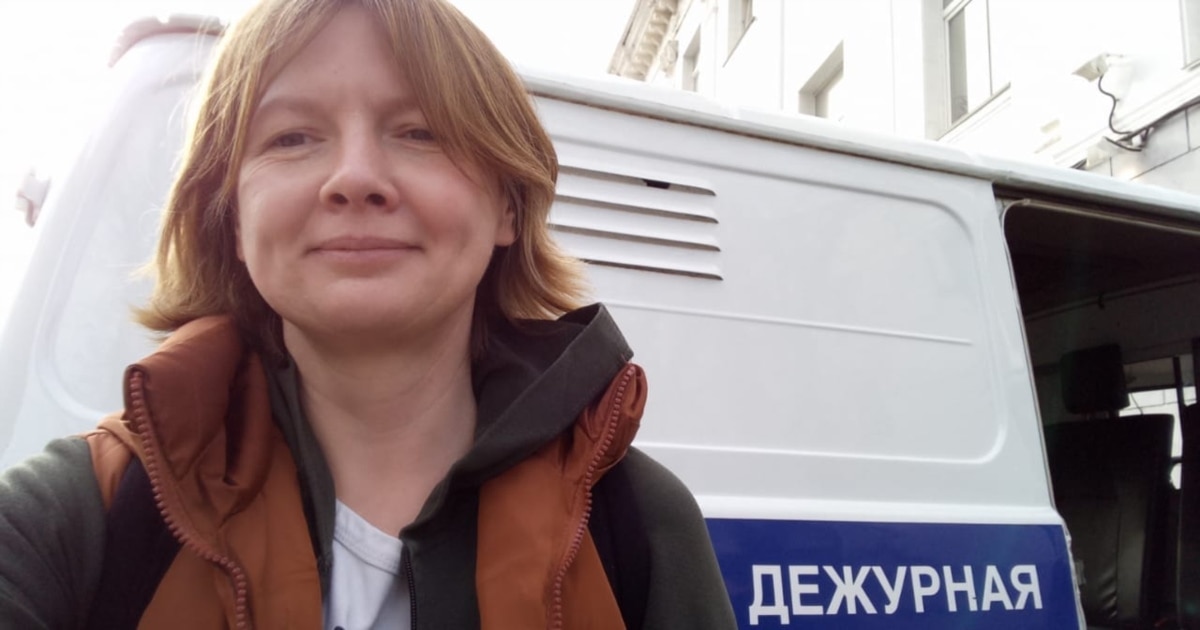
Russian Cassation Court Upholds 12-Year Sentence for Ufa Journalist Olga Komleva
A Russian appeals court on August 14 upheld a 12-year prison term for Ufa journalist Olga Komleva, who was convicted of participating in an extremist organisation and spreading false information about the war. Her lawyer says the sentence followed a brief pacifist social-media post and that the court ignored mitigating factors; the defense plans to appeal to the Supreme Court of Russia.
By Alexander Walter
862 views
The Sixth Cassation Court in Samara on August 14 left unchanged the 12-year prison sentence imposed on Ufa-based journalist and former Navalny campaign volunteer Olga Komleva, according to reports from RusNews and coverage published by Azatliq (RFE/RL). The hearing was held by videoconference; Komleva took part from the penal colony where she is serving her sentence, while her supporters and legal team attended from the Kirov District Court in Ufa.
The session was closed to both press and the public. RusNews reported that Komleva had previously had a short opportunity to describe conditions in the colony to those present, and that after the hearing she wished to make a statement for the press. Her legal team argued before the cassation court that there was no criminal offense warranting the conviction and asked the court to overturn the earlier judgment.
Komleva was detained on March 27, 2024. Last summer she was sentenced to 12 years in prison on charges of participating in an “extremist organization” related to the Anti-Corruption Foundation (FBK) and of disseminating “false information” about the war. In December she was transferred to Colony No. 28 in Berezniki, in the Perm region.
Her lawyer, Sergey Makarenko, told the court and later media that the sentence was imposed for what he described as a brief pacifist social-media post. Makarenko quoted the passage at issue exactly: "Өч ай тәмуг! Өч ай элек Путин украиннарны бомбаларга һәм үтерергә әмер бирде, ә хәрбиләр аның әмерен үтәде. Дөньяга — тынычлык", and said the post appeared on the X social network. He characterised the court's decision as unduly harsh and stressed that the judiciary failed to take into account key mitigating circumstances.
According to Makarenko, the defence highlighted that Komleva has a minor child, had no prior convictions, and suffers from serious illnesses—factors that, under Russian law, can be considered for mitigation. He said the punishment imposed was "near the maximum" for the charges and called the outcome unjust. The lawyer said his team will appeal the cassation court's ruling to the Supreme Court of Russia.
Human rights and press freedom advocates say the case illustrates wider trends in Russia of prosecuting journalists, activists and critics under broad and vaguely defined laws on “extremism” and “disinformation.” Komleva’s prosecution and lengthy sentence add to concerns about the shrinking space for independent journalism and dissent inside the country, particularly in cases connected to anti-corruption activism and criticism of the authorities.
The cassation ruling is likely to further complicate Komleva’s ability to challenge her conviction. International rights groups, legal observers and press freedom organisations monitor such cases closely, asserting that prosecutions of journalists on national security or extremism grounds often have chilling effects on public debate. Komleva’s defence now faces the task of persuading Russia’s highest court to reopen review of the facts and the severity of the sentence.
For now, Komleva remains in custody. The court’s decision underscores continuing tensions between state security legislation and protections for freedom of expression in Russia, and it raises questions about judicial independence and proportionality of punishment in politically sensitive cases. RusNews and Azatliq provided the reporting used for this account; Komleva’s lawyers have announced further appeals.