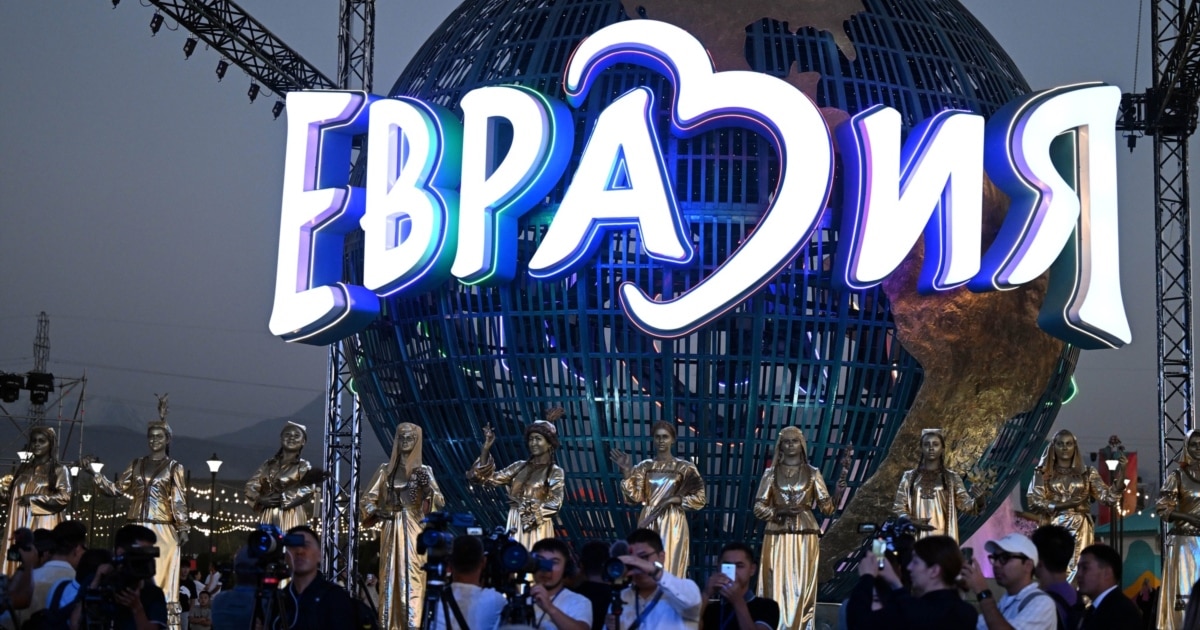
Russian-backed "Eurasia" expands into Naryn as analysts warn of growing Kremlin influence in Kyrgyzstan
A Moscow-oriented organisation known as "Eurasia" has opened a new centre in Naryn, Kyrgyzstan, extending an existing facility in Bishkek that organisers say attracted some 37,000 participants. The move, supported publicly by a Russian State Duma deputy, has prompted concern from local experts and former officials who see it as part of a coordinated Russian effort to shape education, culture and media in Kyrgyzstan and across Central Asia.
By Alexander Walter
1,106 views
A Russian-aligned cultural organisation called "Eurasia" has formally opened a new centre in Naryn, Kyrgyzstan, expanding activities that until now were concentrated in Bishkek. Organisers describe the facility as a multifunctional platform for learning the Russian language, developing creative skills and strengthening cultural ties. Critics and analysts, however, warn the move is part of a larger Kremlin-oriented campaign to spread Russian narratives through education, media and cultural programming in Kyrgyzstan.
At the opening ceremony, Alena Arshinova, a deputy of Russia's State Duma and chair of the coordination council of the Eurasia autonomous non-commercial organisation, praised what she called strong support from Kyrgyzstan's leadership for the group's expansion. Arshinova said the Bishkek centre had become "well-known" and "popular," claiming some 37,000 participants had benefited from its activities. She framed the organisation's work as contributing to the preparation of a "new generation" aligned with the Eurasian Economic Union, adding that opening a second centre in the regions was "very good."
Eurasia is widely regarded by critics as an instrument for promoting Kremlin perspectives. The organisation and its projects, which have intensified over the past two to three years in Kyrgyzstan, have included cultural events, language courses and public discussions. The group has also sponsored concerts in Karakol by Russian pop singers who have publicly supported Russia's war in Ukraine, prompting concern among those who view such events as direct propaganda.
Media and policy analysts point to multiple channels through which Russian influence is expanding. Russia has reportedly increased funding for the Kyrgyz-Russian Slavic University in Bishkek and supports programs that send teachers and educational materials into Kyrgyz schools. Moscow-affiliated institutions such as Russotrudnichestvo operate as "Russian Houses" in Bishkek and Osh, promoting cultural, educational and humanitarian ties and organising festivals, exhibitions, lectures and Russian-language courses.
Speakers at public events funded or hosted by Kremlin-linked organisations have reiterated narratives that connect Kyrgyz and Russian historical destinies and question Western influence. Timofey Bordachev, program director at the Valdai Club, told students at the Kyrgyz-Russian Slavic University that Central Asia historically stood apart from major cultural centres and that historical and cultural affinities link Kyrgyzstan and Russia. In a separate online discussion, political commentator Alexander Sobyanin argued that Russia had sharply increased humanitarian spending in Kyrgyzstan, claiming a rise of 15–20 times in recent years and asserting that Western support for local NGOs and media had declined.
Local critics warn these efforts are more than cultural outreach. Ilim Karypbekov, a media expert, said Russia is using Kyrgyzstan as a platform to reassert influence across Central Asia after losing ground in other regional capitals. He listed a wide array of tools—large university grants, teacher exchanges, satellite media outlets, Telegram channels, and sympathetic experts and panels—as part of a coordinated approach aimed at shaping public opinion and institutional loyalties. "They are preparing Kyrgyzstan as a springboard for Central Asia," Karypbekov said, noting that the strategy includes both cultivation of loyal voices and pressure on dissenting bloggers and activists.
Concerns have also arisen over alleged covert activities. In April 2025 Kyrgyz security services detained four people in Osh on suspicion of trying to recruit mercenaries for Russian armed forces. Two of those arrested were later identified in local reporting as Natalia Sekerina, an employee of the Russian House branch in Osh, and Viktor Vasiliev, described as a Russian political technologist. Authorities later released those detained for reasons that were not publicly explained.
Former presidential administration chief Emilbek Kaptagaev urged Kyrgyz authorities to take prompt action to protect national curricula and public awareness, recommending that philosophy, history and other civic disciplines be taught strictly according to state-approved programmes and warning against allowing external actors to unilaterally shape such education. The debate over the Eurasia organisation and related projects underscores growing tensions in Kyrgyzstan over cultural identity, foreign influence and the balance of power between external sponsors and domestic institutions.
As Russian-funded initiatives expand their footprint in education, cultural life and media, Kyrgyzstan faces questions about the extent to which foreign actors should be permitted to shape public discourse and civic education. With Western funding reportedly decreased in some sectors and Russian resources rising, the contours of Kyrgyzstan's civic space—and who sets the narratives taught in schools and articulated in public forums—remain a central and contested issue.