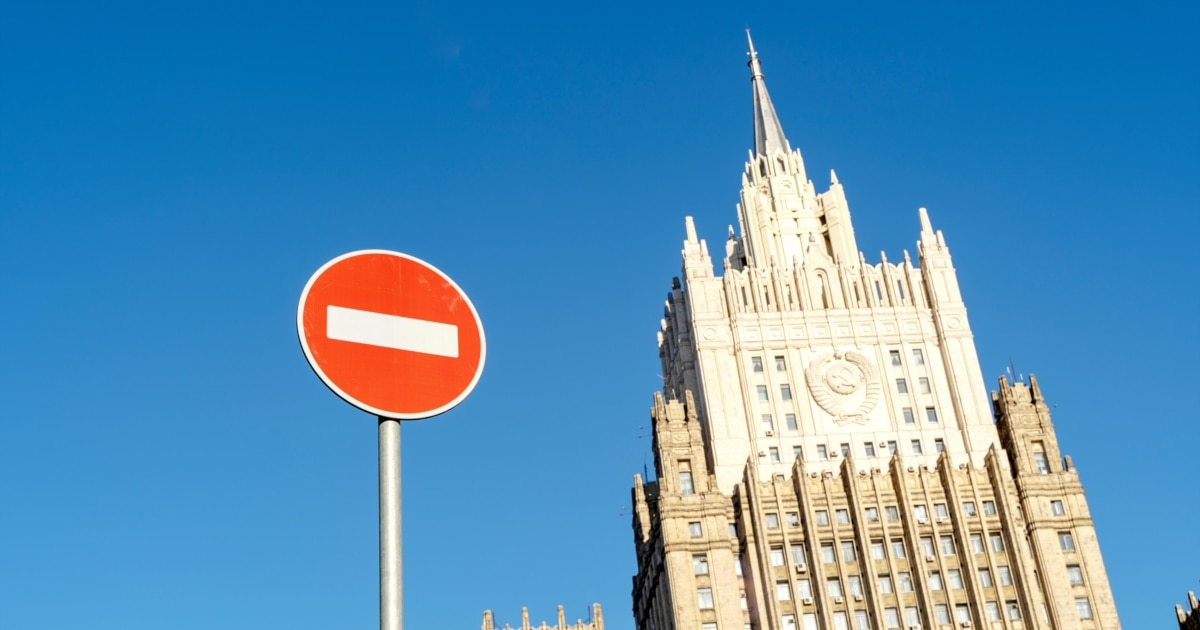
Russia Summons German Ambassador, Accuses Berlin of Backing Strikes on Civilian Infrastructure; Germany Had Earlier Protested Russian Cyberattacks
The Russian Foreign Ministry summoned Germany’s ambassador in Moscow, accusing Berlin of increasing support for Kyiv and of participating in strikes on Russian civilian infrastructure. The diplomatic move followed an EU statement accusing Russia’s FSB of prolonged malicious cyber operations against EU states and partners; Germany had in turn summoned the Russian ambassador to protest those cyberattacks and warned of decisive responses, including additional sanctions.
By Alexander Walter
801 views
The Russian Foreign Ministry summoned Germany’s ambassador to Moscow this week and accused Berlin of taking part in what Moscow described as “terrorist strikes” by Kyiv on civilian infrastructure inside Russia, according to a ministry statement cited by РБК. Russian officials delivered a formal warning to the ambassador, Alexander Lambsdorff, saying that German support for Ukraine was growing unacceptable and explicitly criticizing military-level agreements between Berlin and Kyiv.
Moscow’s statement included the phrase "обвинил Германию в участии в террористических ударах Киева по гражданской инфраструктуре в России", and it told the ambassador that "указано на недопустимость набирающей обороты поддержки киевского режима со стороны Германии, включая заключение соглашений военного характера." The language reflects an escalation in diplomatic rhetoric between Moscow and Western capitals over the war in Ukraine and the broader security measures surrounding it.
The summoning came after the European Union and several member states published a joint statement condemning a pattern of malicious cyber activity they attributed to the Russian security services. The EU declaration, cited in reporting of the episode, said that over many years the Federal Security Service (FSB) had carried out a wide range of harmful cyberattacks that increasingly affected the EU, its member states and international partners, including Ukraine. The statement said these attacks involved intrusions into government networks and the sabotage of critical infrastructure, and it listed among the targets France, Germany, Poland, Cyprus, the Netherlands, Austria, Slovakia, Romania and Finland.
In response to that EU assessment, the German Foreign Ministry summoned the Russian ambassador to Berlin to convey Germany’s position and protest the cyber operations. The German ministry said: "Кибератаки против Германии, партнеров ЕС и Украины недопустимы. Мы отвечаем на них решительно, в том числе дополнительными санкциями. Кроме того, сегодня мы вызвали российского посла и еще раз разъяснили нашу позицию." The ministry stressed that Berlin would respond firmly to cyberattacks, including by imposing further punitive measures.
The exchanges mark a continuation of reciprocal diplomatic démarches between Russia and European governments over security incidents related to the conflict in Ukraine. Moscow’s accusation that Germany is complicit in strikes on civilian targets inside Russia ties into a broader narrative it has used to justify countermeasures; Western governments, by contrast, point to what they call an organized campaign of Russian state-linked cyber operations that threaten public and governmental infrastructure across Europe.
Analysts and diplomats say such tit-for-tat summonses and public accusations are a common instrument in modern diplomatic exchanges, used both to register protest and to manage domestic political messaging. While the Russian Foreign Ministry framed its démarche as a reprimand over Germany’s military cooperation with Kyiv, the German response focused on condemning network intrusions and sabotage that, it says, endanger critical services and partners' security.
Both sides have so far limited their actions to diplomatic protests and statements. Germany’s reference to additional sanctions signals the possibility of further punitive steps if the European assessment of Russian cyber activity stands. For now, the dispute underscores the wider stakes for civilian safety and infrastructure: allegations that military or clandestine cyber operations have targeted non-military systems raise concerns about the protection of civilians and the resilience of critical services in the context of the conflict.
The incidents add to ongoing friction between Russia and European states over the war in Ukraine, with implications for diplomatic relations, cybersecurity cooperation, and the coordination of further restrictive measures. Each government involved continues to present its claims through official channels while public accusations and counter-accusations circulate in media and diplomatic communiqués, leaving the situation likely to inform both policy responses and bilateral contacts in the near term.