Russia Says Balhash Nuclear Project Will Bolster Kazakhstan and Central Asia’s Energy Security amid Environmental and Electoral Concerns
Russian officials say construction of the Balhash nuclear power plant in Kazakhstan is on schedule and will shore up the country’s energy balance through 2035 while strengthening the resilience of Central Asia’s interconnected grid. The project, led by state nuclear firm Rosatom, faces criticism from activists worried about Lake Balkhash and increased dependence on Russia, and independent observers reported irregularities during a referendum that officially approved the plant.
By Alexander Walter
1,016 views
Russian Foreign Ministry representative Alexander Sternik has said that the construction of the Balhash nuclear power plant in Kazakhstan is proceeding according to schedule and will be important for Kazakhstan’s energy balance through 2035. Sternik told regional media that strengthening Kazakhstan’s energy security will in turn increase the resilience of the integrated Central Asian power system, arguing that disruptions in one country can have knock-on effects for neighboring states.
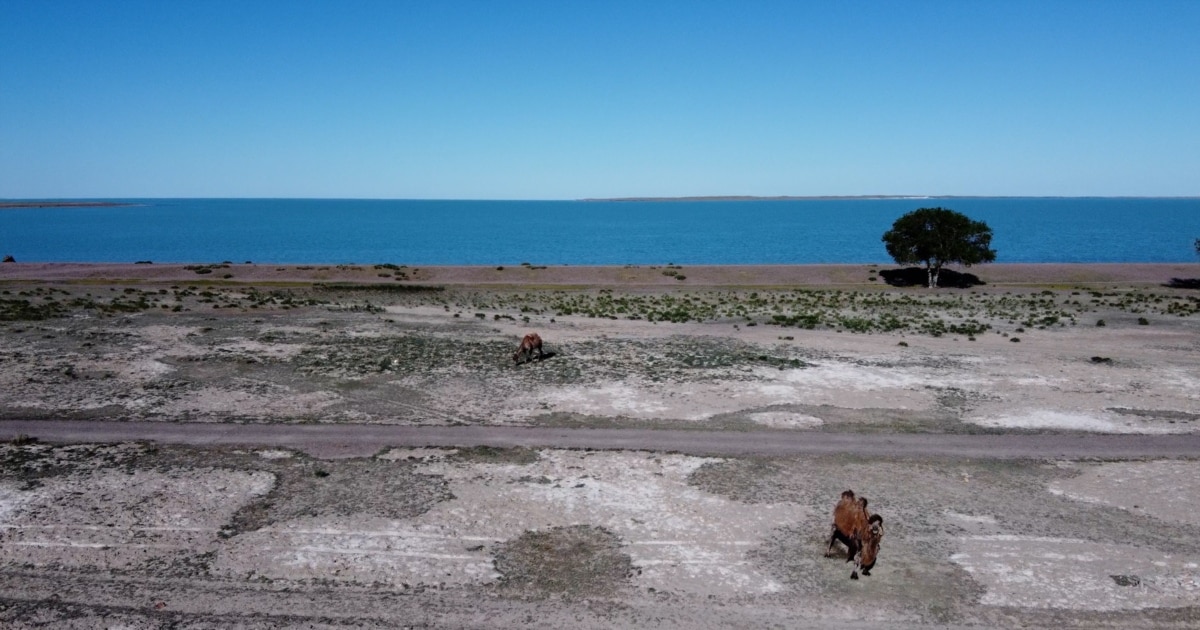
Kazakh authorities and the Russian state nuclear corporation Rosatom are the principal actors in the project. On September 3, Kazakhstan signed a contract with Atomstroyexport, a subsidiary of Rosatom, covering the design, equipment supply and construction of the plant. The planned site is near the village of Ulken in Almaty region, close to Lake Balkhash.
Under the current design, the Balhash plant will consist of two VVER-1200 reactor units. Construction is scheduled to begin in 2027, with commercial commissioning targeted for 2035–2036. Almasadam Satkaliyev, head of Kazakhstan’s Agency for Atomic Energy, previously estimated the total project cost at approximately $16.4 billion and said that around 85 percent of financing would come from a Russian export credit, with Kazakhstan providing the remaining 15 percent.
The project has prompted public debate in Kazakhstan and beyond. Environmentalists and some civic activists have voiced strong opposition, warning about potential consequences for Lake Balkhash — a major inland water body — and expressing concern that closer reliance on Russian finance and technology will deepen Kazakhstan’s dependence on Moscow. These critics have also raised questions about the transparency of decision-making and the long-term environmental assessments connected to siting a major nuclear facility near a sensitive ecosystem.
That debate intensified around a national referendum held on October 6, 2024, in which Kazakh authorities reported that more than 71 percent of participants supported construction of the nuclear plant. International and independent local observers, however, reported a range of irregularities related to the vote. Observers said they witnessed ballot-stuffing, instances of so-called "carousel" voting where voters are shuttled to cast multiple ballots, and practical obstacles to the work of monitors—allegations that, if substantiated, raise questions about the procedural integrity of the referendum.
Russian officials have framed the Balhash plant as a stabilizing force for energy supplies across Central Asia, explicitly linking Kazakhstan’s energy security to the stability of the entire regional grid, which includes Kyrgyzstan, Uzbekistan and Tajikistan among others. For those who support the project, the plant promises to meet rising electricity demand and diversify generation capacity in a region where hydropower and aging thermal capacity have sometimes produced vulnerabilities.
For opponents and environmental campaigners, however, the combination of significant foreign financing, state-led contracting, and contested public endorsement underscores broader concerns about governance, accountability, and environmental stewardship in major infrastructure decision-making. The financing arrangement — relying heavily on a Russian export credit — also highlights geopolitical dimensions of energy cooperation in Central Asia.
As the project moves from contract signing toward construction, observers say the key questions remain the thoroughness of environmental reviews, the transparency of financing and procurement, and assurances that public consultation and oversight will be meaningful. Given the reported issues surrounding the referendum and the scale of the investment, the Balhash project is likely to remain a focal point for debates about national sovereignty, regional cooperation, and the balance between energy development and environmental protection in Central Asia.