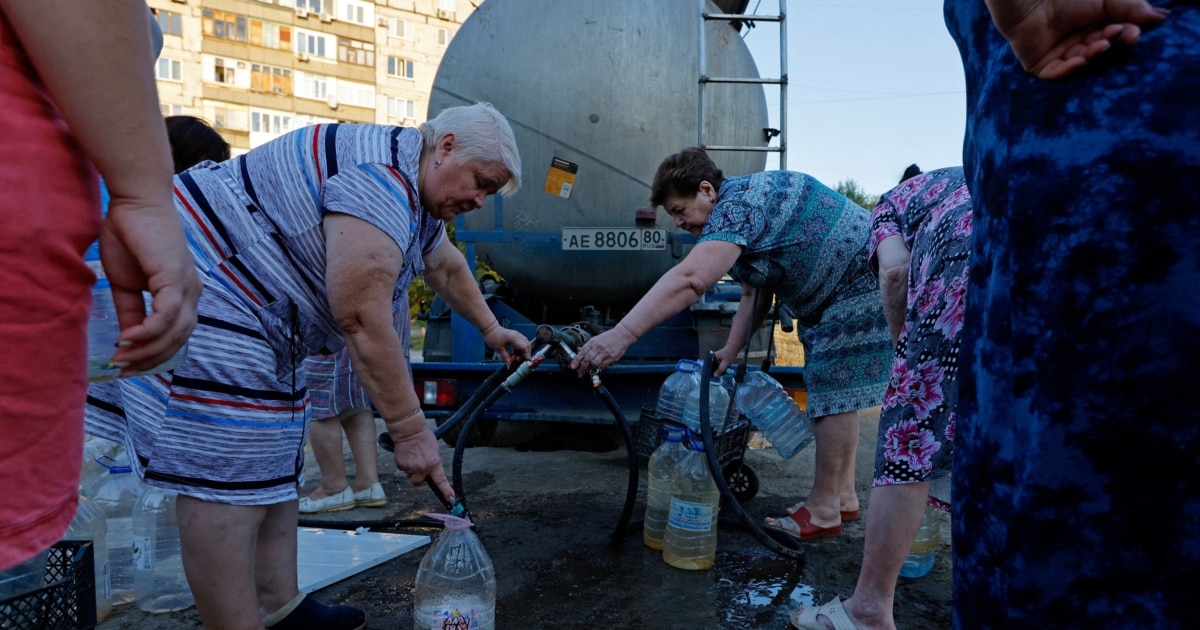
Russia raises utility tariffs in occupied Donetsk and Luhansk; expert warns 40–50% could slide into 'communal poverty'
From October 1, 2026, Russian-installed administrations in the occupied parts of Donetsk and Luhansk increased tariffs for electricity, water, gas, heating and waste removal, even as residents continue to suffer regular outages and degraded services. Experts and consumer advocates say the hikes will not solve long-standing infrastructure decay and may push a large share of the population below a threshold of 'utility poverty'.
By Christopher Manley
841 views
Russian-installed authorities in the occupied parts of Donetsk and Luhansk implemented across-the-board increases for communal services that took effect on October 1, 2026, even as residents continue to experience frequent outages of water and electricity. The announcement covers water, wastewater, electricity, gas, heating and waste collection — with some tariffs rising by double-digit percentages and others by nearly half, depending on the service and consumption levels.
According to occupation authorities in Donetsk, the general tariff for cold water rose by about 10% to 83.28 rubles per cubic metre (roughly 45.3 hryvnia at the cross-rate used in the report). That total comprises 53.09 rubles for water and 30.19 rubles for wastewater. Electricity prices increased by nearly 49.3% and are now set in bands from 2.89 to 10.17 rubles per kWh (about 1.56–5.49 hryvnia) depending on consumption. Heating rates were raised by roughly 27% — residents in buildings without meters will pay 62.28 rubles per square metre, while measured heat costs 2,449.13 rubles per gigacalorie (around 1,322.53 hryvnia).
Gas charges rose by more than 26% in the occupied Donetsk areas: for households with a gas stove and water heater but no meter the new rate is 130.70 rubles per person (about 70.58 hryvnia); where hot water is centrally supplied, the per-person fee is set at 65.35 rubles (35.29 hryvnia). Waste collection saw the largest proportional increase, up to 124.96 rubles per person per month (about 67.48 hryvnia). Occupation administrations said that in 11 towns with particularly intermittent water supply they would apply a reduced tariff of 9.64 rubles per cubic metre for water and waive wastewater charges.
Officials and occupation-appointed politicians defended the increases as part of a “long-term plan” to bring local tariffs in line with neighbouring Russian regions and to stabilise the communal services sector. Anna Kondrykinskaya, head of the housing and utilities committee in the Moscow-backed Donetsk authorities, told local media that networks are worn out, spare parts have become more expensive and prior revenues were insufficient even for emergency repairs. She said additional revenue would be used for repairs, preparing for the heating season and organising scheduled waste removal — though she stopped short of promising immediate improvements in service quality.
Consumer advocates and independent observers disagree that higher prices will resolve the core problems. Oleg Popenko, head of the Union of Consumers of Communal Services, said tariff hikes cannot substitute for investment and proper management, and he alleged inefficiencies and inflated procurement costs within the utility system. Popenko estimated that, at least in Donetsk, funding a comprehensive overhaul of key water utilities would require raising tariffs by seven to eight times — assuming the collected funds were actually allocated to repairs rather than to administrative costs or questionable purchases.
Residents interviewed by local outlets described daily life marked by severe shortages and routine outages. A woman in Mariupol, speaking anonymously, said tap water is frequently discoloured and that households can go several days without running water; power is often limited to a few hours at most in some districts. A resident of occupied Luhansk reported scheduled power cuts for several hours a day over recent days and said some older homes had suffered damage to domestic appliances because of outages and erratic supply.
Experts point to long-standing causes that raising tariffs alone will not fix. Damage to water infrastructure began during the first phase of Russia’s aggression in 2014 and worsened after the full-scale invasion in 2022. In March 2022 the Siversky Donets–Donbas canal — a main source of water for large parts of Donetsk — was taken out of regular operation amid the fighting. Satellite imagery and reporting by local outlets have documented destruction and repeated strikes on canal and pumping infrastructure, and the UN and local water utility staff have recorded casualties and injuries among workers attempting repairs over the years.
Observers also cite personnel losses from mobilisation and weak accountability under occupation. Journalist Denis Kazansky and others say that many skilled utility workers were mobilised, killed or remain at the front, leaving shortages of technicians needed to maintain and repair networks. Critics add that Moscow’s system of appointing local managers to administer occupied territories severs those officials’ accountability to residents, reducing incentives to prioritise local service delivery.
Russian officials have publicly acknowledged shortages of water and outlined long-term plans: Vice‑Prime Minister Marat Khusnullin told a Moscow forum in September 2025 that water problems would be “more or less” resolved by the following year, and the Russian construction ministry later announced a five-year plan through 2030 to address deficits. On August 4, 2025, Denis Pushilin — Moscow’s appointee in the Donetsk occupation administration — blamed Kyiv for a so-called “water blockade,” a claim contradicted by reporting that documents the cumulative impact of years of strikes and infrastructure damage.
Humanitarian and rights advocates warn that the tariff increases, coming amid ongoing interruptions and alleged mismanagement, risk deepening material deprivation on occupied territory. The publication headline cites an expert warning that as many as 40–50% of residents could fall below a threshold of “communal poverty” — a condition in which households cannot afford essential utility services. For civilians living under occupation, the intersecting problems of damaged infrastructure, limited technical capacity, weak local accountability and rising costs mean access to basic water, heat and power will remain a critical humanitarian and rights concern.