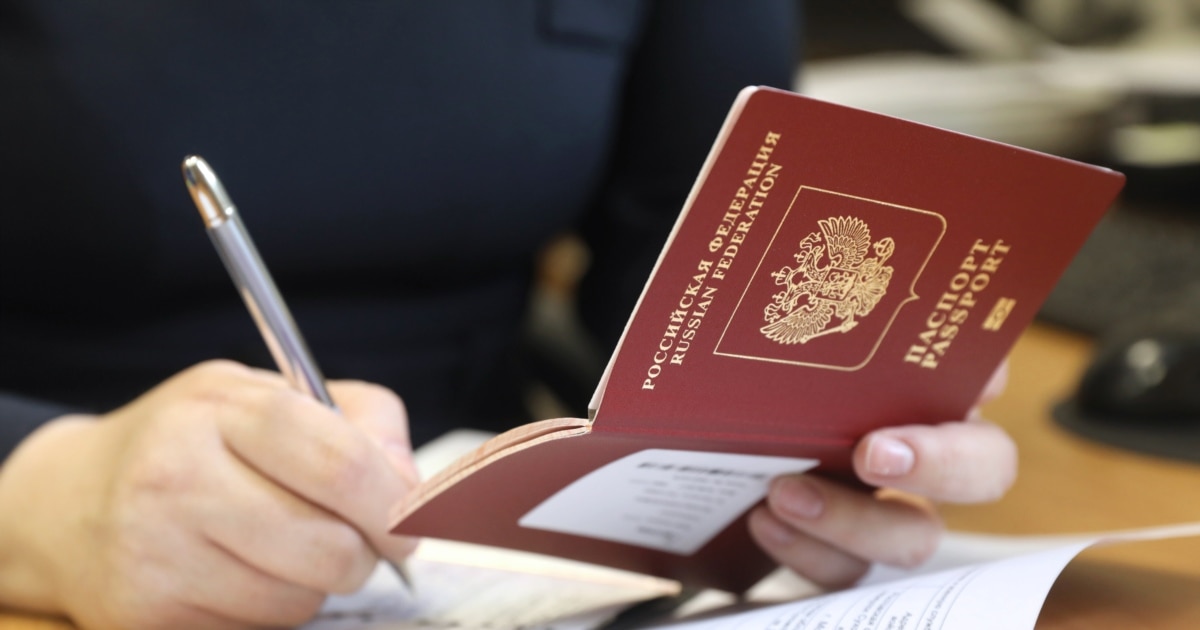
Russia hikes fees and narrows access for citizens trying to renounce nationality, leaving many abroad stranded
A recent Russian law and government decisions have dramatically raised the costs for citizens who wish to give up Russian nationality and consular bottlenecks across Europe have compounded delays, inconsistent guidance and practical barriers. Applicants and activists say the measures, combined with the suspension of national data on renunciations, make it harder to gauge and respond to a surge of people seeking to sever official ties with Russia.
By Blake Marriott
813 views
Since 2022, Russians living abroad who want to renounce their citizenship have confronted growing obstacles, from higher official fees to inconsistent consular practices and long waits for appointments. The situation has upended the plans of people such as Vlada Kharebova, who has lived in Latvia since 2022 and has been trying to renounce her Russian citizenship for herself and her two children while pursuing Latvian nationality. Kharebova says the Russian consulate in Riga provides lists of required documents but offers little practical guidance on how to obtain them and, on contact, has told applicants “Kur telefononi ose i shkruani Konsullatës, ata thonë: ‘Ne nuk merremi me këtë. Na vjen keq, nuk mund t’ju ndihmojmë’”.
The financial burden of renunciation has risen sharply. A law that took effect on July 22 increased the state fee for surrendering Russian citizenship from 4,200 rubles (about €43.50) to 50,000 rubles (about €518). A separate government decision raised the consular fee for applications submitted abroad from €111 to €1,026. For applicants with modest salaries, such as Kharebova, a teacher, the new costs are prohibitive. Her daughter also encountered a separate administrative snag when the Riga consulate refused to accept her application because she had not provided a copy of a Russian university diploma, a requirement Kharebova says was not listed in available guidance.
Other applicants describe similar procedural difficulties that make the process costly even before the increased statutory fees are applied. Finland-based Veronika Mikkonen said some required documents are valid for only three months, creating a race against time if appointments at Russian diplomatic missions cannot be obtained quickly. Those appointment waits, Mikkonen and others say, can last months. She eventually succeeded in renouncing her Russian citizenship but said preparing the necessary documents cost nearly €1,000, on top of a then-consular fee of €130. Mikkonen told Current Time that her decision was driven by the Kremlin’s repression and Russia’s full-scale invasion of Ukraine: “Thjesht nuk doja të mbaja në xhep pasaportën e një vendi diktatorial dhe të një vendi që nisi një luftë”.
The difficulty of formally renouncing Russian nationality is not limited to the Baltic states. Madrid resident Aleksandr Smirnov, who has already obtained Spanish citizenship, said he has tried and failed to complete the process of giving up his Russian citizenship and, after the fee increases, is unsure whether it remains worth pursuing. “Nuk kam qenë në Rusi për 10 vjet, nuk kam asgjë të bëj me Rusinë, nuk kam pasuri apo llogari bankare atje. Nuk kam nevojë për këtë shtetësi”, he told Current Time, arguing the real aim of the tougher rules is to create obstacles.
Human rights activists and former officials say the tougher financial and administrative measures appear designed to deter renunciations. Lev Ponomaryov, a rights activist, said he believes authorities want to make the process inaccessible so there is not “a fluks të madh njerëzish që heqin dorë [nga shtetësia e tyre], në mënyrë që kjo të bëhet një lloj bombe informative që gjithnjë e më shumë njerëz po heqin dorë nga shtetësia ruse.” His comments reflect concern that visible increases in renunciations could be politically and reputationally damaging to the state.
Moscow’s rollout of the new fees has coincided with reduced transparency: the Russian Foreign Ministry has not published nationwide figures on citizenship renunciations since 2023. The most recent statistics posted earlier show 4,356 renunciations in 2019, 3,877 in 2020, 4,055 in 2021 and 4,306 in 2022. The head of the ministry’s consular department said roughly 4,400 people renounced Russian nationality in the first nine months of 2023. The absence of updated national statistics makes it difficult to judge how the trend has evolved during the war in Ukraine and after Russia’s partial mobilization, which prompted hundreds of thousands of people to leave the country following the September 2022 call-up.
Available figures from particular countries, however, indicate sustained demand. Estonia recorded 107 people who renounced Russian citizenship in 2024 and had reached 126 by August 25, 2025, according to Tallinn’s interior ministry. The process in Estonia has been complicated by pauses and capacity reductions at Russian diplomatic posts: the Russian embassy in Tallinn halted acceptance of new renunciation applications from late 2023 until February 2024 following Russia’s new citizenship law, and Moscow has closed consulates in Tartu and Narva and cut staff at its Tallinn embassy. Those actions, combined with temporary closures of other Russian consulates across Europe amid tensions with the West, have delayed the issuance of documents that many countries require as proof of renunciation for naturalization.
Russia’s legal framework also places conditions on renunciation: applicants must have another citizenship or a guarantee that they will obtain one, and authorities can refuse renunciation if the person has unpaid taxes, fees, fines or unresolved legal obligations. For many living abroad the question now is not whether they want to sever formal citizenship ties but whether they can afford to do so, navigate conflicting consular instructions, and overcome delays that risk invalidating time-sensitive documentation. The combination of higher costs, bureaucratic barriers and reduced consular access has transformed what was already a lengthy, sometimes costly administrative procedure into an even more onerous step for those seeking to formally disaffiliate from the Russian state.