Rising Costs and Police Crackdowns Make Leisure Time Too Expensive for Tehran’s Young People
Young people in Tehran say skyrocketing prices, shrinking public space and increased policing have turned simple leisure — coffee with friends, a walk in the park, or learning to drive — into unaffordable or risky activities. Authorities have sealed cafés, detained youths accused of promoting indecency, and criticised street gatherings as 'aimless cruising' even as Iranians grapple with low wages, pollution and the economic fallout of regional conflicts.
By Alexander Walter
159 views
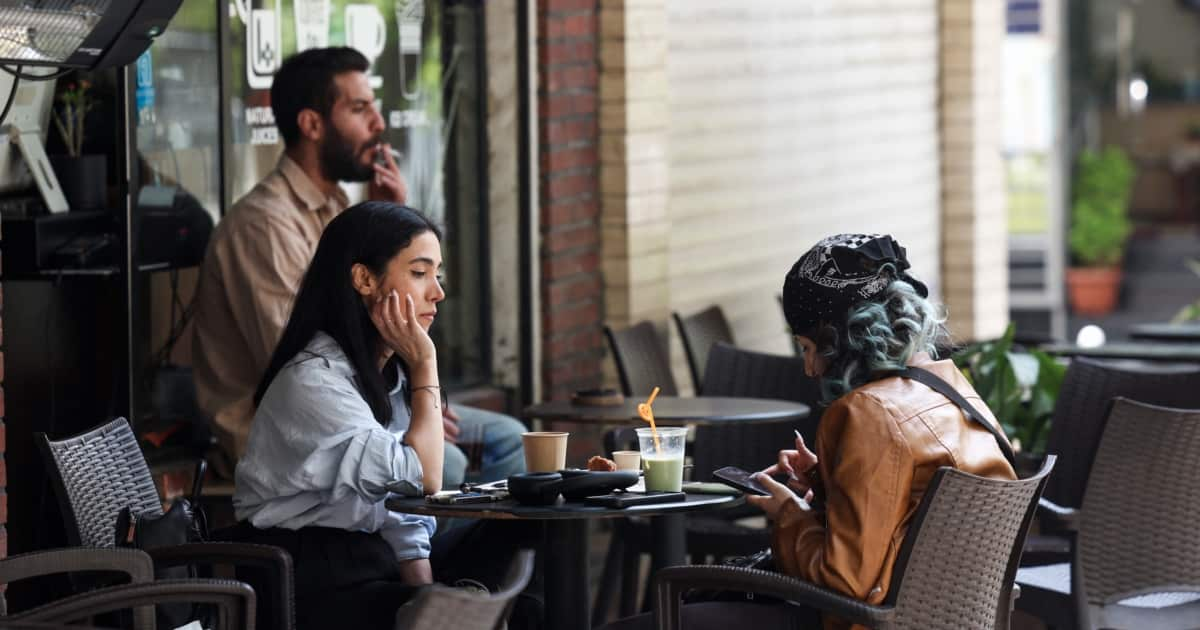
Young people in Tehran are describing a shrinking margin for free time: what used to be inexpensive socialising — meeting friends in cafés, strolling along central streets, or taking part in low-cost cultural events — now comes with high economic and legal costs. Radio Farda spoke to a first-year graphic design student who said that even obtaining a driving licence would consume nearly her entire monthly income of roughly €87. She and six friends have all learned to drive but say none can afford licences, and the group’s primary form of recreation has narrowed to meeting in cafés.
Those cafés, clustered along streets such as Iranshahr and Sanai, have come under heightened scrutiny from police and the judiciary in recent months. Authorities sealed seven cafés in two central districts in July, criticising patrons for gathering on sidewalks and in public. On the evening of October 30, youths gathering in Iranshahr for Halloween were confronted by Basij militia members and plainclothes agents; by the end of the night several cafés had to close. The judiciary-linked Mizan portal reported on November 10 that arrests had been made in Iranshahr, accusing detainees of "openly promoting removal of the veil and indecency," and Tehran’s prosecutor’s office said action would continue against those it described as promoting "nudity and debauchery."
The policing campaign takes place against a backdrop of worsening urban conditions. Tehran ranked 164 out of 173 cities in the Economist Intelligence Unit’s livability index this year, two places lower than the previous year. In the index’s culture and environment category — which factors in social and religious restrictions, censorship and the availability of free activities — the city scored 37 out of 100. Air quality data compiled by Tehran’s Company for Control of Air Quality show the capital had only six days of clean air and 178 days classified as unhealthy in the Iranian year ending in March, with modestly improved conditions this autumn but persistent smog for much of the year.
Public green space is also contracting. A study cited by residents found that construction and replacement of gardens with buildings destroyed about 27 percent of surveyed vegetation in Tehran between 2006 and 2016. For many residents, parks such as Pardisan offer the only nearby refuge; a 36-year-old manicurist who commutes from the southeast of the city said she walks in Pardisan two or three times a week after work because her neighbourhood lacks safe, calm spaces.
Economic pressures compound the restrictions on leisure. Years of international sanctions, chronic inflation and a weakening rial have battered Iranian living standards. The government’s minimum wage for unskilled workers stands at about €75 per month including benefits, while many civil servants earn between €78 and €83 on average. Cultural events that might once have offered affordable escape have mixed accessibility: an Azerbaijani music group performed at a cultural centre this autumn with tickets priced between €0.70 and €3.40; one attendee, a state employee, paid €2.70 per seat and said many women in the audience were unveiled, though she covers at work.
Other forms of leisure are even more costly. A 26-year-old recreational skier who recently took up the sport said he spent roughly €270 on equipment — snowboard, boots, clothing and accessories — and that the cheapest trips to the Tochal ski area cost about €6.10 per visit without food. More remote or private pastimes can be out of reach: for those in the city’s south and southeast, travel times alone can consume several hours a day. A 38-year-old mechanic described losing customers and business after a brief 12-day war in June 2025; he was forced to downsize and now operates a small repair cabin for which he pays €120 per month for the plot.
The economic strain has also been a driver of political unrest. Authorities’ military and security responses followed large-scale protests in January that were fuelled in part by economic grievances; those protests were met with deadly repression. Residents now face not only the immediate financial inability to access leisure activities but also the threat of arrest and public shaming for social behaviour deemed improper by authorities. The article notes that residents fear renewed hostilities following two rounds of conflict with the United States and Israel in 2025 and 2026, adding another layer of insecurity to everyday life.
The combined effects of policing, economic decline and environmental deterioration have narrowed the space for ordinary social life in Tehran. For many young Iranians, the choices are stark: pay a disproportionate share of very small incomes for a few moments of recreation, limit their movements to avoid the attention of security forces, or surrender much of the communal public life that historically unfolded in cafés and on the city’s streets. Those constraints have implications beyond leisure — they reflect and reinforce broader limitations on civil liberties, freedom of assembly and personal autonomy in the Iranian capital.