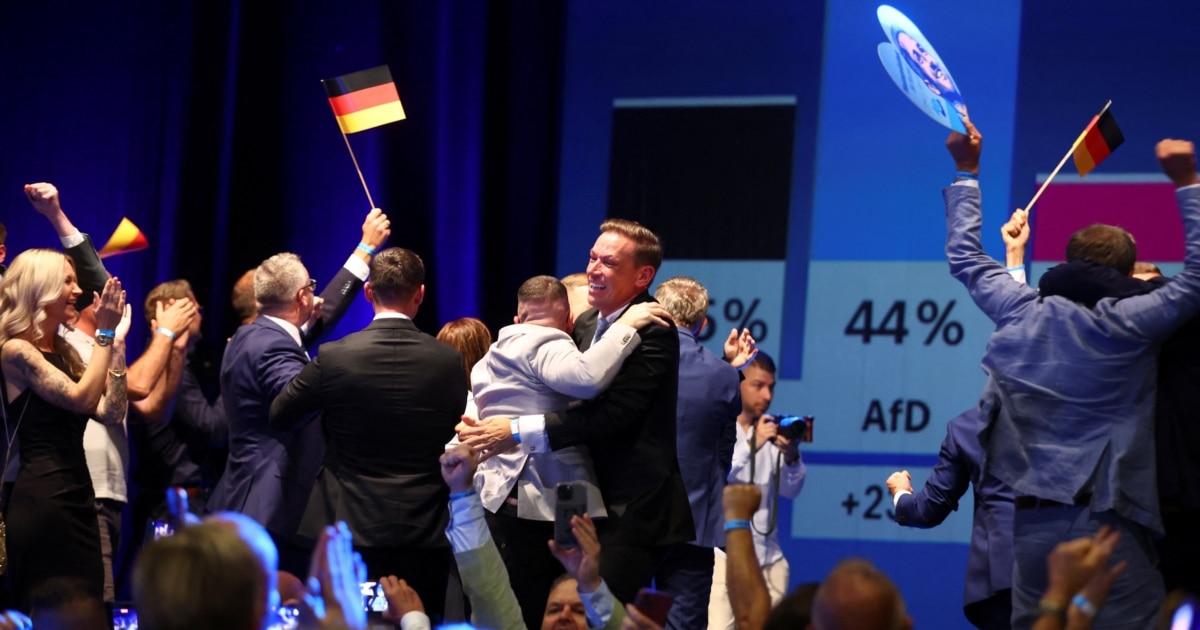
Right-wing AfD Tops Saxony-Anhalt Vote in Exit Poll; Faces Choice of Coalition Despite Strong Lead
An exit poll on Sept. 6 put the right-wing populist Alternative for Germany (AfD) on 44.4% in the Saxony-Anhalt regional election, well ahead of the CDU/CSU bloc on 18.4%. High turnout — 76.5%, the strongest since 1990 — and AfD’s platform calling for an end to support for Ukraine and closer ties with Russia have heightened concerns about democratic norms, possible foreign influence, and the political isolation other parties may maintain.
By Alexander Walter
945 views
Preliminary exit-poll results released on Sept. 6 indicated a strong victory for Germany’s right-wing populist Alternative for Germany (AfD) in elections for the state parliament (Landtag) of Saxony-Anhalt. Public broadcaster ARD’s exit poll put AfD support at 44.4 percent of votes cast, more than double the share reported for the main establishment bloc, the Christian Democratic Union and its Bavarian sister party the Christian Social Union (CDU/CSU), on 18.4 percent.
Other parties that crossed the 5-percent threshold each polled at less than 10 percent, according to the same exit poll. Official final results were scheduled to be published on Monday, Sept. 7; if they confirm the exit poll, AfD would win 39 of the Landtag’s 83 seats. That outcome would fall three mandates short of an absolute majority, meaning AfD would need to form a coalition with at least one other party to control the regional parliament.
The result came amid unusually high voter participation. Observers reported a turnout of 76.5 percent — a level not seen in a German state election since 1990. Analysts say the surge in turnout, combined with AfD’s strong showing, signals deep public engagement and concern over issues the party has emphasized during the campaign.
AfD leaders framed the result as a clear public mandate. AfD co-chair Alice Weidel said the party would receive "үкімет құруға нақты мандат" алады деп мәлімдеген . The party’s platform in the campaign called for halting German support for Ukraine’s defense against Russia, fostering closer ties with Moscow, tightening migration rules, and installing more conservative standards in education policy. AfD has also in the past entertained proposals to withdraw from parts of the European Union framework and to abandon the euro in favor of a return to a German currency.
AfD’s critics point to allegations of close ties with Russia and to suspicions that the party has benefited from Kremlin influence. AfD deputies have attended events in Russia, including the St. Petersburg International Economic Forum and gatherings organized by the ruling United Russia party — activities that have drawn scrutiny and raised questions about foreign influence in domestic politics.
The federal agency tasked with monitoring extremist threats has previously taken action against the AfD’s regional operation: in 2023, the Federal Office for the Protection of the Constitution (Конституцияны қорғау жөніндегі федералдық мекеме) labeled the AfD’s Saxony-Anhalt branch as belonging to the realm of right-wing extremism. At the federal level, mainstream German parties reached an informal consensus in the early 2020s to avoid any cooperation with AfD in government, pledging a political cordon sanitaire around the party. That agreement would complicate AfD’s path to forming a government if it does not secure an outright majority.
The implications of an AfD-led government in Saxony-Anhalt extend beyond regional policy. Observers warned that a government influenced or led by a party that seeks to curtail migration and reorient foreign policy toward Russia could aggravate tensions at both national and European levels. Human rights advocates also expressed concern that AfD policy goals could pose risks to minority rights and protections for refugees and asylum seekers.
With final results pending formal certification, national politicians, civil-society organizations, and European partners will be watching closely. The outcome in Saxony-Anhalt could influence political dynamics in other German states and shape debates over immigration, education, and Germany’s foreign policy stance on the war in Ukraine.
(Reporting based on ARD exit-poll data and statements from party officials; official state results expected Sept. 7.)