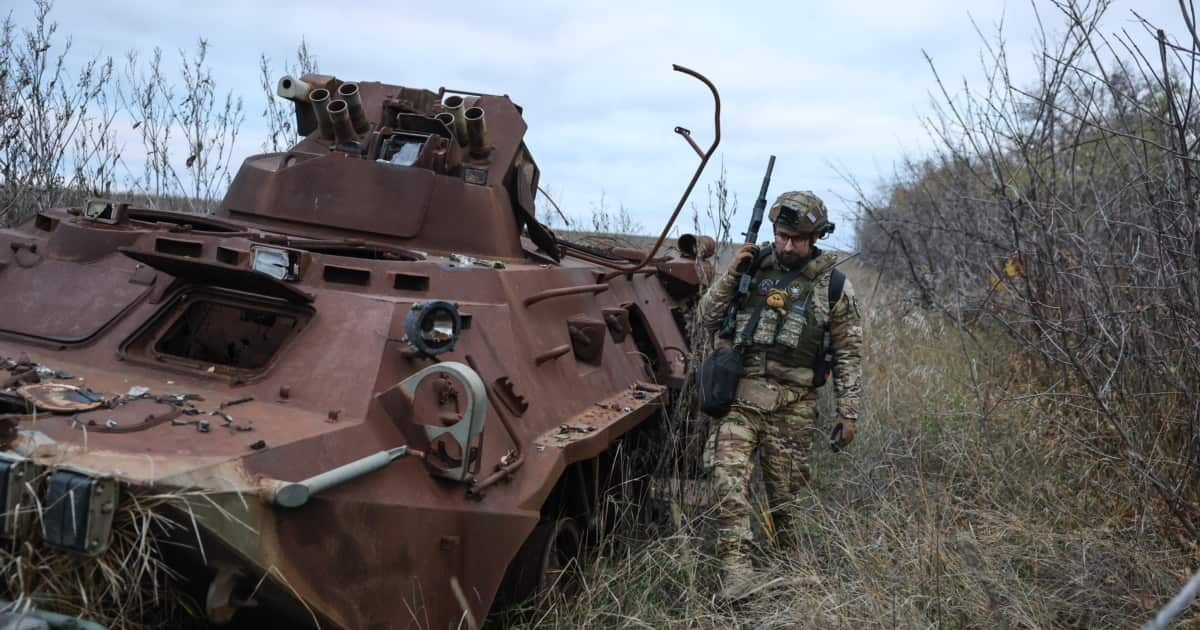
RFE/RL Visits Newly Liberated Donetsk Territory after Ukraine’s ‘Silent’ Counteroffensive
The Third Corps of the Ukrainian Army said it liberated 16 settlements and secured 277 square kilometres in the Donetsk region during an operation named "Vivaldi." Radio Free Europe/Radio Liberty visited frontline positions and retraced the route taken by Ukrainian infantry and assault units during what Kyiv has described as a "silent" counteroffensive.
By Alexander Walter
963 views
Ukraine’s Third Corps has reported the liberation of 16 settlements and 277 square kilometres of territory in the Donetsk region as part of an operation designated "Vivaldi," marking a notable gain along one of the country’s most contested front lines. Radio Free Europe/Radio Liberty (RFE/RL) visited positions in the newly retaken area and accompanied the infantry and assault units that carried out the advance, documenting movements and frontline conditions during what Ukrainian authorities have called a "silent" counteroffensive.
RFE/RL’s reporting follows the course taken by Ukrainian military units as they moved to recover ground in Donetsk. The outlet’s on-the-ground coverage included visits to frontline positions, where correspondents observed the immediate aftermath of the operation and traced the routes used by troops. The combination of official military claims and independent reporting provides a contemporaneous view of operations that Kyiv has kept relatively discreet in their planning and execution.
The gains reported by the Third Corps—16 settlements and roughly 277 square kilometres—represent localized but tangible changes to the front lines. Such advances can have immediate tactical significance, including improved defensive depth, control of terrain, and potential disruption of opposing supply lines. They also carry symbolic and morale value for both military personnel and local populations, as shifts in territorial control affect civilian safety, access, and the broader trajectory of the conflict in eastern Ukraine.
Donetsk has been a focal point of sustained fighting for years, and operations there play an outsized role in the broader conflict dynamics. The characterization of the recent push as a "silent" counteroffensive suggests efforts to limit public disclosure and operational predictability, a tactic sometimes used to preserve surprise and reduce the effectiveness of adversary countermeasures. RFE/RL’s visit, including a video feature, aimed to show how Ukrainian infantry and assault formations conducted their movements while maintaining operational security.
RFE/RL’s coverage underscored not only the military aspects of the advance but also the human and logistical dimensions encountered at the front. Journalists reported on the conditions of frontline positions, the visible impact of recent fighting on terrain and infrastructure, and the routes by which troops advanced. Such reporting provides an essential independent perspective on claims of territorial recovery at a time when access to frontline areas is tightly controlled and information can be contested.
The operation’s reported success will be assessed by military analysts and local authorities for its sustainability and broader implications. Retaking territory is often only the first step; holding, defending, and stabilizing liberated areas typically require follow-on operations, logistics support, and measures to ensure civilian security. How Ukrainian forces consolidate these gains and the response from opposing forces will shape the next phase of operations in Donetsk.
RFE/RL’s visit to the newly liberated territory and its documentation of the route taken by Ukrainian infantry and assault units form part of ongoing international media coverage of the conflict. Independent confirmation and continued reporting will be important for understanding the full scope and consequences of Operation Vivaldi’s reported advances, particularly for civilians in the Donetsk region and for the evolving military balance on the ground.