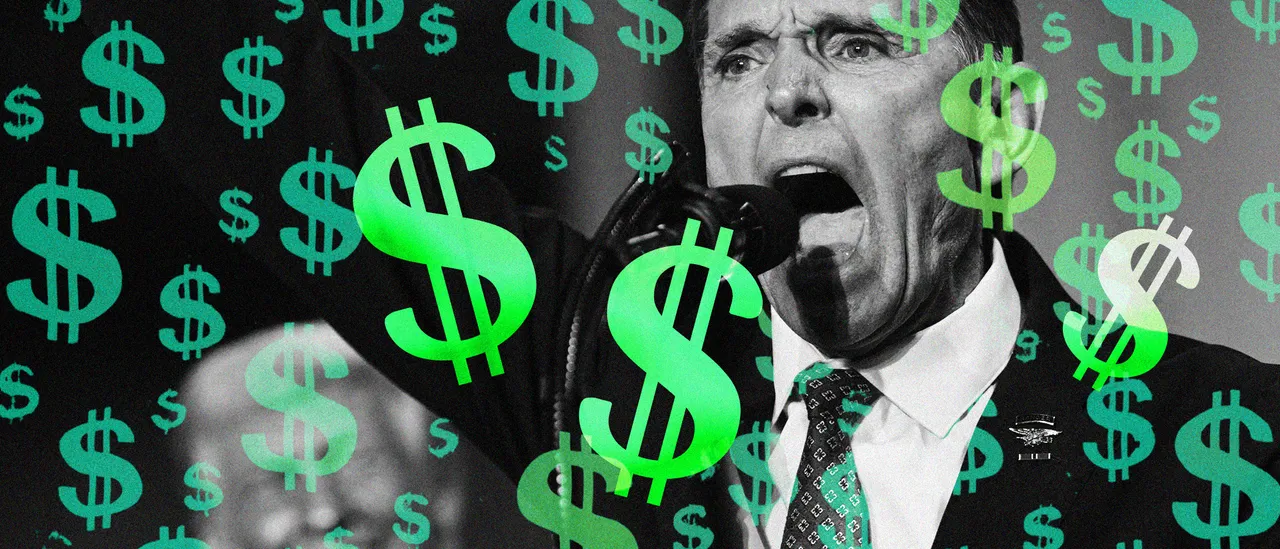
Review Finds Majority of Top Donors to Trump-Endorsed Challenger Previously Gave to Democrats
A Daily Caller review of Federal Election Commission records found that 85% of donors who contributed the maximum allowable amount to Ed Gallrein’s congressional campaign have a history of giving to Democratic candidates. The finding contradicts Gallrein’s public claim that his funds are coming from conservatives and underscores broader questions about cross-party donations in competitive primaries.
By
845 views
A review of Federal Election Commission records by the Daily Caller indicates that a substantial share of high-dollar contributors to Ed Gallrein — the former Navy SEAL running to unseat Republican Rep. Thomas Massie in Kentucky’s 4th Congressional District — have a history of donating to Democratic candidates.
The Caller identified 141 donors in the fourth quarter who contributed the $3,500 primary maximum or more to Gallrein’s campaign. Of those, 120 — roughly 85% — have previously given to Democratic candidates, according to the FEC records review. Additionally, 112 of those donors are high-dollar contributors to Democratic campaigns, a figure that means approximately 79% both maxed out to Gallrein and have made substantial donations to Democrats.
The data stand in tension with public statements from Gallrein, who during a Feb. 25 appearance on Hugh Hewitt’s radio show asserted that his campaign’s financial support was coming from conservatives. “Let me give you an example: my money is coming from conservatives — not from the same people who got Mamdani elected,” Gallrein said at the time, adding, “There’s a Pulitzer Prize waiting for whoever does that research,” when asked whether he had the financial resources to take on Massie.
When the Daily Caller pressed the Gallrein campaign on the discrepancy between the candidate’s remarks and the donor histories revealed by FEC records, a campaign spokesperson dismissed the line of questioning as “ridiculous.” The spokesperson pivoted to criticize Massie’s own donor base, saying: “Thomas Massie is bankrolled by Obama donors, Kamala donors, Hillary donors, and even Rashida Tlaib and Ilhan Omar donors. You should be asking him about that.” The statement also invoked outside endorsements, noting, “President Trump endorsed Ed Gallrein because he’s the MAGA conservative in this race. There is a reason the ladies of View [sic] love Massie. Maybe ask Massie’s best friend, socialist Ro Khanna, about who is the conservative in this race.”
Gallrein has received the endorsement of former President Donald Trump, a high-profile backing that has been publicly celebrated by the campaign. In addition to cash contributions, records show an in-kind donation to Gallrein from Adam Offenhartz, a donor who previously gave to former Vice President Kamala Harris’s 2024 presidential campaign and President Joe Biden’s 2020 campaign. Offenhartz and at least two other Gallrein donors identified in the Caller’s review — Stephen Krooth and David Ross — also contributed the maximum to Rep. Sarah McBride of Delaware, who is the only transgender member of Congress.
The presence of Democrats and Democratic-leaning donors among top contributors to a Trump-endorsed Republican primary candidate highlights a recurring dynamic in modern American politics: cross-party donations as a strategic tool. In contested primaries, donors sometimes support perceived weaker or more extreme candidates in the opposing party to influence general-election matchups or to affect the ideological composition of the rival party. While the FEC data do not reveal donors’ motives, the numbers complicate narratives about the purely conservative financial base of Gallrein’s campaign.
Thomas Massie, a current Republican congressman representing Kentucky’s 4th District, has benefited in previous cycles from a donor base Gallrein has suggested is largely out-of-state. Gallrein has also asserted that his campaign represents a clearer, one-on-one contest that avoids the split-field dynamics Massie has benefited from in the past. How voters in the district weigh the source of the challenger’s funds — and whether Massie’s allies or opponents can effectively use donor histories in campaign messaging — could influence the outcome of the primary contest.
As the race develops, the donor composition and public claims about campaign funding are likely to remain a focal point for both sides. The Gallrein campaign’s dismissal of the Caller’s findings underscores how campaigns may frame donor histories differently depending on political strategy. Meanwhile, the FEC records provide a factual basis for ongoing scrutiny of who is financing high-dollar efforts in what may become a closely watched Republican primary.