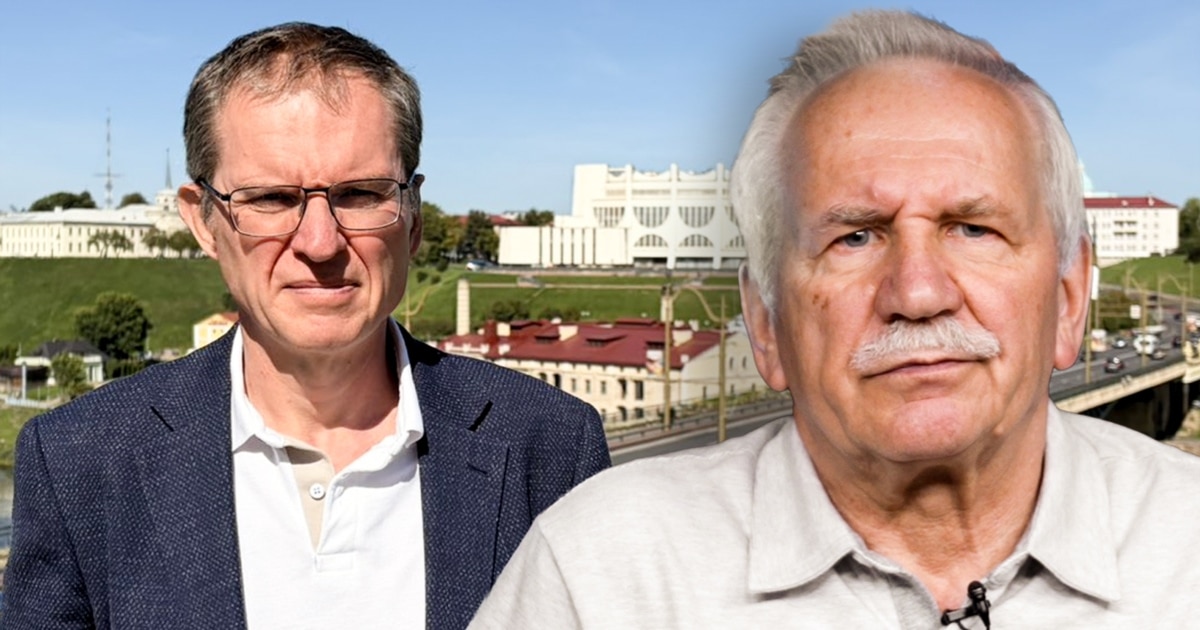
Return of Former Political Prisoner Andrzej Poczobut to Belarus Raises Questions — Analysis by Valer Karbalevich
Former political prisoner Andrzej Poczobut has returned to Belarus in a development described by the source as unprecedented. Political analyst Valer Karbalevich connected Poczobut’s return with wider state activity this week, including a meeting called by President Alexander Lukashenko on licensing for various types of activity, and offered an interpretation of what these events might mean for the country’s political landscape.
By Clémence Desjardins
908 views
Former political prisoner Andrzej Poczobut has returned to Belarus, a development described by the source as unprecedented and that has prompted analysis of its possible significance. The return occurred this week and drew attention amid other notable state actions, including a meeting convened by President Alexander Lukashenko on the subject of licensing different types of activity.
The events of the week were examined by Valer Karbalevich, a veteran political commentator for Radio Svaboda. Karbalevich—identified in the source as a candidate of historical sciences and the author of the 2010 book Alexander Lukashenko. Political Portrait—has been a widely cited analyst on Belarusian politics and has worked with Radio Svaboda since 1999. In his commentary, Karbalevich placed Poczobut’s return in the context of the broader sequence of government decisions and pronouncements this week.
Details on the circumstances of Andrzej Poczobut’s return, including whether it followed a formal release, deportation, or another arrangement, were not specified in the source. The report characterizes the occurrence as without precedent, indicating that observers see it as exceptional in the current political environment. The source also notes that the timing coincided with an official meeting convened by President Lukashenko that focused on licensing regimes for various activities, a development Karbalevich linked to the wider significance of the return.
Analysts and observers often view high-profile returns, releases, or changes in the status of political prisoners as potentially meaningful signals about a government’s strategy. Such moves can serve multiple purposes: they can be tactical attempts to reset international relations, to relieve domestic pressure, or to recalibrate the state’s relationship with specific communities or foreign governments. They may also be isolated incidents without broader policy shifts. The report does not assert which of these interpretations applies in this case, but highlights that Karbalevich offered an explanation tying the event to concurrent government activity.
The source underscores the need to monitor further developments and official explanations to understand the motives and implications of Poczobut’s return. Given the limited public details provided alongside the announcement, questions remain about whether the return reflects a broader political opening, a narrowly tailored administrative decision, or a different form of state calculation.
For readers seeking context on the analysis itself, the source presents Karbalevich as one of Belarus’s most cited political commentators. His background—academic credentials in history, a published political portrait of President Lukashenko, and a long tenure at Radio Svaboda—frames him as a commentator whose interpretations carry weight in discussions of Belarusian political maneuvers.
Observers of human rights and press freedom will likely scrutinize the matter for further indicators, including any official statements from Belarusian authorities or reactions from rights groups and foreign governments. The source emphasizes that the return is notable and that its timing alongside a presidential meeting on licensing issues merits attention as part of an evolving story about political prisoners, state policy, and the country’s direction.
At present, concrete conclusions about the causes and consequences of Andrzej Poczobut’s return are limited by the information released. The report calls for continued reporting and analysis to clarify whether this event represents a singular occurrence or a component of a wider political recalibration in Belarus.