Republicans Gain the Edge in Mid-Decade Redistricting, but Control of the House Remains Uncertain
Ten states redrew congressional maps ahead of the 2026 midterm elections — the most mid-decade redistricting since the 1800s — resulting in maps favorable to Republicans in eight states and to Democrats in two. While consultants estimate a net GOP gain of five to 12 seats from the new maps, polling, international events and demographic trends leave control of the House still in play.
By Clémence Desjardins
841 views
Ten states undertook mid-decade congressional redistricting ahead of the 2026 midterm elections, the most such activity in the middle of a decade since the 1800s, according to the National Conference of State Legislatures. The resulting maps produced a clear advantage for Republicans in eight states, while Democrats secured favorable redraws in two states, California and Utah. Legal rulings, state politics and demographic changes combined to create a patchwork of gains and competitive races that will shape the battle for control of the House.
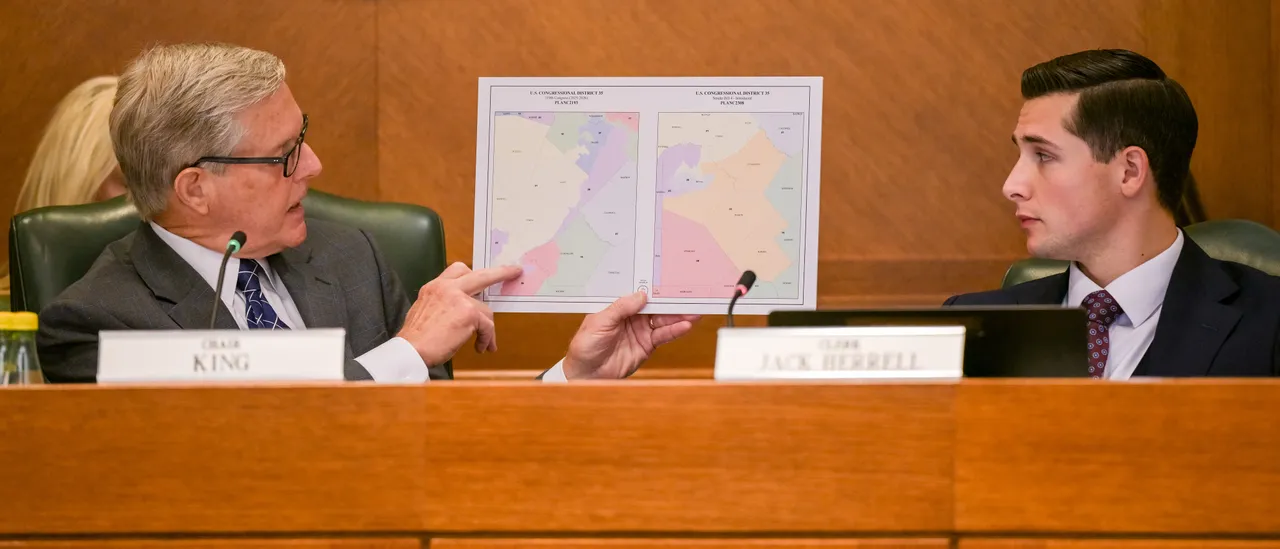
The most prominent early mover was Texas. In July 2025 Republicans in the Texas Legislature voted through a new congressional map after Democrats staged an unsuccessful effort to leave the state to block the vote. Gov. Greg Abbott signed the GOP map into law less than a month after it was unveiled; the lines were expected to flip three to five Democratic-held seats to Republican control. After litigation by opponents, a lower court temporarily blocked the map but the U.S. Supreme Court cleared Texas to use the new lines in December 2025.
Other Republican-led redistricting changes included Missouri, where one seat shifted from safely Democratic to safely Republican; North Carolina, where a previously narrow Democratic seat President Donald Trump carried by three points in 2024 was redrawn into a district Trump carried by 12; and Ohio, where the longtime Democratic incumbent Marcy Kaptur’s seat went from a district Trump had won by under seven points to one he carried by nearly 11. In Florida, Gov. Ron DeSantis on May 4 signed an aggressive map designed to flip four Democratic House seats. Despite the 2024 Trump margins in those areas, the nonpartisan Cook Political Report rated none of the new seats as “Solid R”: one was “Toss Up,” two “Lean R,” and one “Likely R.”
The Supreme Court’s decision in Louisiana v. Callais, which limited portions of the Voting Rights Act tied to race-based gerrymandering, prompted Alabama, Louisiana and Tennessee to redraw maps and created an additional Republican-leaning seat in each state. Meanwhile, Democrats scored a major victory in California when voters approved Proposition 50 in November 2025, a measure backed by Gov. Gavin Newsom intended to offset GOP gains in other states by redrawing California’s map and potentially flipping up to five Republican-held seats. Still, two of California’s newly drawn seats remain competitive.
Utah, typically a deep-red state, was ordered by a Republican-appointed judge to adopt a map that produced a safely blue seat centered in Salt Lake City, replacing the seat held by retiring Republican Rep. Burgess Owens. In Virginia, a heavily criticized Democratic map that initially appeared to promise up to four additional Democratic House seats was struck down by the state supreme court just 17 days after voters approved it. Proposed GOP maps in Indiana and South Carolina also failed when some Republican legislators joined Democrats to block the plans.
At a Washington forum titled “How Will Redistricting Shape the 2026 Elections?,” Republican consultant Jim Ellis estimated that, after accounting for the changes across the ten states, Republicans stand to gain between five and 12 seats. That projection improved the GOP’s position relative to earlier in the year, when some analysts believed Democrats might net seats from mid-decade redraws. Even so, Ellis and other observers stressed that redistricting is only one factor determining the balance of power.
Ellis warned that the outcome of the 2026 midterms will also depend heavily on broader political dynamics, including the Trump administration’s war with Iran and its economic fallout, notably spikes in gas and grocery prices. Public polling from RealClearPolitics between May 7 and June 2 showed Democrats leading the 2026 House generic ballot by six points, and recent Democratic upset wins in special state legislative races evoked comparisons to the 2018 Democratic wave.
Ellis also traced the origins of the redistricting surge to a federal case initiated by the Biden-era Department of Justice, Petteway v. Galveston County. After a Fifth Circuit ruling in 2024 that a majority-minority county commission district in Texas was not protected under the Voting Rights Act, the county dismantled the district and the previous Democratic incumbent lost reelection. The DOJ then informed Texas officials that the state’s congressional map needed to be redrawn, a development Ellis said helped set subsequent redistricting efforts in motion. Ohio’s mandated redraw under state law, he added, and California’s reaction to potential Republican gains, contributed to a chain reaction of map changes.
Looking beyond 2026, Ellis predicted another round of redistricting before the 2028 elections, spurred by legal decisions such as Callais and potential retaliatory moves by blue states. He and other analysts also highlighted demographic trends that could favor Republicans in the next decennial apportionment: the American Redistricting Project projects that if 2025 population estimates are used for post-2030 apportionment, California could lose four congressional seats while Texas would gain four and Florida would gain two, with additional gains for smaller red states and losses for several blue states. Those shifts would affect not only House composition but the Electoral College as well.
The redistricting debate remains unsettled as legal challenges, campaign dynamics and national events continue to evolve. While Republicans have secured the advantage on paper in most of the maps drawn mid-decade, political observers and party strategists agree that the ultimate control of the House in 2026 will be determined by a broader set of forces that extend well beyond map lines. Ellis delivered his analysis at the launch of the America’s Economy First speaker series hosted by Navigators Global in Washington, D.C.