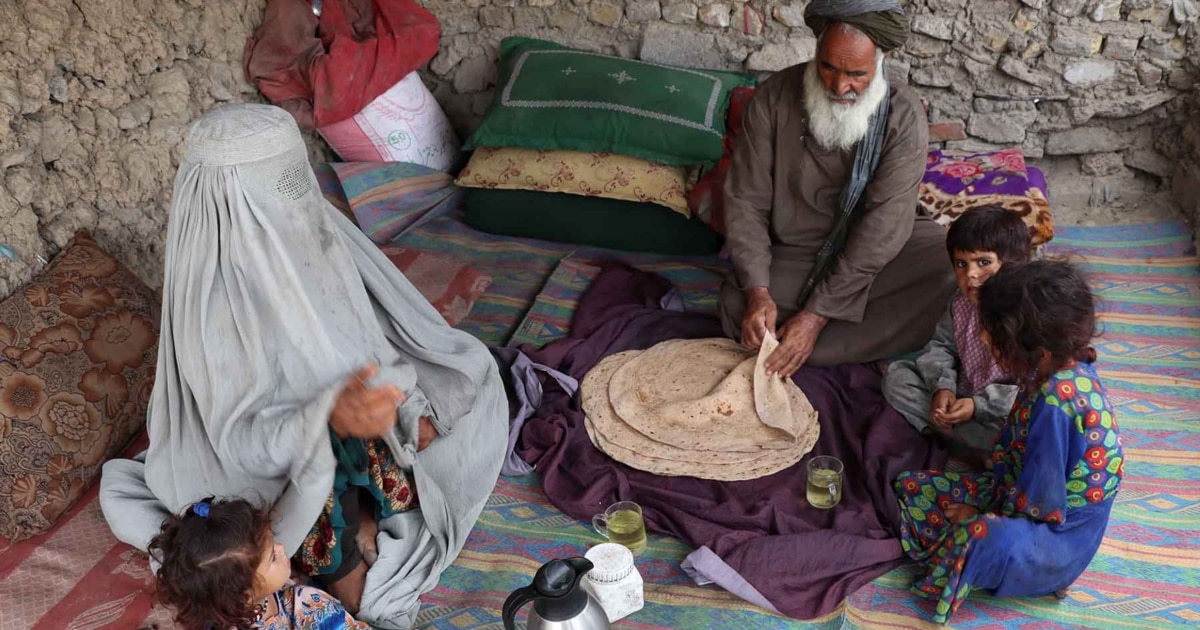
Remittances Become Lifeline as Afghan Economy Falters and Jobs Disappear
Five years after the Taliban returned to power, many Afghan families now depend on money sent by relatives abroad to cover basic needs. With rising inflation, widespread unemployment, restrictions on women's work and millions of returnees putting strain on resources, informal and formal remittance flows have become crucial to household survival.
By Daud Khattak
979 views
For many Afghan households struggling to survive in the years since the Taliban retook control of Kabul, cash sent by relatives abroad has become a primary lifeline. Shopkeeper Momin Khan, who runs a small business in the capital, Kabul, told Radio Azadi that he regularly collects and distributes remittances to neighbors and relatives who have no income of their own. “Those [families] depend entirely on the money that is sent to them [from abroad]. So, almost every month, I collect the money for them and deliver it. It has turned into a main source of survival for those families,” he said.
Afghanistan’s economic decline has multiple causes: the withdrawal of international forces in 2021 was followed by a collapse in foreign investment and aid, and the Taliban's takeover has coincided with policies that many Afghans say have further eroded incomes. The Taliban government unveiled a five-year National Development Strategy last year, but ordinary Afghans report seeing little improvement. Annual inflation rose to 8 percent in May, up from 0.5 percent a year earlier, and food inflation grew even faster, registering about 8.2 percent—squeezing purchasing power as jobs remain scarce.
The lack of employment opportunities is widely cited by families across provinces as the main reason they rely on remittances. In Kunar Province, resident Abdul Sattar Ayubi said his son, who lives in London, regularly sends money that keeps the household afloat. “My son is based in London and supports the family by regularly sending money from there. We wouldn’t be able to fulfill our daily expenses without his support,” Ayubi told Radio Azadi, adding that “with no jobs or business opportunities in the country,” many families must depend on relatives overseas.
There are no precise official figures for total remittances into Afghanistan for 2026, in part because much of the money moves through informal systems such as Hawala, which operate outside the formal banking sector. Still, business figures and returnees’ accounts suggest a marked increase. Azarakhsh Hafizi, a former head of Afghanistan’s Chamber of Commerce who recently returned to Kabul after years in Germany, estimated that remittances have roughly tripled: “In the past, Afghans living abroad used to send around $1 billion a year. That amount now stands between $2.7 billion and $3.5 billion annually,” he said.
The surge in remittance dependence comes as Afghanistan faces one of the world’s most acute humanitarian crises. Aid that previously sustained large parts of the economy has dwindled, and restrictive policies imposed by the Taliban—most notably extensive bans and constraints on women working—have cut off a crucial source of household income for many families. A woman in Kandahar who spoke on condition of anonymity told Radio Azadi that money from relatives abroad is often the only way her family can afford food, medicine and school supplies for her children.
Adding to the strain, an estimated 3.5 million Afghans have returned from neighboring Iran and Pakistan in recent years, increasing the population dependent on an uneven job market. “With millions of Afghans returning home, rapid population growth is outpacing economic gains pushing down incomes and deepening poverty and fragility,” said Faris Hadad-Zervos, the World Bank’s country director for Afghanistan.
External indicators reflect the depth of the labor-market crisis. The International Labour Organization reported that Afghanistan’s unemployment rate remained at 13.35 percent in 2025, among the highest globally. Analysts warn that while remittances offer immediate relief, they are not a sustainable substitute for domestic economic recovery. Hafizi cautioned that heavy reliance on money from abroad could ultimately dampen incentives for work and entrepreneurship: “To help overcome the economic problems, the focus must shift to long term solutions that will help generate employment opportunities and improve the economy.”
As remittance flows remain essential to millions of households, policymakers and international organizations face the challenge of converting that temporary aid into longer-term economic stability—if and when political conditions allow. For now, in the absence of robust job creation, many Afghans will likely continue to depend on relatives overseas and informal channels like Hawala to meet basic needs amid persistent economic and social restrictions.