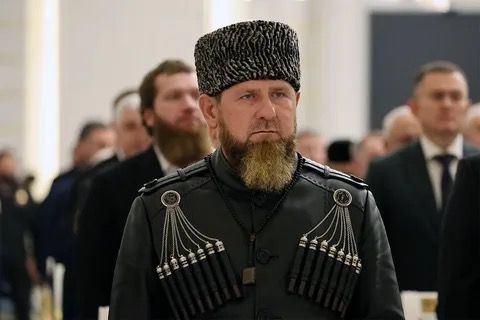
Ramzan Kadyrov sworn in for fifth term in Grozny, vows to defend residents as rights groups highlight abuses
Ramzan Kadyrov began his fifth term as head of Chechnya in a ceremony held in Grozny on his 50th birthday, promising to protect the Quran, the constitutions of Russia and Chechnya, and the rights of local residents. Human rights organisations say the pledge comes amid continuing reports of persecution, abductions, forced enlistment, torture and extrajudicial killings under Kadyrov’s rule.
By Elizaveta Chukharova
1,135 views
Ramzan Kadyrov was inaugurated for a fifth term as head of the Chechen Republic on Monday in Grozny, a ceremony that coincided with the 50th birthday of the region’s long-standing leader. After taking the oath of office, Kadyrov pledged to “defend the Quran, the Constitutions of Russia and the Chechen Republic, and the rights of our residents to life and to a happy future for our children.” He added: “This is my duty. This is my word. The word of Ramzan Kadyrov.”
The inauguration followed an election in September in which Kadyrov, nominated by the ruling United Russia party, was officially reported to have won 99.85% of the vote with a turnout of 95.19%. According to official results, 830,690 people voted for him. The two other registered candidates, Ismail Denilkhanov of A Just Russia — For Truth and Khalid Nakaev of the Communist Party, each received 0.05% of the vote. Kadyrov has governed Chechnya since 2007.
Electoral monitors and independent Russian media widely criticised the September vote, saying it was tightly controlled and offered little space for legal opposition. The election results and the circumstances surrounding them have been cited by critics as evidence of the restricted political environment in the republic.
Kadyrov’s inauguration was accompanied by an array of honors and high-profile congratulations. President Vladimir Putin was, according to Kadyrov, among the first to send congratulations and well-wishes. Patriarch Kirill of Moscow and All Rus presented Kadyrov with the Order of Glory and Honour, First Class, praising him as a “strong-willed, determined and responsible leader” and noting the close relations that have developed between Chechen authorities and the Grozny Diocese of the Russian Orthodox Church.
Two days earlier Kadyrov was presented with the rank of army general by Rosgvardiya director Viktor Zolotov and was given gold shoulder boards and a maroon beret, despite never having served in the Russian Armed Forces. Heads of neighbouring republics and a series of senior Russian officials, including Prime Minister Mikhail Mishustin, Federation Council chair Valentina Matviyenko, State Duma speaker Vyacheslav Volodin, and Kremlin chief of staff Anton Vaino, also sent congratulatory messages. Belarusian President Aliaksandr Lukashenka was among foreign leaders to offer felicitations.
The public celebration and federal endorsements take place against a backdrop of persistent and detailed criticism from human rights organisations. In its World Report for 2026, Human Rights Watch said Chechen authorities continued to persecute relatives of Kadyrov’s opponents in 2025. The Memorial Human Rights Centre reported in 2026 on what it described as a new wave of raids, abductions and the forced signing of contracts with the Russian Defence Ministry. Multiple rights groups have long accused Chechen security forces and pro-government units of practices including torture and extrajudicial executions.
Kadyrov’s repeated public commitments to protect residents’ rights and to uphold religious and constitutional values are therefore sharply juxtaposed with these documented allegations from rights monitors. For residents and observers, the new term is likely to be viewed through the dual lens of reinforced local authority and the continuing international scrutiny over human rights and rule-of-law concerns in Chechnya. How federal authorities and independent watchdogs respond to ongoing reports of abuses may shape both the domestic political environment in the republic and its relations with Moscow in the months ahead.