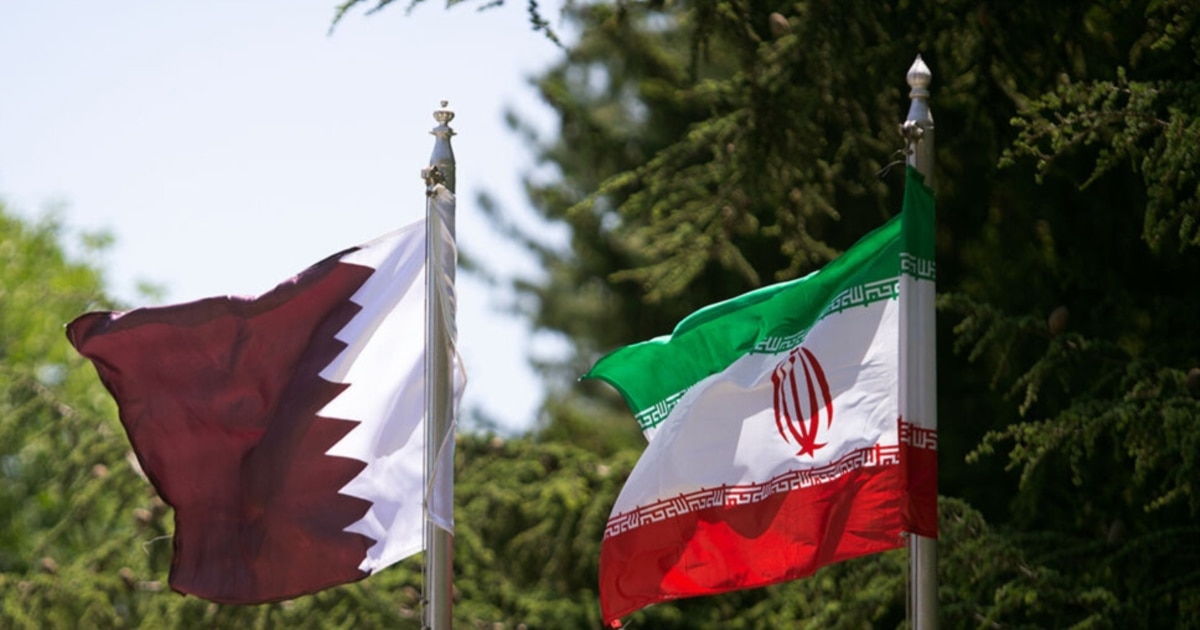
Qatar Sends Mediators Back to Tehran in Renewed Push to Stop Iran–U.S. Hostilities
Qatari mediators have returned to Tehran for a second visit in as many weeks to press efforts to end fighting between Iran and the United States, Reuters reported. The mission is said to be coordinated with Washington, though Tehran has not formally confirmed the delegation's presence; earlier offers were rejected by senior Iranian officials who say Iran's nuclear stance has not changed.
By Christopher Manley
1,072 views
Qatari mediators have arrived in Tehran again in a renewed effort to keep alive talks aimed at ending hostilities between Iran and the United States, Reuters reported on Friday citing a knowledgeable official. According to that report, Doha's mediation is being conducted in coordination with Washington, though the Qatari delegation's visit has not yet been formally acknowledged by Iranian authorities.
This marks the second trip by Qatari intermediaries to Iran in roughly a week. The visits follow a diplomatic exchange in which, according to reporting, U.S. political figure J.D. Vance sent a letter to Mohsen Rezaei, secretary of Iran's Supreme National Security Council, proposing a resumption of direct talks. While the precise contents of that correspondence and the details of the interlocutors' proposals have not been disclosed publicly, media reporting indicates Doha has been carrying a draft proposal to Tehran aimed at ending clashes.
Doha reportedly delivered a draft proposal last Sunday intended to serve as the basis for de-escalation. An unnamed senior Iranian official described those proposals as "unacceptable," and reiterated that Tehran's positions, particularly on its nuclear program, have not changed. The Iranian government's formal silence on the Qatari delegation's arrival has left the mission's immediate objectives and the prospects for agreement uncertain.
The renewed mediation effort comes amid heightened tensions between Iran and the United States. Even absent a formal declaration of war, escalatory exchanges and proxy confrontations can rapidly imperil civilians, infrastructure and regional stability. International mediation aimed at de-escalation therefore has urgent humanitarian significance: successful diplomacy could reduce civilian casualties, stabilize supply lines for essential goods and create space for negotiated solutions to contentious security and nuclear issues.
Qatar has in recent years played a quiet but visible role as an intermediary in several regional disputes. In this instance, Reuters' sourcing indicates that Qatari envoys are maintaining close coordination with U.S. counterparts as they shuttle between capitals. Yet the contours of any possible settlement, the timeline for talks, and the mechanisms for verification and enforcement remain undisclosed. Iran's explicit stance on its nuclear program and its apparent rejection of the initial draft underscore the depth of the diplomatic challenge.
Observers caution that mediation faces multiple hurdles. Any agreement would need to address security guarantees, mutual perceptions of threat, and the political constraints faced by each side domestically. For Iran, the nuclear issue appears to be a red line, according to the statements attributed to senior Iranian officials. For the United States and its allies, credible assurances regarding Iranian regional behavior and any rollback of hostile actions would likely be central.
At present, the situation is fluid and opaque. Qatar's shuttle diplomacy underscores international concern about the dangers of further escalation and the desire among regional and external actors to avert a broader conflagration. For civilians on the ground and the wider international community, the stakes include not only immediate physical safety but broader humanitarian and human-rights consequences should hostilities intensify.
As mediation continues, transparency about the process and international attention to the humanitarian implications of any outcome will be essential. Whether the Qatari initiative can bridge the gaps between Tehran and Washington remains uncertain, but the renewed visits signal that diplomatic channels are still being pursued even as official confirmations lag and substantive differences persist.