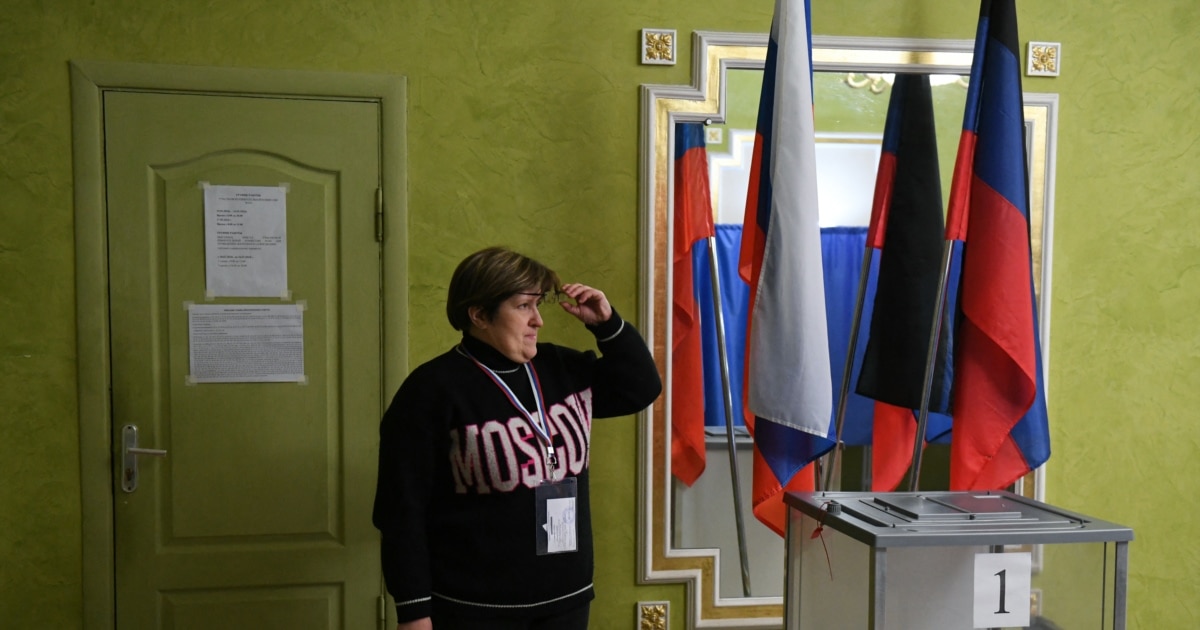
Public-sector employees across Russia report pressure to vote amid preparations for upcoming elections
Employees of state-funded institutions in several Russian regions say they are being pressured by employers to vote in particular ways ahead of forthcoming elections. Allegations range from enforced registration for remote electronic voting to direct instructions to support specific candidates from the ruling party, with some workers reporting threats to bonuses or employment for non-compliance.
By Christopher Manley
818 views
Public-sector employees in multiple Russian regions have reported pressure from their employers to participate in the upcoming elections in ways that may undermine voters' free choice, according to regional media outlets, civic groups and social media channels. Accounts collected by local civic organizations and independent outlets describe a variety of coercive measures, from forced registration in remote electronic voting systems to explicit directions about which candidates to support.
In the Omsk region, the Omsk Civic Association has reported that employees of budget-funded institutions were instructed to register on the website for a regional project called "People's Hero. Vanguard of the Omsk Region," a matter also noted by the independent outlet 7x7. Staff were reportedly handed QR codes they were told to bring to polling stations, but employees say they were not informed of the codes' purpose. The distribution of the codes and required registration have been described by workers as compulsory.
In the Republic of Bashkortostan, the Ufimsky District education department allegedly sent directives to the heads of 49 schools and kindergartens instructing staff to "consolidate" behind the Ufimsky District and vote for specific candidates from the United Russia party, according to the Telegram channel Respublika yorto. In Yakutia, subscribers of the Pryanaya Yakutiya channel reported that university administrators at the North-Eastern Federal University required staff to submit applications to vote at the university's location and to "choose worthy candidates," language that employees interpret as urging support for particular contenders.
Similar reports emerged from Novgorod Region, where the regional branch of the Yabloko party said that management at Novgorod State University compelled academics to use the remote electronic voting (DEG) system. Yabloko pointed out that the rector, Yuri Borovikov, and the director of the Humanities Institute, Andrey Yefremenko, are themselves candidates for the Novgorod regional Duma from United Russia, a detail critics say raises conflict-of-interest concerns where staff are pressured to vote electronically.
In Sverdlovsk Region, municipal council candidate Dmitry Duma said cultural and educational institution employees told him they were required to cast votes electronically under direct supervision of their managers. Those who refused were allegedly offered termination forms or told to submit resignation statements. Duma has reportedly filed a complaint with the regional prosecutor's office.
Employees at museums in Saint Petersburg, including some who work at the State Hermitage, told the outlet Bumaga they were being compelled to vote on the first day of the election. In at least one medical facility staff were asked to vote before noon and then return to their shifts, with managers requiring even night-shift workers or those off duty on that day to show up and vote. In Altai Krai, the outlet Sibirsky Express reported that budget workers are being forced to register in the DEG system under threats of losing bonuses or experiencing unspecified workplace "problems." The Telegram channel Serditaya Chuvashia said that Chuvashia has recorded a surge in DEG applications and claimed the region now leads Russia in the number of such requests.
These reports span multiple regions and institutions, including schools, universities, museums and healthcare facilities. Employees described measures that ranged from administrative instructions and distribution of QR codes to direct threats regarding pay and employment. The accounts were reported by a mix of regional civic organizations, independent media and Telegram channels; in at least one case a municipal election candidate said he had taken the matter to prosecutors.
Independent verification of each individual allegation is limited in many cases, and regional authorities or institution managers have not uniformly responded to requests for comment in the reports cited. Nonetheless, the accumulation of similar accounts from distinct regions raises broader concerns about the integrity of the electoral process and the ability of public employees to exercise the right to a free and secret ballot. The pressure described by workers, if accurate, touches on fundamental civil liberties — including freedom of association and the right to an independent vote — and may prompt further scrutiny from rights groups and election monitors as voting approaches.