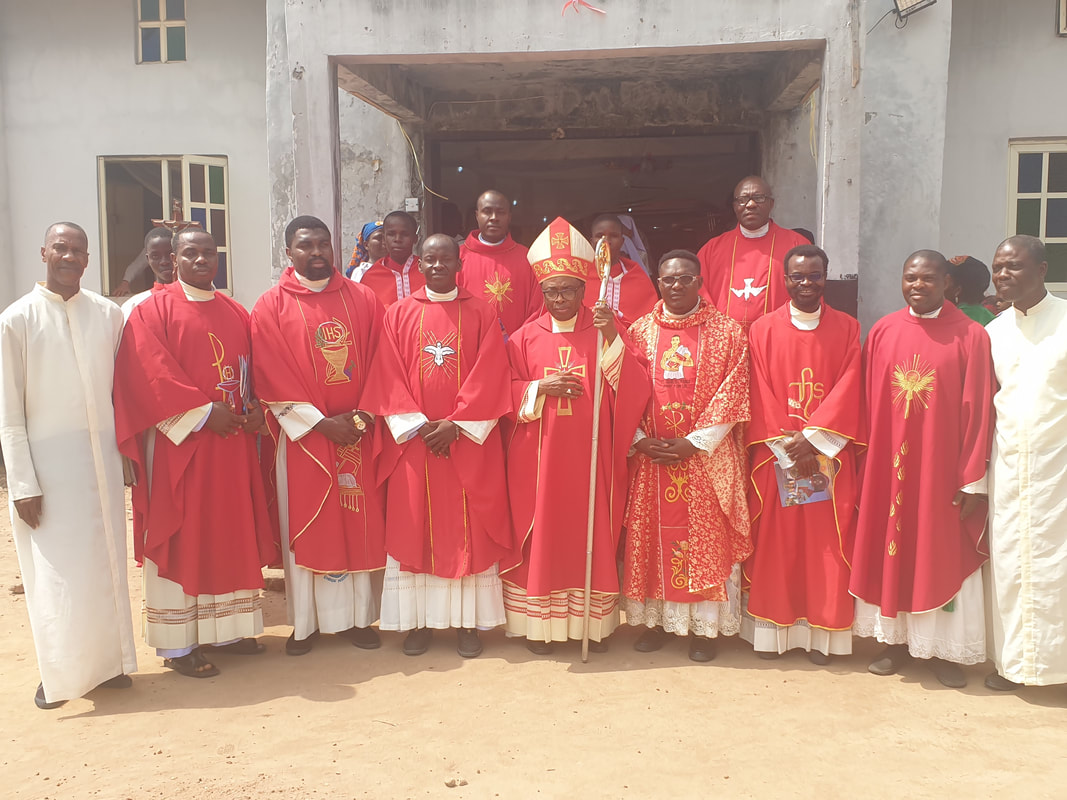
Priests and Christian Civilians Remain in Captivity as Militant Violence Escalates Across Nigeria
Christian communities across Nigeria continue to face systematic killings, mass kidnappings and forced conversions by Islamist militants and ethnic militias. Thousands were killed and abducted in 2025 alone, and several Catholic priests and hundreds of children and women remain in captivity amid limited government intervention and rising political tensions.
By Antonio Graceffo
1,010 views
Reports from human rights monitors and church sources indicate that violence against Christians across Nigeria has intensified in recent years, with 2025 recorded as one of the deadliest years on record. Monitoring groups attribute much of the violence to Islamist militant organizations including Boko Haram (also known as JAS), Islamic State – West African Province (ISWAP), and JNIM, as well as to Fulani and Koyam militias. According to the reporting, more Christians were killed in Nigeria in 2025 than in all other countries of concern combined, with over 7,000 murders attributed to Islamist militants and affiliated groups.
Abductions have accompanied and in some places eclipsed killings as a primary tactic. Open Doors documented 2,830 Christians kidnapped in 2024. Intersociety recorded approximately 7,800 Christians abducted in the first seven months of 2025—an average of roughly 35 people per day. The Observatory for Religious Freedom in Africa reported that over a four-year period the Fulani Ethnic Militia alone carried out more than 21,000 abductions in the North-Central Zone and Southern Kaduna, although return rates for those taken are not publicly tracked.
Catholic clergy have been particular targets. As of early 2026, four Catholic priests remained in captivity: Fr. John Bako Shekwolo, missing since 2019 after being taken from the Archdiocese of Kaduna; Fr. Joseph Igweagu, abducted in 2022 with no confirmed contact since; Fr. Emmanuel Ezema, likewise held with no publicly confirmed proof of life; and Fr. Nathaniel Asuwaye, parish priest of Holy Trinity Catholic Parish in Karku, Kaduna State, who was kidnapped on February 7, 2026, when gunmen raided his parish and residence. Between 2015 and 2025 at least 145 Catholic priests were kidnapped and 11 killed, with Kaduna identified as the deadliest state—24 priests abducted and seven killed. Chronic insecurity has also forced closures: in the Diocese of Minna more than 90 churches have reportedly shut their doors.
Church officials and diocesan spokespeople say priests are targeted because they are easily identified, generally lack protection, and their communities are often forced into lengthy and costly ransom campaigns. A communications director for one Nigerian diocese told Catholic News Agency: “It’s easier to kidnap priests, and give him little torture, and money will come out of it,” adding that, in that director’s view, no priest comes out of captivity without ransom being paid. Diocesan reports and survivors’ accounts describe kidnappers subjecting captives to long marches without food or water, beatings and other abuses.
Clergy are not the only victims. The abduction and exploitation of children and women have drawn sustained attention from international human rights organizations. The UN documented 210 cases of conflict-related sexual violence in Nigeria in 2020 alone, including rape affecting 30 boys. Amnesty International and Human Rights Watch have reported that boys are regularly conscripted, trained on weapons and forced into combat, while girls and women—particularly Christian women—have been singled out for abduction, forced conversion, marriage to fighters, sexual slavery and murder. Accounts cited by Amnesty include survivors raped repeatedly and forced into marriages; Human Rights Watch reported that some abducted Christians were released while Muslim captives were freed sooner.
The abductions of schoolchildren have been particularly high-profile and long-lasting. On the night of April 14–15, 2014, Boko Haram kidnapped 276 mostly Christian schoolgirls from the Government Girls Secondary School in Chibok, Borno State; as of a September 2025 UN CEDAW inquiry, 91 Chibok girls remain unaccounted for or their fate is unknown. In 2018, Boko Haram kidnapped 110 girls from a school in Dapchi, Yobe State; all were eventually released except Leah Sharibu, the only Christian among them who refused to convert to Islam and has remained in captivity. Reports indicate Sharibu has been forcibly married to an ISWAP commander and gave birth to children in captivity. UNICEF reported that since 2013 more than 1,000 children were abducted by Boko Haram in northeastern Nigeria. Between April 2014 and December 2022, approximately 70 attacks on schools led to more than 1,680 students abducted; between January 2023 and November 2025, another 22 verified attacks resulted in 816 students kidnapped—bringing the estimated total since Chibok to about 2,496 students abducted across 92 school attacks.
Large-scale recent incidents include the November 21, 2025, abduction of 303 children and 12 teachers from St. Mary’s Catholic School in Papiri, Niger State; authorities said all those captives were released by December 22, 2025, although public confirmation about ransom payments was not issued. Economic drivers and a growing kidnapping industry have been documented: SBM Intelligence reported confirmed ransom payments of 2.56 billion naira (about $1.66 million) and recorded 4,722 civilians abducted in a single year. UNICEF also warns that the crisis has contributed to a widening education gap, with one in three Nigerian children reportedly not in school.
The pattern of violence has continued into 2026, with attacks reported across the North, East and Middle Belt regions and incidents occurring during Passion Week in Christian communities in Kaduna and Jos. Analysts and church leaders have described the phenomenon with terms such as “Islamization” and “Fulanization,” reflecting fears about demographic and cultural pressure in affected areas. With general elections approaching, political tensions are heightened, but federal and state intervention remains limited according to multiple sources. Humanitarian organizations, religious leaders and rights monitors continue to call for improved protection, better tracking of abductions and returns, and measures to stem the financial incentives that sustain the kidnapping economy, as communities struggle with displacement, church closures and ongoing insecurity.