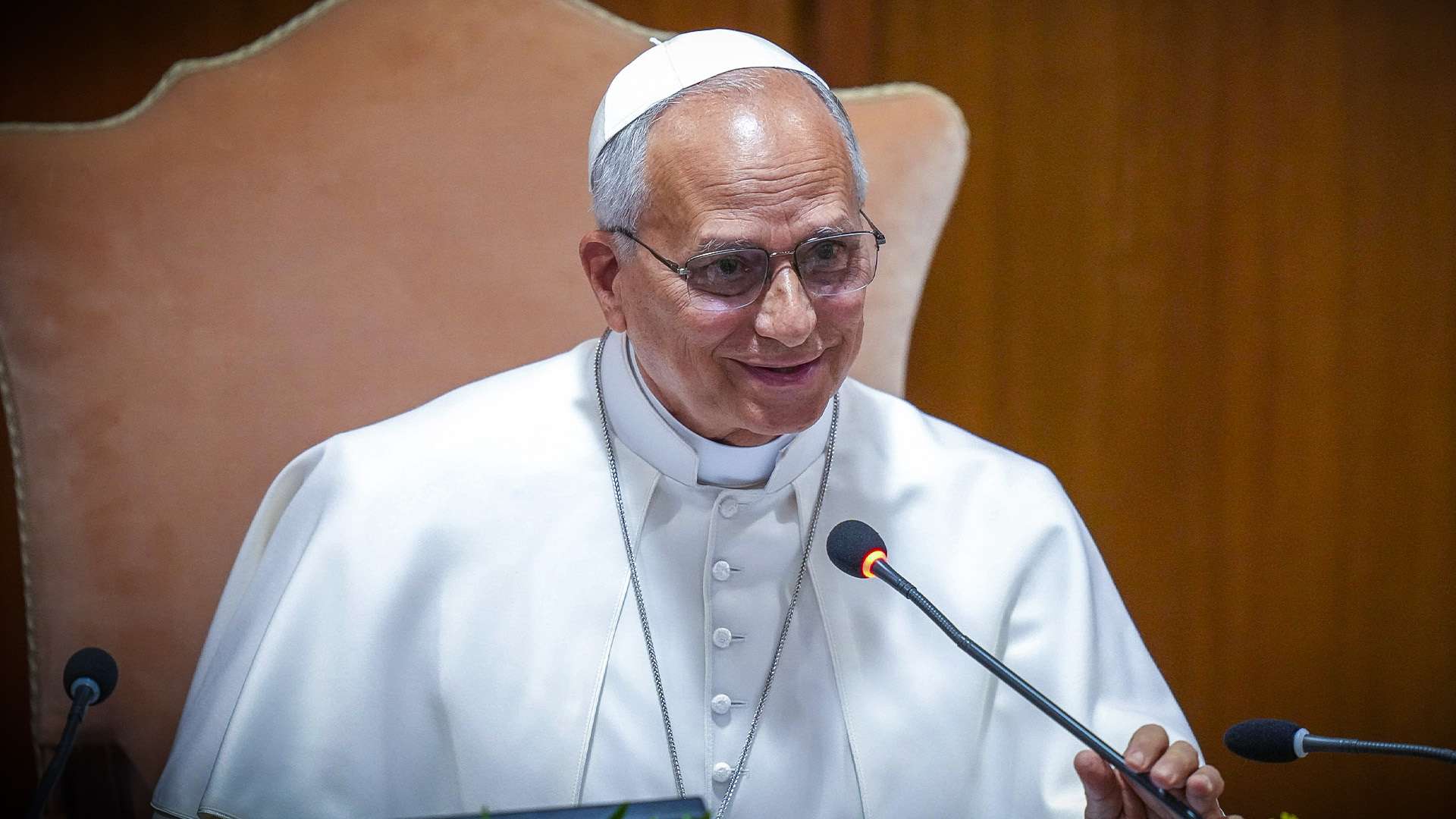
Pope Leo XIV Issues AI-Focused Encyclical 'Magnificas Humanitas'; Roundup Covers U.S. Strikes in Iran, Court Ruling, Drug Trial Results and More
Pope Leo XIV released his first encyclical, 'Magnificas Humanitas,' urging moral guidance for the development and deployment of artificial intelligence and warning of its potential to deepen injustice and surveillance. In a broader roundup of global developments, U.S. forces carried out self-defense strikes in southern Iran, a federal judge dismissed a high-profile human-smuggling prosecution, trial data for a new obesity drug showed striking weight loss, and Saudi Arabia gained economically amid regional turmoil.
By Liz Wolfe
1,073 views
Pope Leo XIV on Monday published his inaugural encyclical, titled "Magnificas Humanitas," setting out a moral framework for how humanity should harness artificial intelligence and other technologies for the common good while guarding against their harms. The document frames technology as neither inherently good nor evil but insists that, in practice, technological systems take on the character of those who design, finance, regulate and use them. "Technology has the power to heal, connect, educate and protect our common home; but it can also divide, exclude and generate new forms of injustice," the pope writes, urging a choice "not between a 'yes' or 'no' to technology, but rather between constructing Babel or rebuilding Jerusalem ; between a power that claims to dominate the heavens and a people who work together in the presence of God to rebuild the walls of fraternal coexistence." The encyclical draws on historical precedent and explicitly aligns the pope’s role with past papal approaches to transformative social change.
The document addresses economic and social consequences of automation and AI, warning that unbridled pursuit of profit can lead to the systematic sacrifice of jobs. While the encyclical concedes that "technology should not be considered, in itself, as a force antagonistic to humanity," it also asserts that "the pursuit of greater profits cannot justify choices that systematically sacrifice jobs." Leo XIV stresses that the "economic order must remain subordinate to human dignity and the common good," and he cautions that a technically advanced society which guarantees employment to only a small fraction of the population risks exposing many to "forced inactivity, a lack of responsibility and the absence of daily tasks and stimuli, resulting in human and cultural impoverishment." While the pope does not propose specific policy prescriptions, his aim is to supply moral clarity that could guide policymakers.
The encyclical also singles out digital business practices that exploit attention and vulnerability. "The subtler forms of addiction linked to the 'digital attention economy' should not be underestimated," Leo XIV writes, condemning platforms designed to capture users' time and attention and calling for the promotion of technologies that "strengthen interior freedom by fostering education in digital sobriety and the protection of minors." He further warns against pervasive data collection and algorithmic governance, arguing that such capabilities enable a form of social control: "When every action—movements, purchases, relationships and preferences—leaves a trace, a new form of power emerges, namely the power to profile, predict and influence behavior, often without individuals being fully aware of it." The pope invokes literature as well as theology, quoting J.R.R. Tolkien: "It is not our part to master all the tides of the world, but to do what is in us for the succour of those years wherein we are set, uprooting the evil in the fields that we know, so that those who live after may have clean earth to till."
Beyond the Vatican, the news of the day included renewed military tensions in the Middle East. U.S. Central Command reported that American forces conducted self-defense strikes in southern Iran after detecting threats amid a fragile ceasefire. The New York Times reported that a senior U.S. military official said Iranian surface-to-air missiles posed threats to American warplanes and nearly two dozen Navy warships, including two aircraft carriers and their escorts, which were operating in and around the Gulf of Oman and the Arabian Sea to enforce a blockade on vessels to and from Iranian ports. The strikes reportedly hit near Bandar Abbas, a major Iranian port and navy base. Iranian officials vowed the strikes "will not go unaddressed," and analysts warned the episode could further complicate any reopening of the Strait of Hormuz to commercial traffic.
In U.S. legal news, a federal judge in Tennessee dismissed the Justice Department’s human-smuggling case against Kilmar Abrego García. U.S. District Judge Waverly D. Crenshaw Jr. ruled that the administration had improperly brought the prosecution as a punitive response to Abrego’s successful legal challenge to what courts later found was his unlawful deportation to El Salvador. "Evidence before this Court sadly reflects an abuse of prosecuting power," Judge Crenshaw wrote, according to reporting in The Washington Post. The decision represented a notable legal rebuke to federal prosecutors and complicated the Justice Department’s public stance in the matter.
Medical developments drew attention as well after phase 3 trial data for the obesity drug retatrutide were released, producing unusually large average weight losses. The widely shared results showed an average body-weight reduction of 28.3 percent at a 12 mg dose over about 80 weeks—roughly 70.3 pounds (31.9 kg)—with 45.3 percent of patients achieving 30 percent or greater weight loss, a reduction commonly associated with bariatric surgery. The data have prompted both excitement and debate in medical and policy circles about the potential of new pharmacotherapies to reshape obesity treatment and health care demand.
Economic shifts tied to the Iran war were also highlighted. Bloomberg reported that Saudi Arabia has seen substantial increases in oil revenue and is advancing plans to become a trading hub, in part because the kingdom’s Red Sea coast has become an important corridor to bypass the closed Strait of Hormuz. Surging oil prices, contingency planning and higher defense and logistics spending have, according to analysts, bolstered Saudi revenue even as regional conflict slows growth elsewhere. "Saudi Arabia has shown it is the indispensable Red Sea backstop," said Hesham Alghannam, a Riyadh-based scholar at the Malcolm H Kerr Carnegie Middle East Center, reflecting the kingdom’s emerging strategic and economic role.
Amid these weighty global developments, the roundup also included lighter cultural notes. Supporters celebrated a Knicks watch party at Radio City, and a social-media post captured the convivial atmosphere as fans gathered to cheer on the team. On parenting, one user shared a small counterpoint to screen-driven childhoods: instead of an iPhone, their youngest child carries a stopwatch and records how long everyday tasks take in a notebook—an anecdote offered as a modest approach to limiting digital exposure. Together, the stories in this roundup ranged from global geopolitics and legal rulings to ethical guidance on emerging technologies and moments of everyday life, illustrating the breadth of current public conversation.