Poland–Ukraine Tensions Escalate After Lviv Declares 2027 the Year of the UPA and Roman Shukhevych
Poland has imposed a five-year Schengen entry ban on a Ukrainian regional councillor who initiated a controversial move to commemorate the Ukrainian Insurgent Army (UPA) and its wartime commander, Roman Shukhevych. The decision has reignited one of the most sensitive historical disputes between Warsaw and Kyiv, raising questions about reconciliation, regional cooperation and Ukraine’s European ambitions.
By Pawel Cybulski
1,112 views
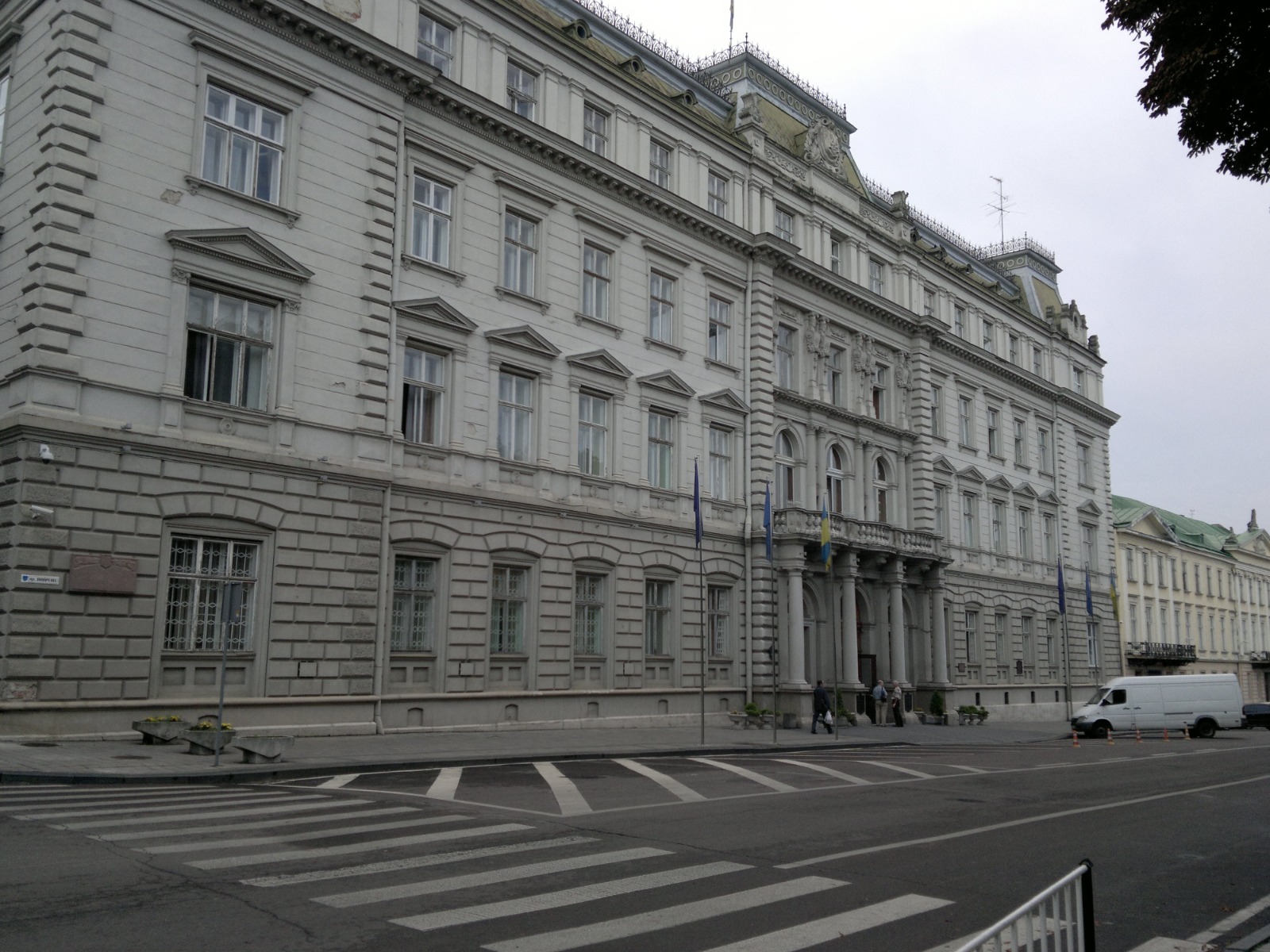
Photo: Lviv Regional State Administration building Source: Wikimedia Commons
A regional decision in western Ukraine has triggered a diplomatic dispute with consequences extending far beyond the Ukrainian-Polish border.
On October 20, 2026, the Lviv Regional Council adopted resolutions designating 2027 as the Year of the Ukrainian Insurgent Army (UPA), the Year of Roman Shukhevych, and the Year of Ukrainian nationalist poet and political activist Oleh Olzhych.
The initiative was proposed by Sviatoslav Sheremeta, a member of the Lviv Regional Council and chairman of its committee on culture and information policy.
The announcement immediately provoked strong reactions in Poland, where the UPA remains closely associated with the mass killings of Polish civilians in Volhynia and Eastern Galicia during World War II.
For Warsaw, commemorating the organisation and its commander without addressing their historical responsibility is unacceptable. For some Ukrainian nationalists, however, the UPA represents the struggle for Ukrainian independence against Soviet and other foreign domination.
The disagreement has once again exposed how unresolved historical grievances continue to complicate relations between two countries that share important security interests in the face of Russian aggression.
Poland imposes a five-year Schengen ban
Poland's response was swift.
On October 21, Foreign Minister Radosław Sikorski announced that he had signed a motion to place Sheremeta on Poland's list of individuals considered undesirable in the country.
Sikorski specifically referred to Sheremeta's role in proposing the commemoration of Shukhevych, whom he described as the commander of the UPA responsible for issuing orders to expel and kill Poles.
The Polish foreign minister also accused Sheremeta of participating in historical reenactments associated with the Waffen-SS Galicia Division.
Later that day, Interior Minister Marcin Kierwiński confirmed that Sheremeta had been entered into the register of foreigners whose presence in Poland is considered undesirable. Kierwiński announced that the restriction had been imposed at the request of Foreign Minister Sikorski.
The five-year ban covers entry into and residence in all Schengen Area countries and remains in force until October 20, 2031.
Sheremeta described Poland's reaction as strange, arguing that the resolution was not directed against Poland or the Polish people. He maintained that Ukrainians have the right to commemorate those they consider national heroes.
Sheremeta had already been banned from Poland in 2017
The latest restrictions are not the first time Sheremeta has faced a Polish entry ban.
On November 18, 2017, the Ukrainian official was stopped at the Medyka border crossing while travelling to Poland. Polish authorities refused him entry and he was reportedly informed that he was subject to a one-year ban covering Poland and the Schengen Area.
At the time, Sheremeta served as secretary of Ukraine's Interdepartmental Commission for the Commemoration of Participants in the Wars and Political Repressions.
The 2017 decision came amid a serious dispute over the suspension of Polish search and exhumation activities in Ukraine.
At the time, Sheremeta served as secretary of Ukraine's Interdepartmental Commission for the Commemoration of Participants in the Wars and Political Repressions. The 2017 decision came amid a serious dispute over the suspension of Polish search and exhumation activities in Ukraine.
Polish officials linked the entry ban imposed on Sheremeta to the Ukrainian decision to suspend the historical investigations and the restoration of Polish memorial sites.
The 2017 dispute was therefore already closely connected to the same unresolved historical issues that have resurfaced in 2026.
Who is Roman Shukhevych, and why does his legacy divide Poland and Ukraine?
Roman Shukhevych (1907–1950) was one of the most prominent figures in the Ukrainian nationalist movement and served as commander-in-chief of the Ukrainian Insurgent Army from 1943.
The UPA emerged from the radical nationalist movement associated with the Organisation of Ukrainian Nationalists (OUN-B). It fought for an independent Ukrainian state, opposing Soviet control and engaging in armed conflict with other forces operating in the region.
However, its history is inseparable from the mass murder of Polish civilians.
Between 1943 and 1945, UPA units carried out systematic attacks against Polish communities in Volhynia and Eastern Galicia. Approximately 100,000 Poles were killed, with women, children and elderly people among the victims.
Poland recognises the Volhynian massacres as genocide.
Shukhevych's historical responsibility remains a central issue in Polish-Ukrainian historical disputes. His position in the UPA leadership makes his commemoration particularly controversial in Poland.
In Ukraine, historical interpretations are different. Some political and social groups regard the UPA as a symbol of the national struggle for independence and resistance against Soviet domination.
This does not mean that Ukrainian society has a single position on the organisation or its wartime actions. The legacy of the UPA remains contested, both historically and politically.
For many Polish families, however, public celebrations of the organisation without recognition of its crimes are deeply painful.
Kyiv distances itself from the Lviv initiative
One of the most important aspects of the dispute is the distinction between the position of the Lviv Regional Council and that of Ukraine's central government.
Ukraine's Ministry of Foreign Affairs described the regional initiative as counterproductive to the development of Polish-Ukrainian relations.
The ministry stressed that the Lviv councillors had not consulted the central authorities before adopting the resolutions. It also called on Poland to refrain from drastic measures.
Polish Deputy Foreign Minister Marcin Bosacki subsequently said that representatives of President Volodymyr Zelenskyy's office had assured Warsaw that the controversial resolution would not be implemented.
There was, however, no publicly confirmed agreement from the Ukrainian presidential administration.
A further development came on October 28, when Maksym Kozytskyi, head of the Lviv Regional Military Administration, responded to an appeal from Wojciech Saługa, Marshal of the Silesian Voivodeship in Poland.
Kozytskyi confirmed that the resolutions had not been signed and had therefore not entered into force.
Under the applicable procedure, the decision requires the signature of the acting chairman of the Lviv Regional Council.
Kozytskyi also stressed that decisions made by public authorities should take Ukraine's foreign policy interests and good-neighbourly relations with Poland into account.
The clarification is significant: although the regional council voted in favour of the initiative, the proposed commemorations had not become legally effective as of October 28.
The dispute spreads to Polish regional governments
The controversy has also affected cooperation between local authorities on both sides of the border.
In Przemyśl, a Polish city located close to Ukraine, local councillors supported suspending cooperation with Lviv.
The Lublin regional assembly also took steps to end its partnership with the Lviv region.
In Jarosław, councillors withdrew an earlier resolution concerning planned cooperation with the Ukrainian town of Skole.
Meanwhile, Wojciech Saługa, Marshal of the Silesian Voivodeship, directly challenged the Lviv authorities over the decision.
These developments demonstrate that the consequences of the dispute are not limited to diplomatic statements or historical disagreements. They could also affect cross-border projects, cultural exchanges and institutional partnerships.
Such cooperation has played an important role in maintaining relations between Polish and Ukrainian communities, particularly since Russia launched its full-scale invasion of Ukraine in February 2022.
Military assistance: reports denied by Warsaw
The controversy also generated reports that Poland had suspended a planned military assistance package for Ukraine in response to the Lviv resolution.
The reports were published by Ukrainian media outlet European Pravda, citing an unnamed source in the Ukrainian government.
However, Poland's Ministry of National Defence rejected the claims.
Ministry spokesman Janusz Sejmej described reports of a suspension of military assistance as false.
There is therefore no confirmed basis for claiming that Poland officially halted military aid to Ukraine because of the regional council's decision. The distinction is important.
Despite the diplomatic tensions, Warsaw has not publicly announced a suspension of its military support in response to the controversy.
A recurring problem in Polish-Ukrainian relations
The latest dispute is part of a much longer history of disagreements over the interpretation of World War II and the treatment of its victims.
For years, Poland has called for greater access to sites where Polish victims of the Volhynian massacres are believed to have been buried.
Warsaw has repeatedly emphasised the importance of exhumations, identification of remains and proper burials.
Although there have been developments in Polish-Ukrainian cooperation on historical investigations, the issue remains politically sensitive.
The public commemoration of figures associated with the UPA has repeatedly complicated attempts at reconciliation.
For Poland, the recognition of Ukrainian independence and support for Kyiv against Russian aggression do not remove the need to address historical crimes.
For Ukraine, the struggle to establish and preserve national independence remains a fundamental part of its modern historical identity.
These two perspectives continue to collide, particularly when regional or national authorities decide to officially commemorate controversial historical figures.
The controversy therefore illustrates a broader political challenge for Ukraine: maintaining its national historical narrative while building sustainable relationships with neighbouring European countries.
It also presents a challenge for Poland, which must balance its historical expectations with the strategic importance of supporting Ukraine against Russian aggression.
For now, the immediate dispute appears to have been contained at the national level. Kyiv has distanced itself from the Lviv initiative, and the regional resolutions have not entered into force.
But the five-year Schengen ban imposed on Sheremeta and the deterioration of regional partnerships demonstrate that the consequences of the controversy are already tangible.