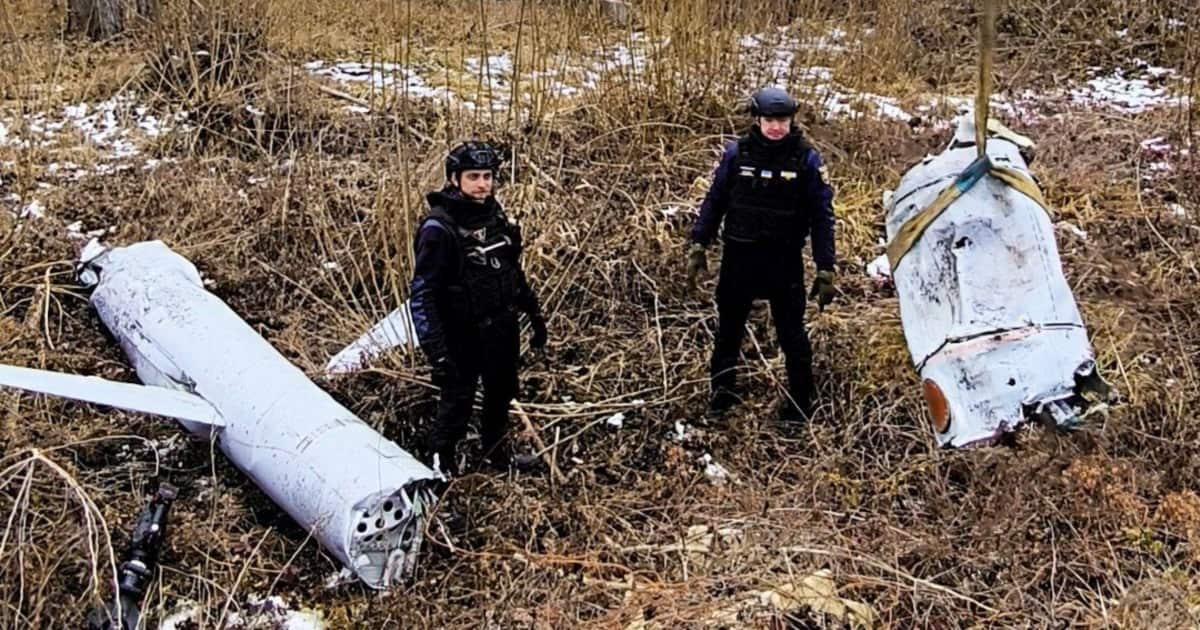
Poland says Russian-made projectile fell and exploded on its soil during night of strikes on Ukraine; emergency meetings convened
Polish authorities say a projectile, likely a Russian cruise missile, fell and exploded in the Lublin region in the early hours of 20 November, prompting an emergency response, the scrambling of fighter jets and an emergency government meeting. Officials described the event as a provocation and reported searches at multiple sites for debris as Russia carried out strikes across western Ukraine the same night.
By Clémence Desjardins
1,152 views
Polish authorities reported that a projectile believed to have been launched from Russia fell and detonated on Polish territory in the early hours of 20 November, prompting emergency meetings in Warsaw and the deployment of fighter jets. The incident took place in the east of the country, near the village of Novy Lipovets in Lublin Voivodeship, according to statements published by Polish officials.
Vladislav Kosinyak-Kamysh, identified in social media posts as the country’s defence minister, said the defence ministry called an urgent meeting in response to what was described as a violation of Polish airspace during a mass Russian strike on western regions of Ukraine. Prime Minister Donald Tusk also convened a meeting that included representatives of the Polish army and the country’s security services.
Polish media cited preliminary assessments that the object was a missile. Fighter jets were scrambled as a precaution. Officials later said the projectile was likely a Russian cruise missile, with the Kh-101 cited as the main candidate in initial assessments. The defence minister characterized the incident as a “provocation.”
Interior Minister Marcin Kierwinski told reporters that search-and-rescue operations were underway at multiple locations where debris from drones or missiles may have fallen. Kosinyak-Kamysh subsequently confirmed that investigators were treating the event as involving at least one missile and one unmanned aerial vehicle.
Local residents in the area reported alarm at the sound of the explosion. One resident described the moment to the press, saying: “My God, it whistled and it roared! People were really frightened. It’s a miracle that it seems no one was hurt. I think it was something larger, possibly a missile. It was not the foam-plastic drone shown on television earlier.” The resident recalled an earlier episode in September 2025 when Russian reconnaissance UAVs known as “Gerber” entered Polish airspace in large numbers but reportedly carried no warheads.
The incident in Poland occurred on the same night that Russian forces carried out multiple strikes against Ukrainian regions, including western oblasts. Ukrainian officials reported damage to residential buildings and industrial facilities, as well as casualties and power outages in Lviv, Ivano-Frankivsk and Zakarpattia oblasts. The cross-border fall of a projectile on NATO-member Poland raises acute security and legal questions as investigators seek to establish the origin and trajectory of the weapon.
Coverage of the incident by Krym.Realii, the regional service of Radio Free Europe/Radio Liberty, has met with obstacles: Russia’s communications regulator Roskomnadzor has reportedly sought to block access to the Krym.Realii site. The outlet encouraged readers in areas where its site is blocked to use an official mirror site or alternative platforms, and reminded audiences that Radio Free Europe/Radio Liberty and Krym.Realii are designated as “undesirable organisations” in Russia. The attempt to restrict reporting underscores broader pressures on independent media covering the conflict and cross-border incidents.
Poland’s immediate response included mobilising military and security services and opening investigations at the sites where debris was reported. Officials said so far there were no confirmed civilian casualties in Poland from the event, but searches and forensic work were ongoing. Warsaw’s description of the incident as a provocation, set against the backdrop of direct attacks on Ukrainian territory that same night, is likely to intensify diplomatic and security consultations within NATO and among European partners about measures to prevent further cross-border incidents and to hold accountable any actors responsible for violations of international law.
As investigations continue, officials and analysts will seek to determine the projectile’s provenance and whether its fall was the result of a weapon launched deliberately or inadvertently, a malfunction, or other causes. The incident highlights the risks posed by an escalating conflict in Ukraine and the potential for spillover into neighbouring countries, with attendant implications for civilian safety, international law and press freedom as authorities and regulators respond to and attempt to control information about such events.