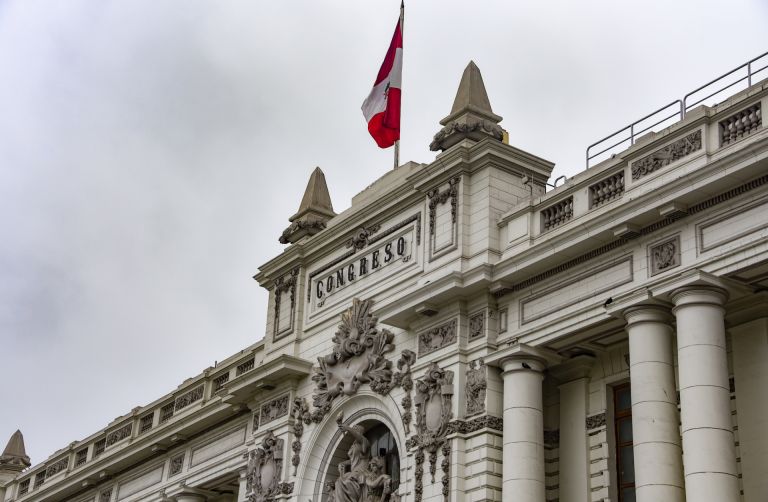
Peru Faces Highly Fragmented Presidential Race as Bicameral Legislature Returns
Peru will hold general elections on April 12 to elect a president, two vice presidents, 130 members of the Chamber of Deputies and, for the first time in over three decades, a 60-seat Senate. With a record 35 presidential candidates, leading contenders polling in the low double digits and many voters undecided, the vote is poised to be unpredictable and may lead to a June 7 runoff.
By Blake Marriott
1,135 views
Peru is preparing for a pivotal general election on April 12 that will determine the country's next president and reshape its legislative landscape. Voters will choose a president and two vice presidents, elect 130 members to the Chamber of Deputies and, in a notable institutional shift, restore a 60-seat Senate — marking the return of a bicameral legislature for the first time in over three decades. The scale of change and the structure of the ballot have elevated the stakes of what is already a highly volatile political contest.
The presidential race stands out for its extraordinary fragmentation. A record 35 candidates are vying for the nation's top office, and polling indicates that leading contenders are only in the low double digits. A substantial share of the electorate remains undecided, creating fertile ground for late shifts in voter sentiment and unforeseen developments in the run-up to the vote. Under Peru's electoral rules, if no candidate secures more than 50 percent of the vote on April 12, the top two finishers will advance to a runoff scheduled for June 7, extending the political uncertainty into the early summer.
The crowded field and low levels of support for frontrunners mean that no single candidate is likely to emerge with a commanding mandate. Analysts and observers view the situation as one that could produce a president with limited early political capital, particularly if a president-elect reaches office after winning a narrow or contested runoff. The widespread voter indecision and potential for last-minute momentum shifts increase the probability that the election's final outcome will surprise polls and pundits alike.
Concurrently, legislative elections will determine the composition of Peru's reconstituted Congress, now composed of the Chamber of Deputies and the reinstated Senate. This year's vote also follows the end of a ban on immediate legislative reelection, a change that is expected to influence party strategies and the makeup of the incoming legislature. Early indications suggest that multiple center-right parties are likely to win the bulk of legislative seats, an outcome that will be important for the next administration's ability to govern.
If center-right forces secure a plurality or majority of seats in the new bicameral legislature, the political dynamics facing a right-leaning president could be relatively favorable in terms of legislative cooperation. A legislature dominated by ideologically aligned parties can help a president enact policy and confirm appointments, improving short-term governability. At the same time, a multi-party center-right configuration could produce its own internal divisions, coalition negotiations and policy trade-offs that complicate governance, especially within the dual-chamber arrangement being reinstated.
The return of a Senate after more than 30 years also carries institutional implications. A bicameral system introduces an additional layer of review and oversight over legislation, affecting the speed and content of legislative output. The Senate's reintroduction could alter the balance of power between branches of government and change how policy priorities are advanced or blocked. How the two chambers interact, and whether party alignments hold across both, will shape the practical effects of bicameralism on governance and political stability.
Overall, Peru's April 12 elections present a complex set of outcomes with significant consequences for the country's domestic politics. The combination of an unusually crowded presidential field, low levels of consolidated voter support, the potential for a June runoff and the reinstatement of a bicameral legislature against the backdrop of renewed legislative reelection rights creates a highly unpredictable political environment. How these dynamics resolve will determine not only who occupies the presidential palace but also how effectively the next government can pursue its agenda amid a transformed legislative architecture.