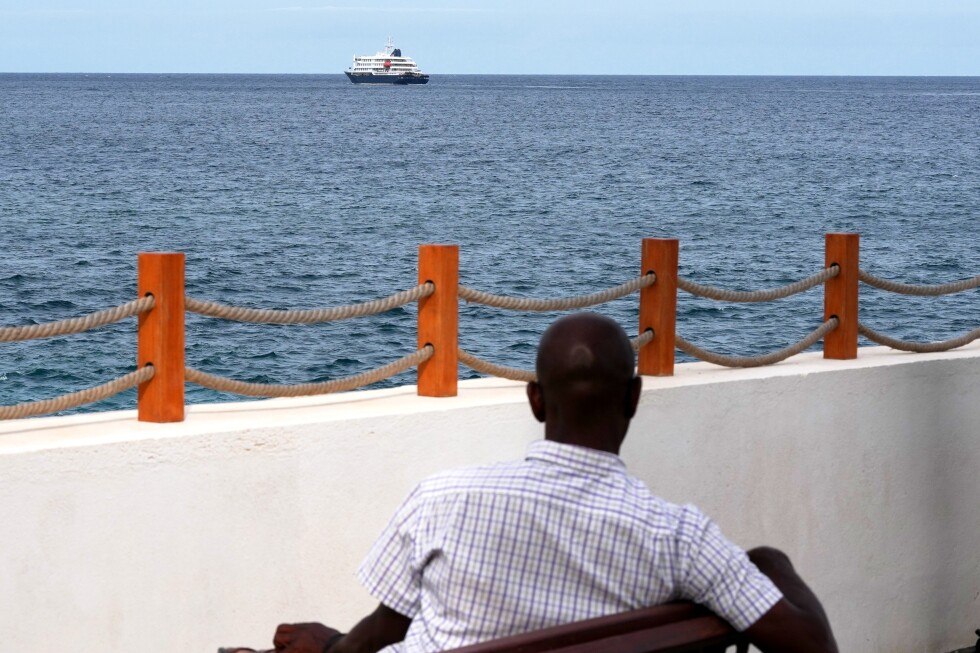
Patients from cruise ship hantavirus outbreak flown to Europe for treatment as vessel heads to Canary Islands
Three people taken off a cruise ship after a hantavirus outbreak have been evacuated to Europe for medical care, officials say, as the vessel alters course and heads for the Canary Islands. The outbreak is linked to a cruise that began in Argentina, and authorities in Spain and other European jurisdictions are monitoring potential exposure among passengers and crew.
By SUSAN MONTOYA BRYAN
969 views
Three people removed from a cruise ship after a hantavirus outbreak have been evacuated to Europe for medical treatment as the vessel changed course and headed for the Canary Islands, authorities said. The move intensified concern among public health agencies across multiple continents and prompted an extraordinary international tracing effort, as officials worked to identify everyone who had been aboard or come into contact with the sick.
The ship at the center of the outbreak is the MV Hondius, a Dutch-flagged expedition vessel operated by Oceanwide Expeditions. It departed Ushuaia, Argentina, on April 1, 2026, on a roughly 33-day voyage north through the South Atlantic, with stops at remote islands including South Georgia, Tristan da Cunha, St. Helena, and Ascension Island before a planned call at Cape Verde. The ship was carrying close to 150 people of around 23 nationalities, with passengers drawn largely from Spain, France, the United Kingdom, the United States, and several other countries, and a crew that included a substantial contingent from the Philippines. After receiving clearance from Spanish health authorities, the vessel left Cape Verde for Tenerife in the Canary Islands with additional medical personnel aboard, a journey expected to take three to four days.
The three evacuated patients were transferred to the Netherlands, the country whose flag the ship sails under and which has been coordinating assistance to those on board. According to the operator, two of the three were symptomatic and one was without symptoms; the group included the ship's doctor. Upon arrival via Amsterdam, the patients were dispersed to specialized care, with one taken to a hospital in Düsseldorf, Germany, and another to a hospital in Leiden, the Netherlands. Authorities said that the passengers and crew remaining aboard the Hondius were without symptoms at the time of departure, and Spain's health ministry sought to reassure the public that the ship's arrival "won't represent any risk for the public."
The cause has been identified as the Andes virus, a species of hantavirus found in South America, primarily in Argentina and Chile. Hantaviruses are typically carried by rodents and transmitted to people through contact with infected rodent droppings, urine, or saliva, and infection can lead to a severe respiratory illness. Crucially, the Andes virus is notable as the one hantavirus known to be capable of spreading between people, although such transmission is considered rare and is thought to occur only through close contact — a feature that helps explain how a cluster of cases could emerge among people sharing the confined quarters of a ship. Investigators believe the outbreak did not originate on the vessel itself; there were no reports of rodents aboard, and the people who first fell ill had been touring Argentina and Chile for months beforehand, likely exposed to an infected rodent or its droppings during an activity on land. Because the virus has a long incubation period — estimated at roughly one to eight weeks — those individuals may have felt well when they boarded and only later developed symptoms, potentially passing the virus to others in close quarters before the danger was recognized.
By the time the ship was diverting toward the Canary Islands in early May, the World Health Organization had confirmed the outbreak and tallied a total of several cases with three deaths since illness first appeared in early April. The first to die was a Dutch man who became ill and died aboard the ship in mid-April; his body was taken off the vessel at St. Helena on April 24, when his wife also disembarked. She subsequently flew toward South Africa, deteriorated, collapsed at a Johannesburg airport, and died, with testing later confirming hantavirus infection. A third fatality, a German woman, developed a fever and malaise in late April, progressed to pneumonia, and died aboard the ship in early May. Additional cases surfaced among people who had already left the vessel: a British man evacuated earlier was in intensive care after being moved to South Africa, and a former passenger who had disembarked at St. Helena and traveled home to Switzerland tested positive for the Andes strain and was being treated in isolation at a Zurich hospital. His wife had shown no symptoms but was self-isolating as a precaution.
The geographic scatter of those cases turned a shipboard emergency into a sprawling, multi-country investigation. Because dozens of passengers had disembarked at St. Helena well before the outbreak was detected, health officials across four continents found themselves tracing travelers who had since dispersed to numerous countries, as well as people who may have crossed paths with them en route. Authorities on St. Helena, the remote British territory in the South Atlantic, said they were monitoring a small number of "higher risk contacts" and had instructed them to isolate. Contact tracers also worked to reach scores of passengers and crew who had shared an April flight from St. Helena to Johannesburg with an infected traveler, and the Dutch health ministry reported that a flight attendant who had briefly been aboard a plane carrying an infected passenger in South Africa was showing symptoms and would be tested in an isolation ward.
The situation has carried broader implications for the cruise industry and for the public health officials responsible for ports that receive ships with ill passengers. International maritime law and public health regulations require ships to report certain illnesses to port authorities and to accept directives intended to protect local populations and provide care for the sick. In this case, the Canary Islands became a focal point for the international response because of the ship's decision to divert there following the evacuations — and the prospect drew political friction. While Spain agreed to receive the vessel and the WHO assessed the risk to the general public as low, the regional president of the Canary Islands, Fernando Clavijo, voiced alarm about the potential risk to residents and to the islands' vital tourism economy, and pressed for a meeting with Spain's prime minister, Pedro Sánchez. Officials more broadly urged calm while emphasizing that investigations and medical evaluations were under way to determine the extent of exposure and the condition of those affected.
The response underscores how quickly a health event on a ship can involve many countries and require close cooperation among cruise lines, port authorities, and health agencies. As the Hondius continued toward Tenerife, planning was already focused on how passengers and crew would be safely repatriated — an operation that would ultimately involve protective equipment, disinfection, and quarantine arrangements coordinated across numerous governments. Passengers and the public were watching closely for further updates on the health status of those evacuated and any additional measures to protect other travelers. Public health outlets following the situation pointed readers toward background on hantavirus and how it is transmitted, given the unfamiliarity of the illness in a travel context.
As authorities continued their work, further official statements were expected from the cruise operator and from health agencies in Spain and the other European countries involved in treating and monitoring those who had been aboard. The case illustrates the ongoing need for vigilance in tracking infectious diseases across international travel routes, particularly for a pathogen with a weeks-long incubation period capable of surfacing long after exposure and far from where it began. With the ship en route to the Canary Islands and the evacuated patients in European care, health officials remained focused on treatment for those affected and on assessing any risk to the wider passenger population as they weighed next steps for the vessel and its onward itinerary.