Pashinyan: Armenia Will Not Let Foreign Actor Decide on Constitutional Changes Amid Azerbaijani Preconditions for Peace
Prime Minister Nikol Pashinyan told the Armenian parliament that the government will not negotiate changes to the country's constitution with any external actor, responding to Azerbaijani demands that a reference to the 1991 Declaration of Independence be removed from the constitution’s preamble as a precondition for a peace treaty. Pashinyan said a proposal for a new constitution is part of his party’s election platform and the government programme and that a draft text will be published and discussed with parliament.
By Alexander Walter
808 views
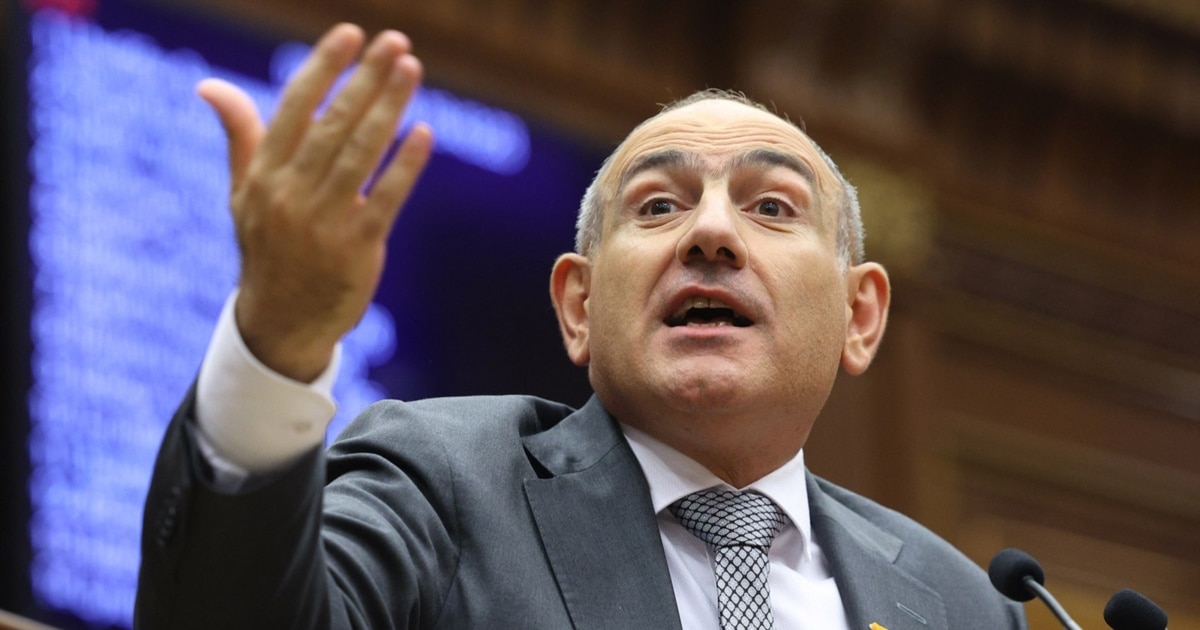
Armenian Prime Minister Nikol Pashinyan told members of the National Assembly on Tuesday that his government will not discuss changes to Armenia’s constitution with any external actor, directly addressing Azerbaijani demands that have emerged as a precondition for a bilateral peace agreement. The statement came in response to a question from opposition lawmaker Garnik Davtyan, who asked why Baku’s condition that Armenia amend its constitution has not been characterized as conduct that would undermine the peace process.
"We tell Azerbaijan that we will not discuss our Constitution with any external entity," Pashinyan said from the parliamentary rostrum. He added that, in official channels, Yerevan consistently states it will not discuss constitutional matters externally, and that interlocutors in some instances indicate they are not raising questions about Armenia’s constitution. "We simply inform them that we have such a perception of the issue because it has been raised in discussions," he said.
Pashinyan also accused some public statements on the subject of being designed to foment domestic instability. "Sometimes it seems that such declarations are made to provoke internal political instability; those statements feed the opposition," he told legislators. The prime minister’s comments highlight a growing tension between the need to negotiate a peace framework with Azerbaijan and concerns in Yerevan about protecting the integrity of democratic institutions and the constitutional order.
Baku has reportedly made removal of a reference to the 1991 Declaration of Independence from the preamble of Armenia’s constitution a precondition for signing a peace treaty. Azerbaijani officials argue that the reference could be interpreted as implying territorial claims against Azerbaijan. Armenian officials, including Pashinyan in his parliamentary remarks, emphasized that constitutional matters are an internal issue and should not be subject to negotiation with foreign governments.
Pashinyan reiterated that change to the constitution is nevertheless on his government’s agenda—but as a domestic political process. "Adopting a new Constitution is part of our election programme and also included in the Government’s programme," he said, adding that the government will soon publish the draft text and that discussions with parliament will begin. By framing the constitutional reform as part of the domestic political roadmap, the prime minister sought to underscore that any amendment would follow Armenian procedures and parliamentary debate rather than external pressure.
The exchange in parliament underscores the fraught environment surrounding peace negotiations between Yerevan and Baku. For Armenian authorities, balancing the negotiation of a durable peace settlement with the protection of national sovereignty and democratic legitimacy is politically sensitive. Opposition figures have used the issue to challenge the government, while officials in Baku have linked constitutional language to assurances about territorial integrity and post-conflict arrangements.
Observers say the constitutional question is emblematic of broader tensions in the region: agreements that seek to normalize relations after conflict often raise difficult questions about national narratives, legal texts, and the domestic legitimacy of concessions perceived as imposed from outside. In Armenia’s case, Pashinyan’s insistence that constitutional change will be an internally driven process signals a determination to maintain constitutional sovereignty even as Yerevan engages in diplomacy aimed at achieving a formal peace with Azerbaijan.
The government has committed to publishing a draft constitution in the near future and opening it to discussion in the National Assembly. How that process unfolds, and whether it will influence or be influenced by external demands tied to the peace process, remains a central political question in Armenia’s evolving domestic and foreign-policy landscape.