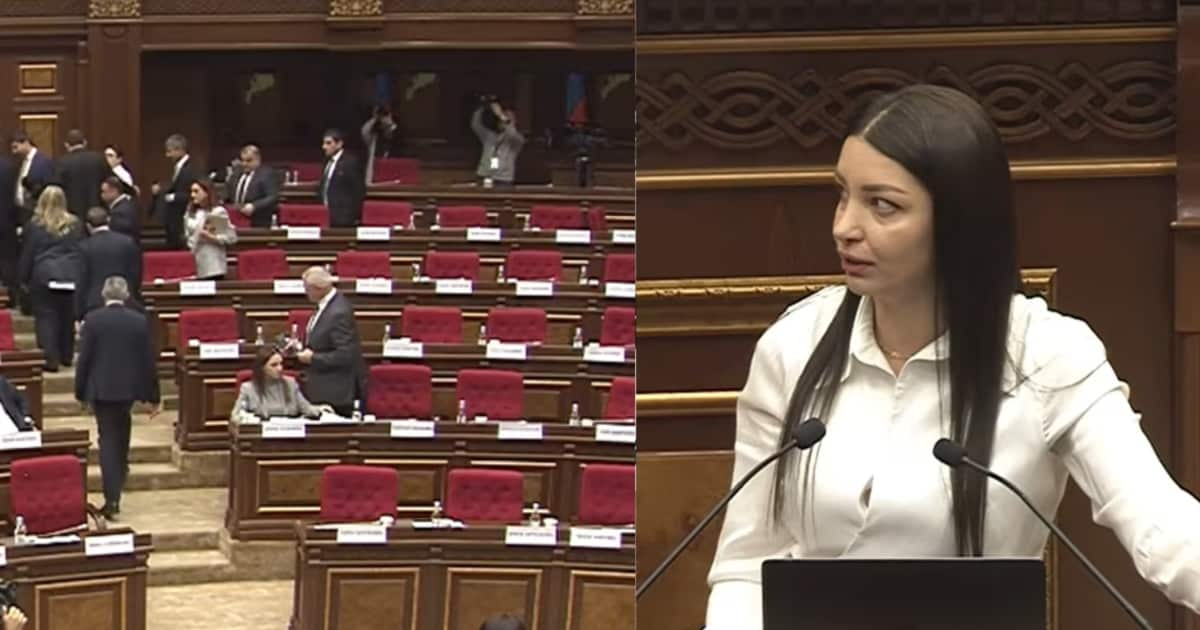
Parliamentary session erupts after ruling MPs attack Catholicos; opposition walks out amid dispute over draft on democratic backsliding
A National Assembly session in Yerevan descended into disorder after ruling party deputies directed a series of accusations at Catholicos Garegin II, prompting opposition lawmakers to strike tables and walk out. The clash occurred during debate over an opposition draft declaration on democratic backsliding and political persecution, which the ruling Civil Contract bloc voted down and removed from the agenda.
By Christopher Manley
910 views
A session of Armenia’s National Assembly turned confrontational on Tuesday after deputies from the governing Civil Contract party launched a series of verbal attacks on the head of the Armenian Apostolic Church, Catholicos Garegin II, prompting opposition lawmakers to protest and ultimately exit the chamber.
The incident began during debate on a draft declaration authored by the Hayastan (Armenia) parliamentary faction that criticized what it described as a regression in democratic standards in Armenia, alleged political persecutions, and called for protection of the rights of people targeted by those measures. Civil Contract deputies opposed the draft.
During the discussion, Civil Contract MP Hasmik Hakobyan addressed the Hayastan proposal and, in the course of criticizing the opposition’s initiative, referred to Catholicos Garegin II using a derogatory label translated in parliamentary remarks as “Executioner Nersisyan.” The comment triggered a loud reaction from opposition deputies, who began striking their desks in protest.
National Assembly Speaker Ruben Rubinyan stepped in and said he opposed restricting any deputy’s right to use non-offensive expressions. He then proceeded to list a set of accusations directed at the Catholicos, saying in translation: “Executioner Nersisyan, the brother of a KGB operative, one who has broken the monastic vow, defender of corrupt people, who has made the thousand-year-old Armenian Church into a shield for corruption — Executioner Nersisyan.”
As Rubinyan spoke, opposition deputies continued to pound the desks while Civil Contract members applauded. The atmosphere remained tense and escalated further when Hakobyan accused opposition deputies of exploiting the name of a recently deceased opposition activist, Arsen Gevorgyan, who died in the Nubarashen penitentiary. “You have shamelessly exploited the name of a deceased colleague and turned his death into a political petty-show,” she said, according to the parliamentary record.
Those remarks prompted the opposition contingent identified in reporting as Strong Armenia and elements of the Hayastan bloc to abandon the chamber in protest.
At roughly the same time, Alen Simonyan — Security Council Secretary and a former speaker of the National Assembly — joined the chorus of criticism from outside the chamber. Simonyan posted on social media calling the Catholicos “the greatest threat to national security,” amplifying the intensity of the public exchange between state officials and the church leadership.
The parliamentary debate in which the confrontation unfolded concerned the Hayastan-drafted declaration alleging democratic backsliding and politically motivated prosecutions and seeking safeguards for those affected. The ruling Civil Contract faction voted against the draft; as a result, it was not placed on the National Assembly’s agenda.
The episode underscored sharp political polarization in the legislature and the fraught relationship between secular authorities and the Armenian Church. It also occurred against the backdrop of continued public concern about the treatment of detainees and prisoners: the death of Arsen Gevorgyan in Nubarashen penitentiary, cited by MPs during the session, has become a flashpoint cited by opposition figures alleging mistreatment and by ruling party figures accusing opponents of politicizing the incident.
Lawmakers’ antagonistic exchange and the subsequent walkout highlight mounting tensions in Armenia’s political environment over freedom of expression, accountability of institutions, and the space for dissenting voices within formal democratic processes. The exclusion of the draft declaration from the agenda leaves unresolved questions about parliamentary oversight of alleged rights abuses and political prosecutions that the opposition had sought to raise.