Pakistan Says Washington and Tehran Expect to Sign Peace Deal Within 24 Hours as Mediators Report Progress
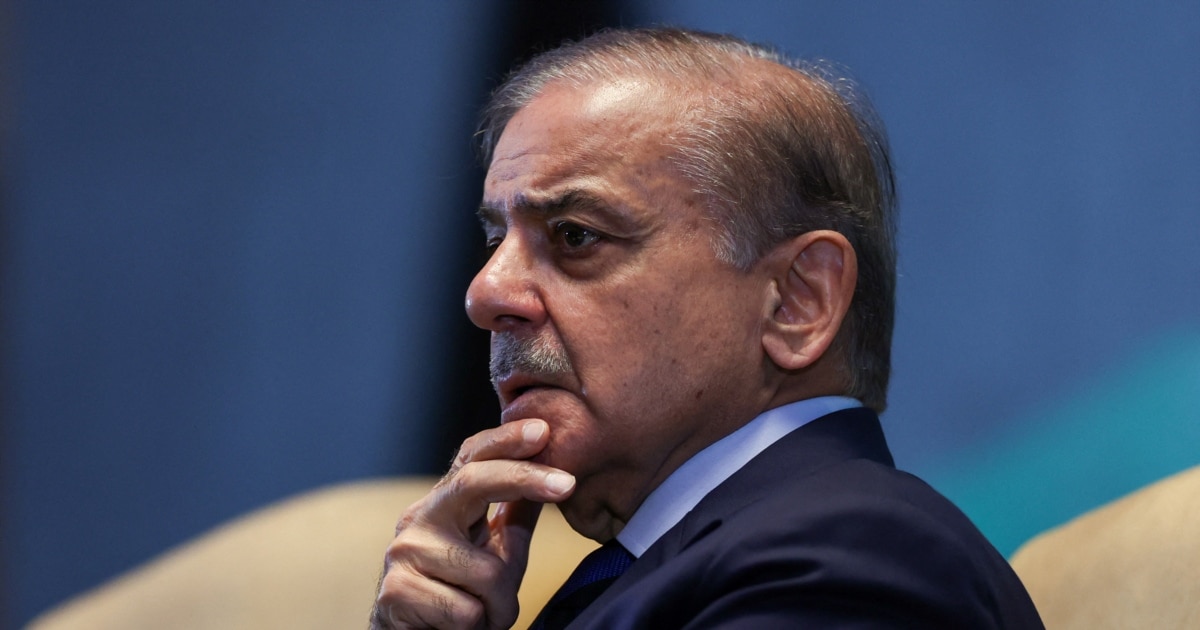
Pakistan’s prime minister, Shehbaz Sharif, said on June 13 that a peace agreement between the United States and Iran was expected within 24 hours, with Pakistan serving as a key intermediary. Officials from both Washington and Tehran have signaled rapid diplomatic progress, and mediators say the deal may be signed digitally, although an in-person ceremony in Europe is still under consideration.
By Alexander Walter
1,006 views
Pakistan’s prime minister, Shehbaz Sharif, said on June 13 that a peace agreement between the United States and Iran was expected to be signed within 24 hours, marking a potential de-escalation after months of heavy fighting and diplomatic breakdown. Shehbaz, whom Pakistani officials have described as a key intermediary in the talks, said the country was prepared to host or facilitate an electronic signing immediately, with technical-level negotiations to follow next week.
«Мы бліжэй да мірнага пагадненьня, чым калі-небудзь раней. Пакістан рыхтуецца да электроннага падпісаньня мірнага пагадненьня адразу пасьля гэтага, а затым да перамоваў на тэхнічным узроўні на наступным тыдні», Shehbaz wrote on his X page on June 13. He added in a separate post: «Мы ўпэўнены, што гэта гістарычнае мірнае пагадненьне стане ўстойлівай асновай для ўстойлівага міру».
Radio Free Europe/Radio Liberty (RFE/RL) reported that, in the 24 hours before Shehbaz’s statement, senior U.S. and Iranian officials had sent signals indicating diplomatic progress. Iranian officials also said they expected a digital signing. A White House official told RFE/RL on June 12 that mediators were still considering the possibility of an in-person signing ceremony in Europe in the coming days, leaving the exact form and timing of any agreement unresolved.
Details of the prospective agreement remain murky. Leaders on each side have presented differing elements of what a deal might entail, and Pakistani statements did not outline the provisions that would accompany the anticipated signing. Observers cautioned that while a formal signature could mark a step toward de-escalation, the terms of any arrangement and the mechanisms for verification and enforcement will be critical to determining whether it can produce lasting stability.
The mediating effort occurs against the backdrop of a dramatic military escalation that began on Feb. 28, when U.S. President Donald Trump announced the start of a joint U.S.-Israeli large-scale military operation against Iran. That operation was framed by U.S. and Israeli officials as a response to a breakdown in talks over Iran’s nuclear program. According to the reports cited in regional media and Iranian sources, the strike that opened the operation killed Ayatollah Ali Khamenei and other senior Iranian leaders, an event that Iranian officials and President Masoud Pezeshkian described as a severe crime and vowed to avenge.
Iran responded with an array of strikes targeting U.S. facilities in the Middle East and a number of U.S. allies and partners. The fighting spread across the region. Iranian emergency services reported substantial civilian casualties: the Iranian Red Crescent Society said more than 200 people had been killed and more than 700 wounded, while Iran’s IRNA news agency said 118 of those killed were schoolchildren. Regional governments also reported casualties; officials in the United Arab Emirates said three people had died and 58 were wounded in attacks tied to the wider hostilities.
The conflict has produced strikes on territory inside Israel as well. An Iranian rocket strike on the city of Beit Shemesh, about 40 km from Jerusalem, was reported to have killed at least nine people and wounded 28. On March 2, the pro-Iranian Lebanese group Hezbollah began launching attacks at Israel from Lebanese territory. Iranian forces are reported to have continued strikes on Saudi Arabia, Bahrain, the UAE and Kuwait, targeting sites associated with cooperation with U.S. forces, while U.S. and Israeli forces continued strikes on Iranian military targets.
The regional political fallout also included responses from global actors: Moscow publicly condemned what it called aggression by Israel and the United States against Iran, while Belarus’s response was muted. Belarusian state carrier Belavia canceled flights to parts of the region citing the danger from reciprocal strikes; on March 2 the airline dispatched an evacuation flight from Minsk to Doha to repatriate Belarusian tourists stranded in Qatar.
Iran’s domestic political landscape shifted amid the conflict. On March 8, Iran’s Assembly of Experts reportedly selected Mojtaba Khamenei, the son of the killed Ayatollah Ali Khamenei, as the country’s new supreme leader. Reports also said Mojtaba’s wife, Zahra Haddad Adel, was among those killed in the same U.S.-Israeli strike that killed her father-in-law.
Shehbaz’s announcement that a signing could occur imminently draws attention to the potential for a diplomatic thaw after a period of violent escalation with a heavy humanitarian toll. Yet many questions remain about the content of any agreement, the means of implementation and verification, and whether parties will adhere to commitments on the ground. Observers and humanitarian groups will be watching for confirmations of the signing and for details on provisions addressing civilian protection, reparations, and mechanisms to prevent a return to hostilities.