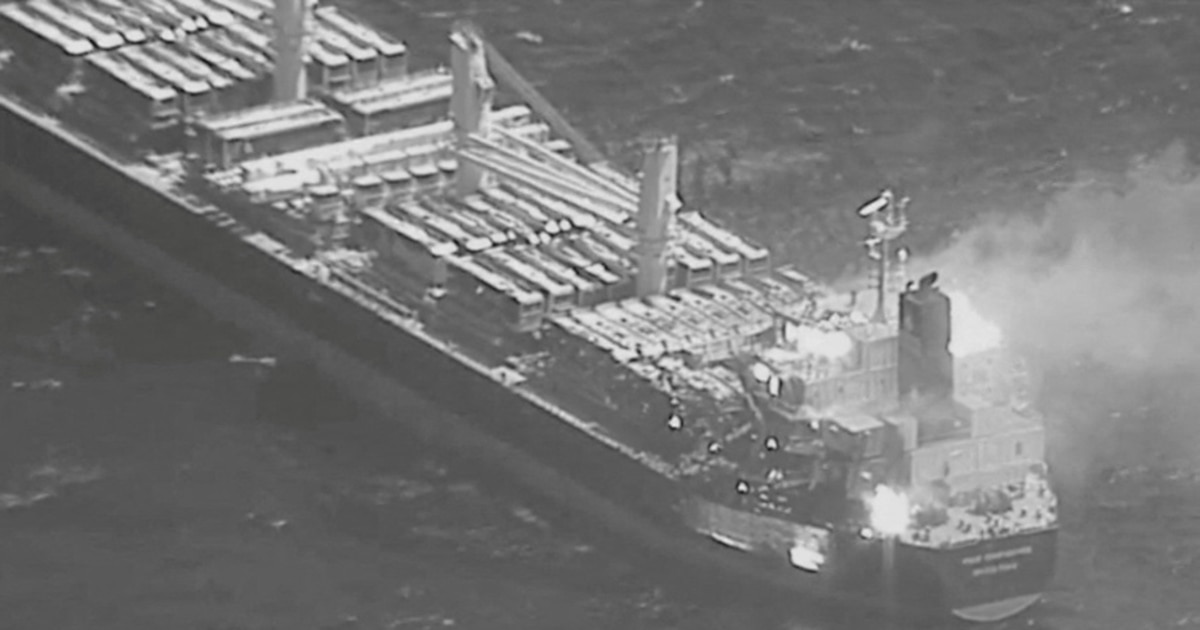
Pakistan Confirms Three Citizens Killed in Red Sea Attack as Yemen Coastguard Reports Multiple Deaths; Regional Tensions Over Strategic Waterways Escalate
Pakistan’s foreign ministry confirmed that three Pakistani citizens were killed and one wounded in an attack on a commercial vessel in the Red Sea, an incident that Yemen’s coastguard says left at least six people dead and many wounded. The assault—attributed to Houthi forces—also reportedly killed an Indonesian national and two rescue workers, and comes amid heightened tensions over control of the Strait of Hormuz and wider U.S.-Iran standoffs.
By Christopher Manley
981 views
Pakistan’s Ministry of Foreign Affairs said on Wednesday that three Pakistani citizens were killed and one injured in an attack on a commercial vessel in the Red Sea, marking a deadly escalation in maritime violence that has implicated regional militias and raised concerns about the safety of civilian mariners.
The announcement, posted by Finance Minister Ishaq Dar on X, follows reporting from Yemen’s coastguard and transport ministry that attributed the strike to Houthi forces operating off Yemen’s coast. Yemen’s transport ministry said an Indonesian national was also among those killed in the incident, while the coastguard reported that rescuers responding to the scene came under a second attack, killing two members of the anti-Houthi national resistance and leaving at least 10 others wounded.
Yemen’s coastguard described a chaotic rescue effort in which Houthi fighters renewed their assault even after first responders reached the scene. The renewed strikes complicated search and recovery operations and increased the civilian toll, according to the coastguard’s account.
The attack comes against a backdrop of intensifying confrontations over strategic shipping lanes in the Gulf and Red Sea. U.S. President Donald Trump told reporters that Washington exerts “full control” over the Strait of Hormuz, asserting U.S. naval supremacy in the area. He added that the United States decides which ships may enter or leave the strait, and said: «ما تنگۀ هرمز را بهطور کامل کنترول داریم. ما بر آن کنترول داریم، تنها ما.»
Tehran rejects that characterization and has repeatedly asserted its own influence over the strait, saying it has worked with Oman on a draft “transit map” for vessels. Iranian officials, including Foreign Ministry spokesman Ismaeil Baqaei, said Tehran is not engaged in direct negotiations with Washington and described interactions as a limited exchange of messages. Baqaei also warned that the strait would remain closed to normal traffic so long as the United States maintains maritime pressure: "ما با امریکا مذاکره نداریم. تبادل پیام طبیعی است که از طریق میانجیها درباره موضوعات روز صورت بگیرد".
The strategic chokepoints of the Strait of Hormuz and the Red Sea are vital conduits for global energy and shipping. Past incidents—including the mining of parts of the Hormuz after a prior 40-day conflict and attacks on tankers—have already forced international concern and prompted ad hoc diplomatic arrangements. According to the reporting, a memorandum signed in Islamabad earlier called for mine clearance within 30 days, but that understanding collapsed after renewed strikes on tankers and subsequent U.S. military responses.
Beyond immediate maritime security concerns, the developing violence interacts with broader regional humanitarian and geopolitical crises. The Norwegian Refugee Council warned that Afghanistan faces a deepening humanitarian emergency compounded by dwindling international support and mass returns of displaced people—factors that heighten regional instability. Separately, Iran has listed a series of political conditions it says must be met before it will consider reopening parts of the Hormuz corridor, including the end of hostilities, withdrawal of U.S. forces, compensation for wartime damages, lifting sanctions and the release of frozen assets.
The attack and its aftermath underline mounting risks to commercial shipping and civilian lives in a region where proxy forces and state actors increasingly contest control of critical sea lanes. With crew members and rescuers among the dead, governments and maritime operators face renewed pressure to coordinate protective measures, increase investigations into responsibility for the strikes, and pursue diplomatic channels to reduce the threat to neutral shipping and to civilian maritime personnel.