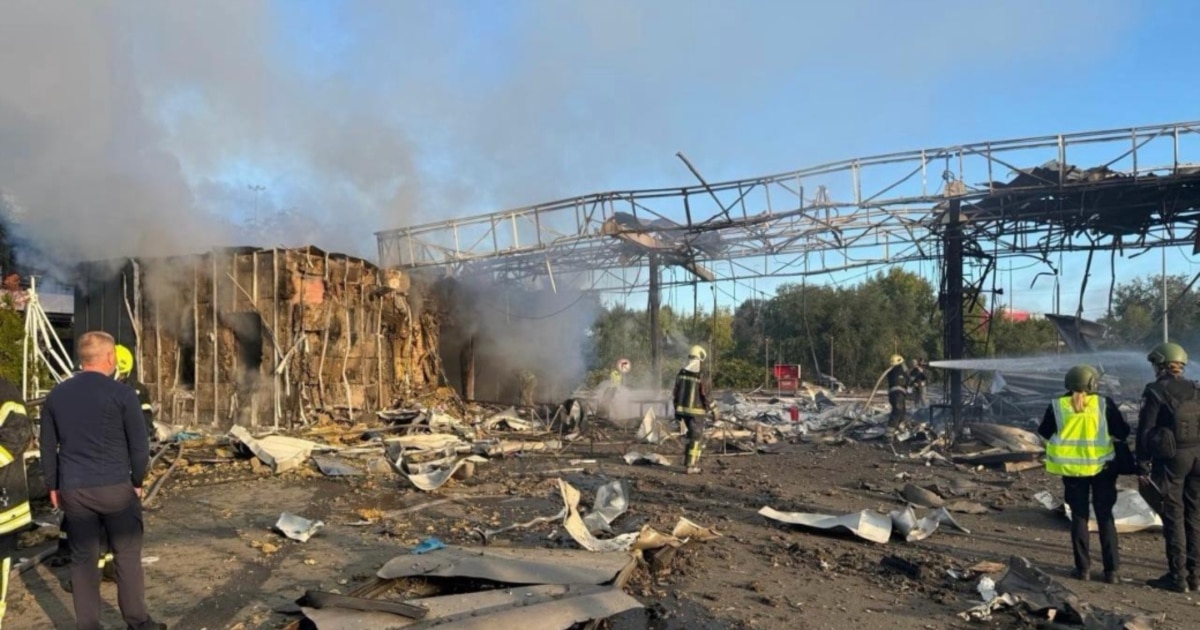
Overnight Russian Strikes Hit Multiple Ukrainian Cities: Fires, Casualties and One Dead
Russian forces launched a wave of overnight strikes across Ukraine on the night of 22–23 September, hitting Kyiv, Zaporizhzhia, Izium, Sumy and surrounding areas with guided aerial bombs and strike drones. The attacks caused fires at fuel stations and civilian facilities in Kyiv, injured at least a dozen people across several regions and left one civilian dead in Zaporizhzhia oblast.
By Alexander Walter
709 views
Russian forces carried out coordinated strikes on several major Ukrainian population centers during the night of 22–23 September, according to Ukrainian officials and local reports. The attacks, which Ukrainian authorities say employed guided aerial bombs and strike unmanned aerial vehicles (UAVs), resulted in fires, damage to civilian infrastructure and multiple casualties across Kyiv, Zaporizhzhia, Kharkiv and Sumy regions.
In the capital, Kyiv, the overnight attacks sparked fires at two petrol stations, at an object of transport infrastructure and in a warehouse building. Emergency services reported three people wounded in the strikes; two of the injured were hospitalized in serious condition. Local authorities said the strikes directly affected civilian sites and infrastructure rather than military targets.
In Zaporizhzhia city, a strike by a UAV struck the Amstor shopping center—already targeted by drone attacks earlier this month—causing a fire and injuring two people. In the broader Zaporizhzhia region, the village of Kushuhum was hit by drone strikes that destroyed a private house; the owner of the home was killed, according to regional reports.
In the Kharkiv region, the city of Izium was struck with guided aerial bombs. Seven people were wounded there, including a child. The blasts damaged multi-storey residential buildings and sparked fires, compounding damage to civilian housing and putting additional strain on emergency responders.
The city of Sumy came under fire from long-range weapons overnight. Local officials reported damage to two private homes and two civilian infrastructure facilities and at least one wounded person. Across the affected regions, authorities have documented both structural damage and fires, and have criticized the attacks as deliberate strikes on civilian infrastructure.
The strikes near Ukraine’s borders prompted defensive reactions from neighboring NATO states: Polish and Romanian authorities said they had to scramble fighter jets in response to military activity in immediate proximity to their frontiers. Officials in both countries monitored airspace and heightened alert measures as the night’s operations unfolded.
Ukrainian authorities and international organisations have repeatedly condemned the Russian strikes on civilian sites, describing them as potential war crimes. The targeting and destruction of life-support systems and healthcare facilities, and attacks intended to deprive civilians of power, heat, water, communications and medical care, have been characterised in some statements as indicative of actions that could amount to genocidal conduct. Russian authorities reject allegations that their forces deliberately target civilian infrastructure, denying responsibility for strikes that destroy hospitals, schools, kindergartens, energy and water systems.
The reports of overnight attacks coincide with pressures on independent media and access to reporting. Russian communications regulator Roskomnadzor has sought to block access to the Krym.Realii website; the outlet and Radio Free Europe/Radio Liberty were both designated “undesirable” organisations in Russia. Krym.Realii published a mirror link and urged readers to follow updates via its Telegram, Instagram and Viber channels and to consider using a VPN to bypass restrictions.
The United Nations has voiced concern about the cumulative effect of attacks on civilian infrastructure ahead of the coming winter, warning that conditions for Ukraine’s population could become significantly harder. The latest strikes add to a pattern of bombardments across Ukrainian regions, where the use of drones, missiles, guided aerial bombs, precision-guided munitions and multiple-launch rocket systems has repeatedly damaged civilian objects and caused loss of life.
As emergency services continue extinguishing fires and assessing damage, Ukrainian officials and international observers have emphasized the need for accountability for attacks on civilians and civilian infrastructure. The overnight operations underscore ongoing risks to non-combatants throughout Ukraine and raise urgent questions about the protection of civilians, the conduct of hostilities and the international legal process for investigating alleged war crimes.