OSCE Observers Say Kazakhstan’s Kurultai Vote Lacked Genuine Political Pluralism Despite No Major Procedural Violations
Observers from the OSCE’s election monitoring bodies concluded that Kazakhstan’s Kurultai elections were held without significant procedural violations but in an environment lacking real opposition and political pluralism. They highlighted the dominance of pro-presidential parties, disproportionate advantages for the leading party, misuse of administrative resources and significant constraints on media freedom and independent candidacy.
By Clémence Desjardins
1,186 views
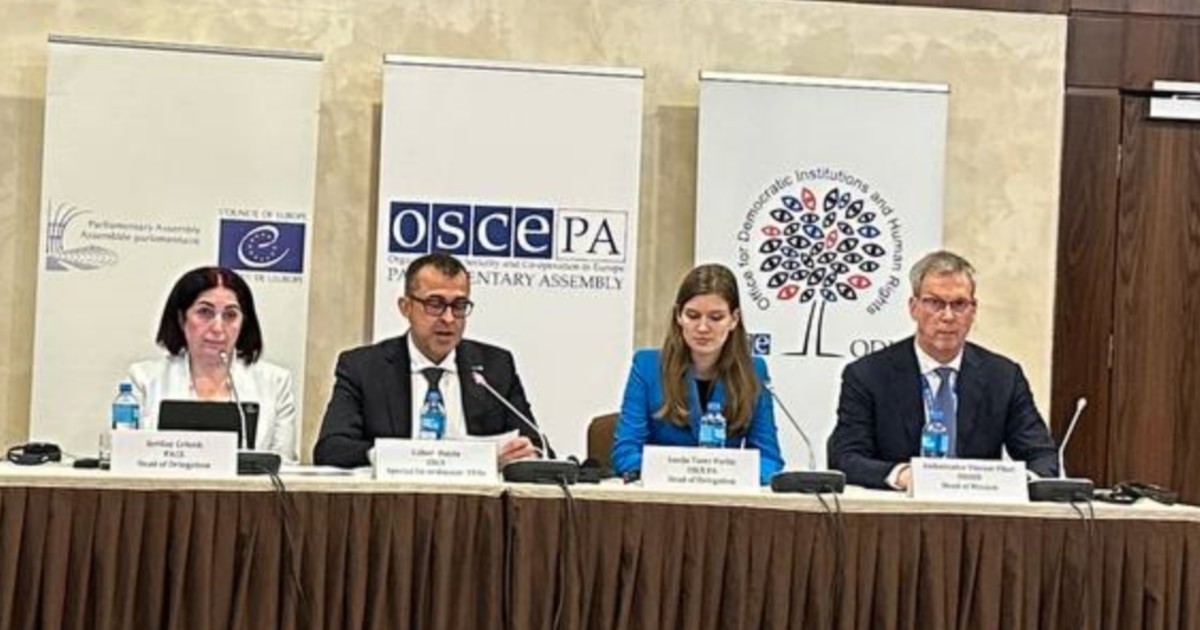
International observers from the OSCE Office for Democratic Institutions and Human Rights (ODIHR) and the OSCE Parliamentary Assembly (OSCE PA) said Kazakhstan’s recent Kurultai (parliamentary) elections were conducted without major procedural violations but took place in an environment devoid of genuine political pluralism. At a press conference in Astana on 24 August, the delegations presented preliminary findings that raised concerns about the overall competitiveness of the contest and the conditions for free political debate.
Observers noted that all seven parties registered to contest the elections publicly supported the policies of President Kassym-Jomart Tokayev, limiting the choice available to voters. The Central Election Commission (CEC) reported that the ruling-aligned party Әділет received more than 71 percent of the vote; observers said Әділет enjoyed “an undue advantage that blurred the line between the state and the party,” and that there were credible reports of improper use of administrative resources. The mission documented instances in which state officials were mobilized to participate in pre-election campaigning and other activities that advantaged the dominant party.
"Все семь зарегистрированных партий поддерживают политику действующего президента. С этой точки зрения между партиями наблюдалось сходство, что ограничило плюрализм выбора для казахстанского избирателя", said Vincent Piket, head of the ODIHR mission, commenting on the lack of substantive differences among the contesting parties. Observers also criticized the absence of independent, non-partisan candidates—an omission they said runs counter to international standards and earlier OSCE recommendations for more open and competitive participation.
The monitoring missions raised significant concerns about the media environment during the campaign. Observers reported that foreign journalists were frequently denied accreditation, that state-controlled outlets dominated coverage, and that journalists faced pressure and resorted to self-censorship amid fears of arrest. The delegations also received reports of online media being blocked and of journalists’ and media accounts being removed from social networks following what appeared to be fake complaints to platform administrators. "Свободные и справедливые выборы и независимые СМИ тесно связаны. Без плюралистической медиасреды политическое участие и представительство существенно ограничены", said Sevilay Chelenk, head of the PACE observer delegation.
Gender representation in candidate lists was another shortcoming highlighted by observers. Lucia Tacer Perlin, head of the PACE delegation, said the number of women among candidates, party members and leadership remained low. The monitoring teams emphasized that their statements were preliminary and that a more complete assessment would be published in a final report detailing their full findings and recommendations.
The OSCE has historically not recognized any of Kazakhstan’s past elections as fully fair and competitive, a stance that has drawn criticism from Kazakh authorities. President Tokayev has previously accused the organization of bias; in a 2025 interview with Al Jazeera he described some OSCE assessments of the 2023 campaign as unbalanced. Observers in the current mission declined to engage directly with those past criticisms, arguing that their present evaluation is based on systematic data collection. "Я не думаю, что сегодня и на этом этапе нам нужно отвечать на предыдущие оценки того, как мы оценивали предыдущие выборы и как это воспринималось местным руководством. Могу сказать, что сейчас мы проводим очень подробную оценку, и я уверен, что она будет очень точной и объективной", said Gabor Hajdu, the OSCE special coordinator, at a polling station in Astana on 23 August. "Наша репутация основана на том, что мы являемся нейтральными наблюдателями и сосредотачиваемся на данных, которые собирает БДИПЧ, на наших наблюдениях или обсуждениях на брифингах, и на сборе всей информации, которую увидят наши наблюдатели. Поэтому любые спекуляции противоречат этому", added Lucia Tacer Perlin.
Kazakh authorities responded that they had not recorded violations that could have affected the outcome of the vote. According to the CEC’s preliminary results, five parties passed the threshold to enter parliament: Әділет (over 71 percent), Ауыл (6.26 percent), Ақ жол (5.21 percent), the Nationwide Social-Democratic Party (5.11 percent), and Respublica (5.56 percent). The CEC reported turnout above 74 percent.
Observers said the combination of a de facto single political line among registered parties, barriers to independent candidacy and a constrained media landscape limited the elections’ competitiveness and the electorate’s ability to choose among distinct political alternatives. The final OSCE/PA reports, expected in due course, will offer a comprehensive assessment and may include recommendations aimed at expanding pluralism, safeguarding media independence and ensuring future elections meet international democratic standards.